
Last updated September 23, 2026
Whole-system duct and dryer vent check with before-and-after photos - you see exactly what came out of your vents
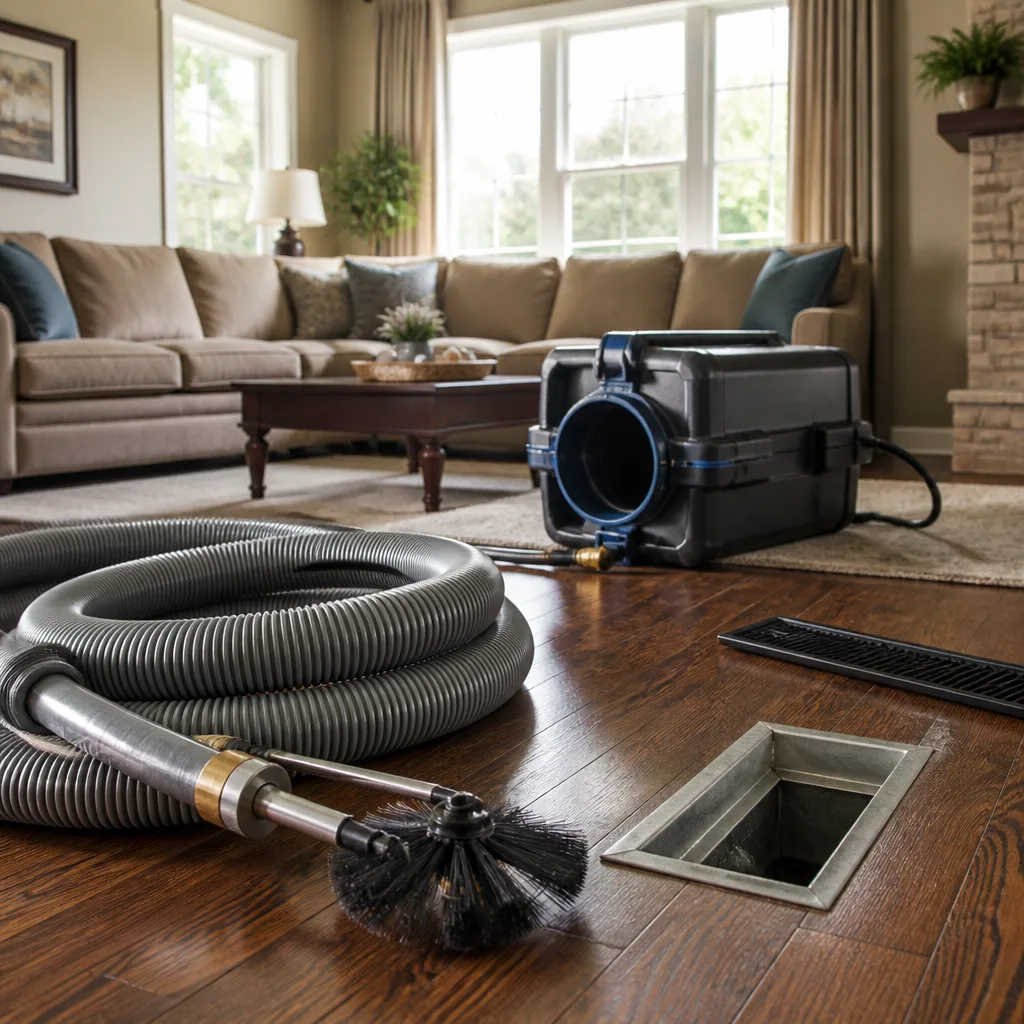
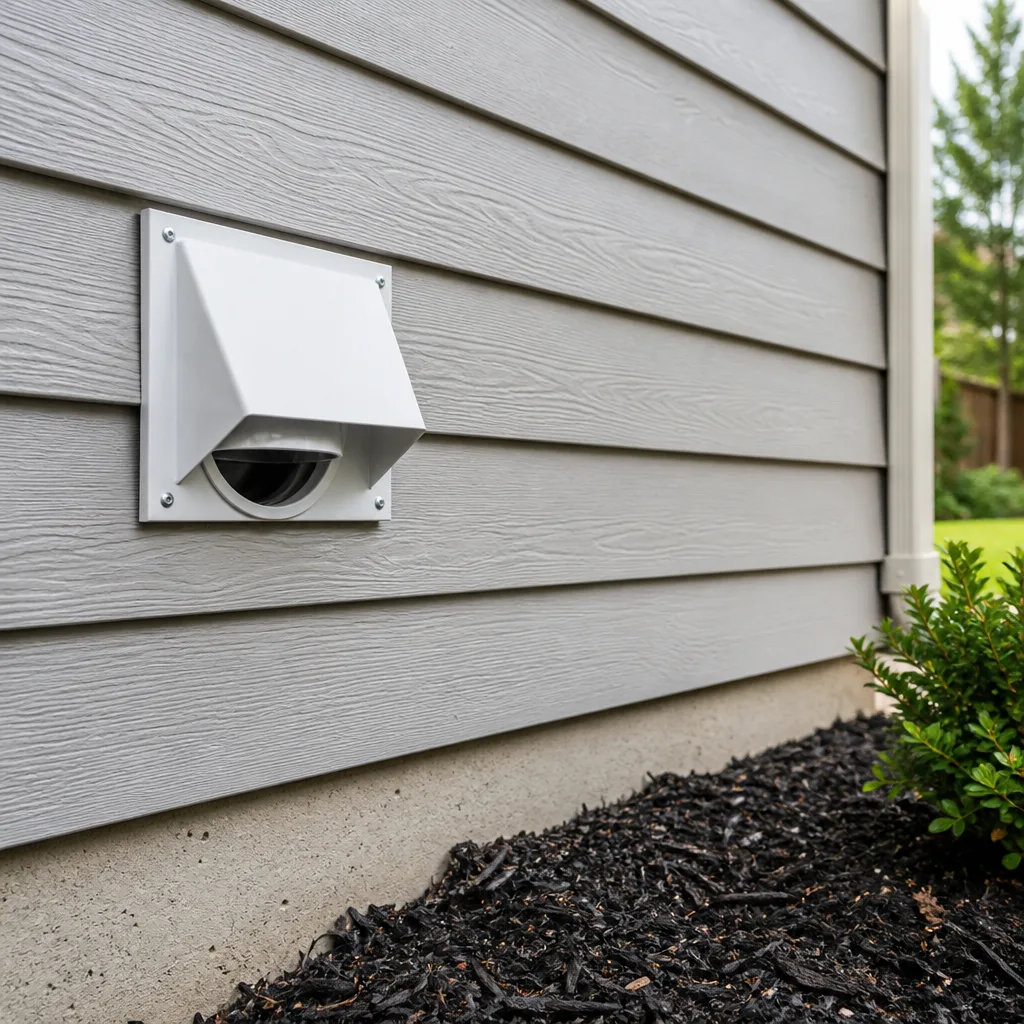
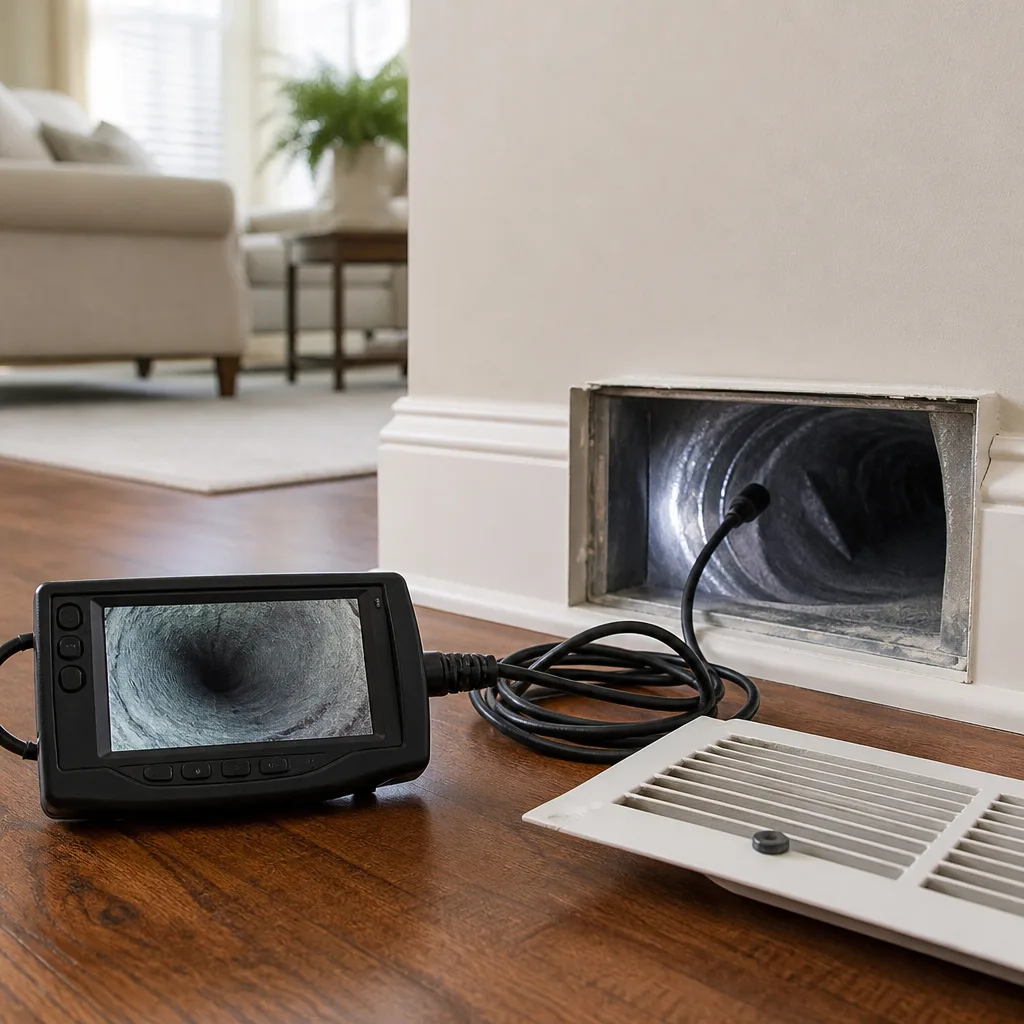
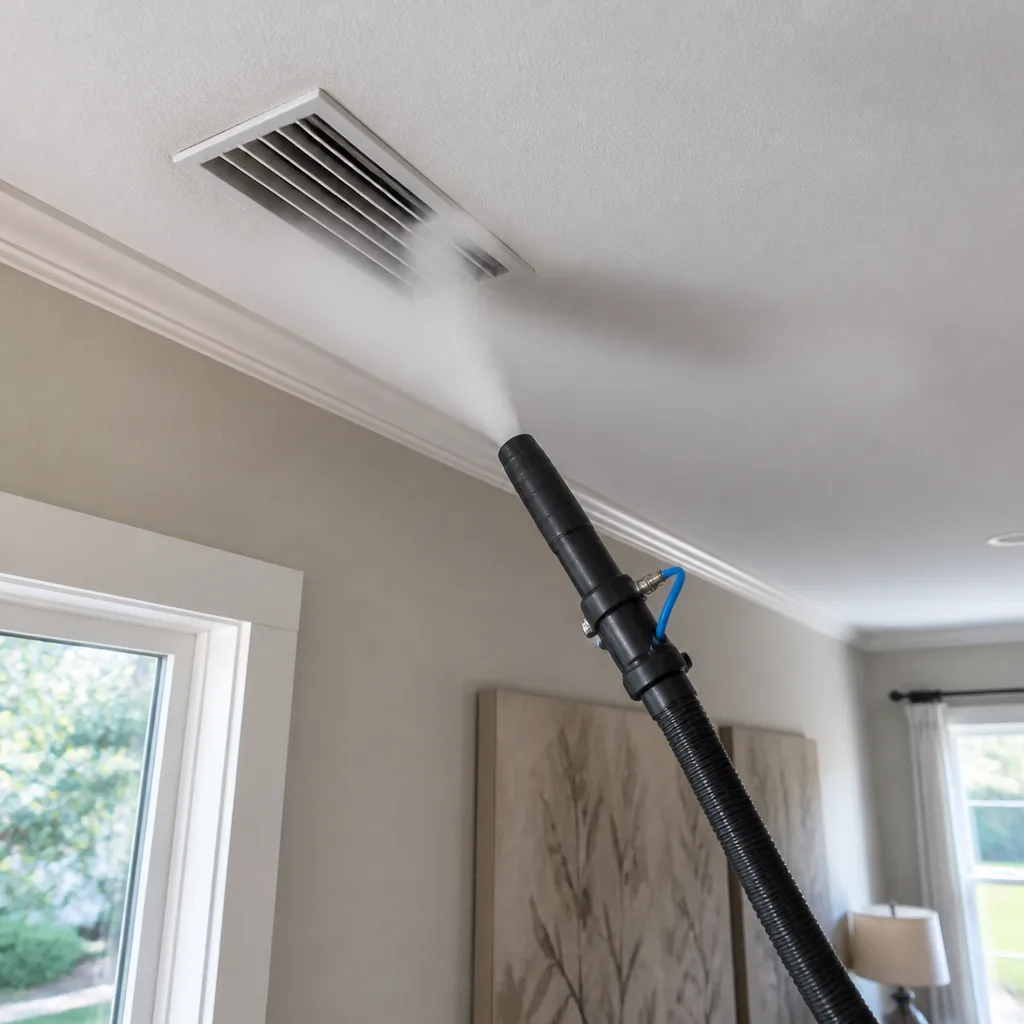
That "$99 whole-house special" is a bait ad - the real number appears once they are in your hallway, or the "clean" is a shop-vac at the register. We photograph the inside of your ducts before and after instead.
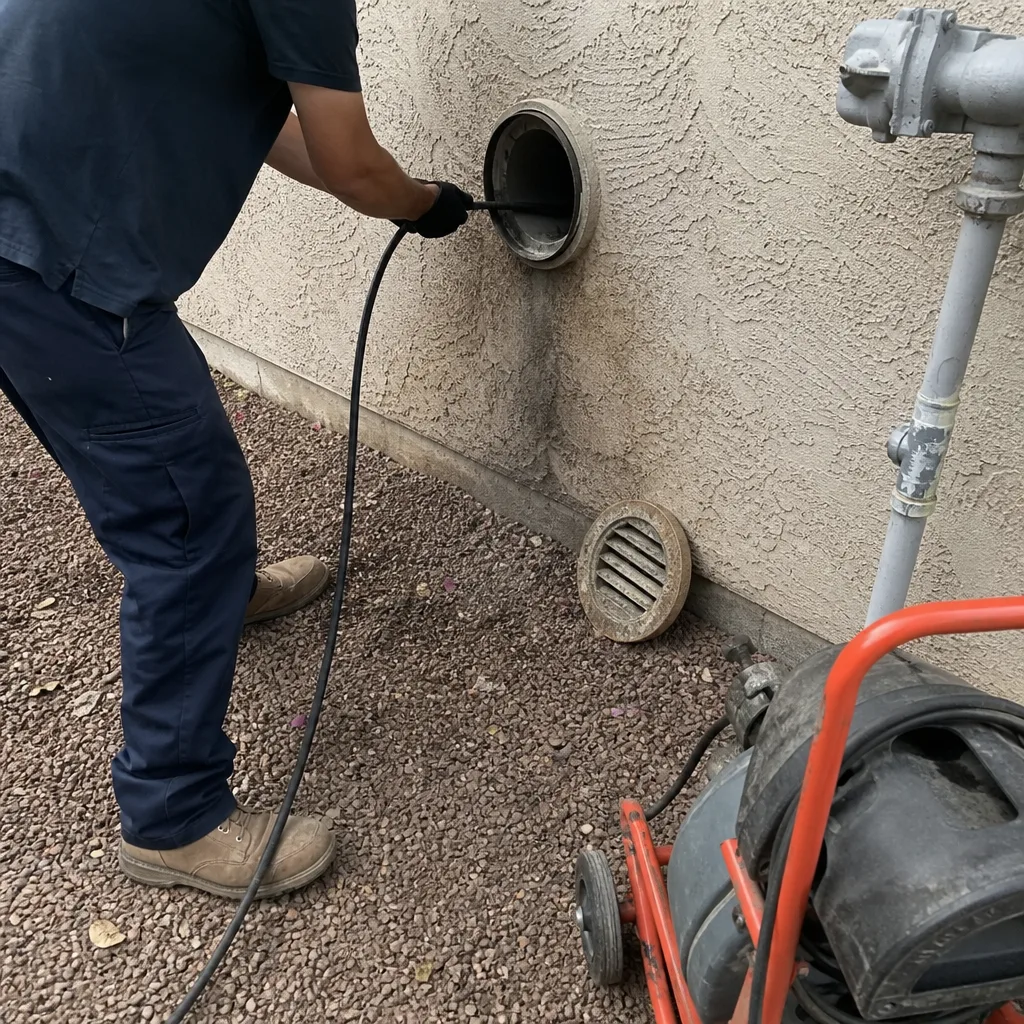 Before
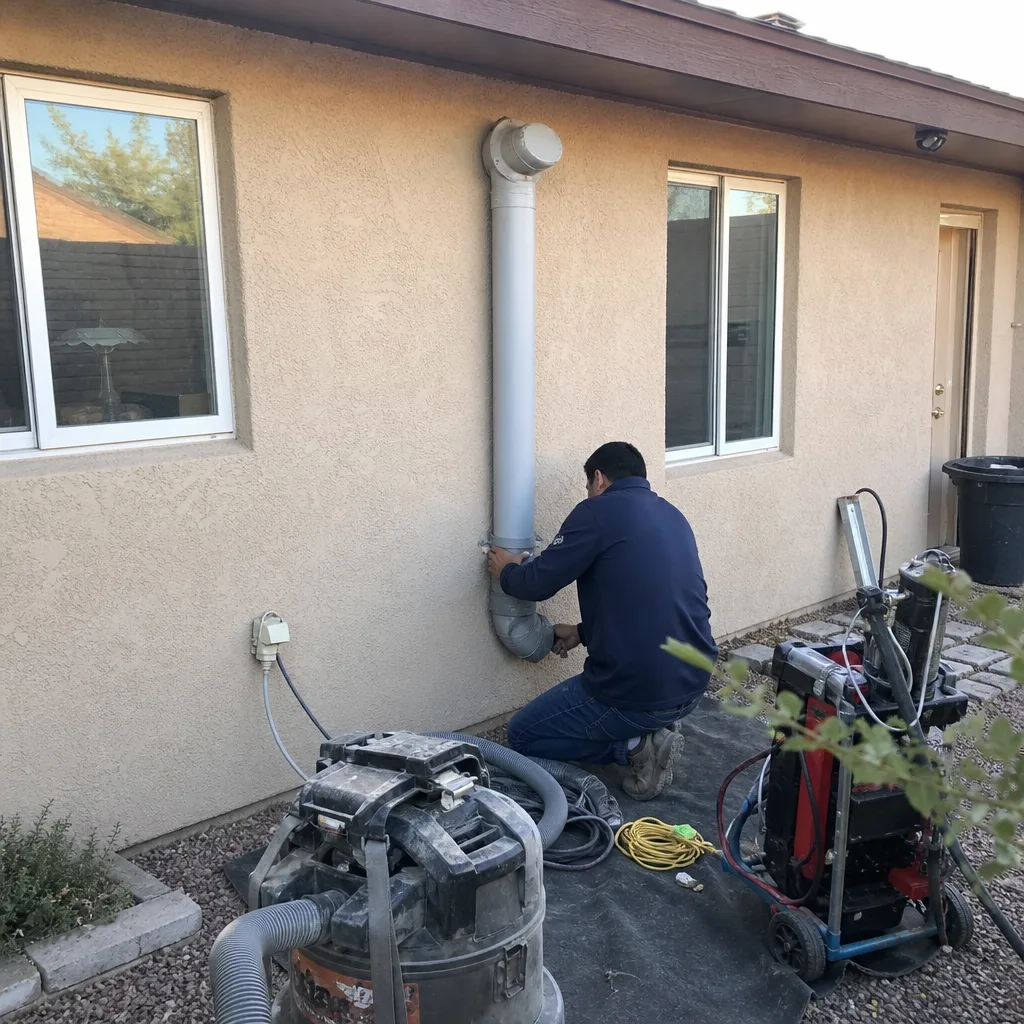 After
After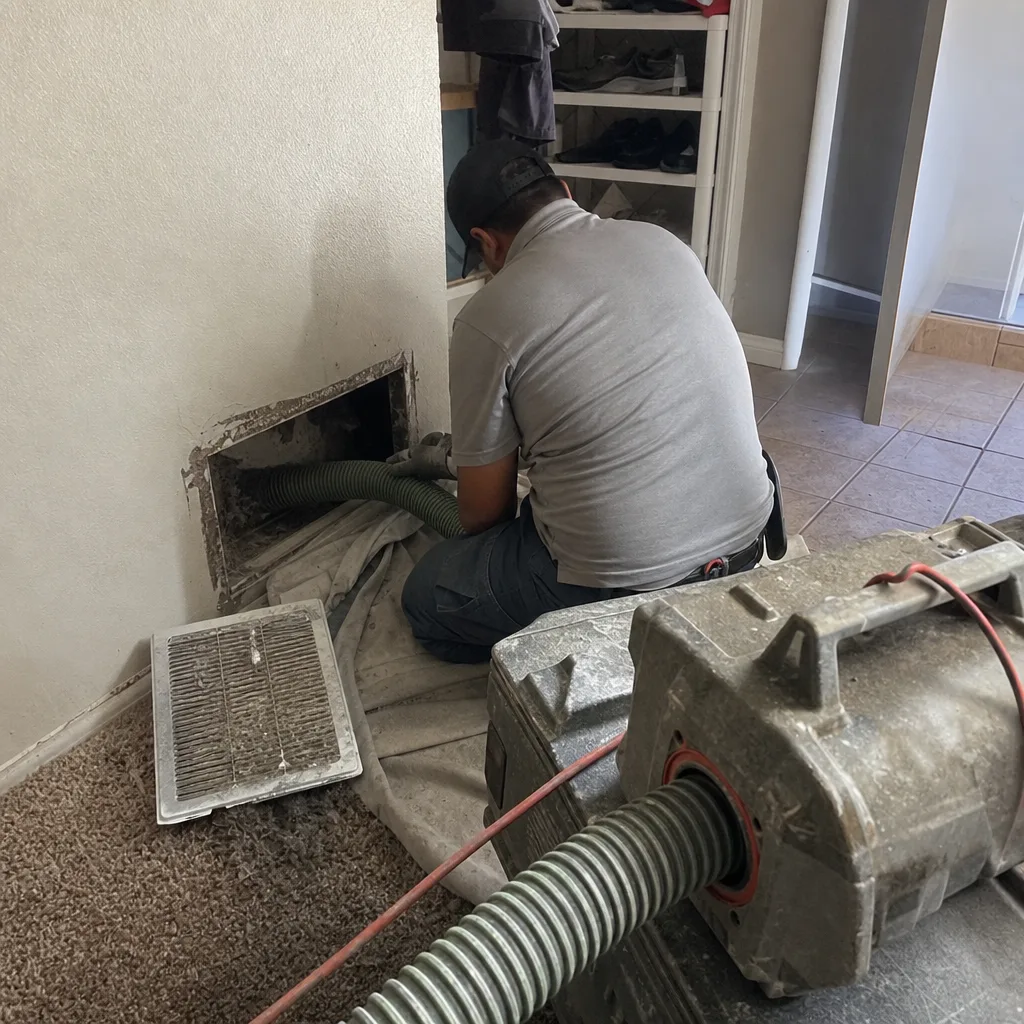 Before
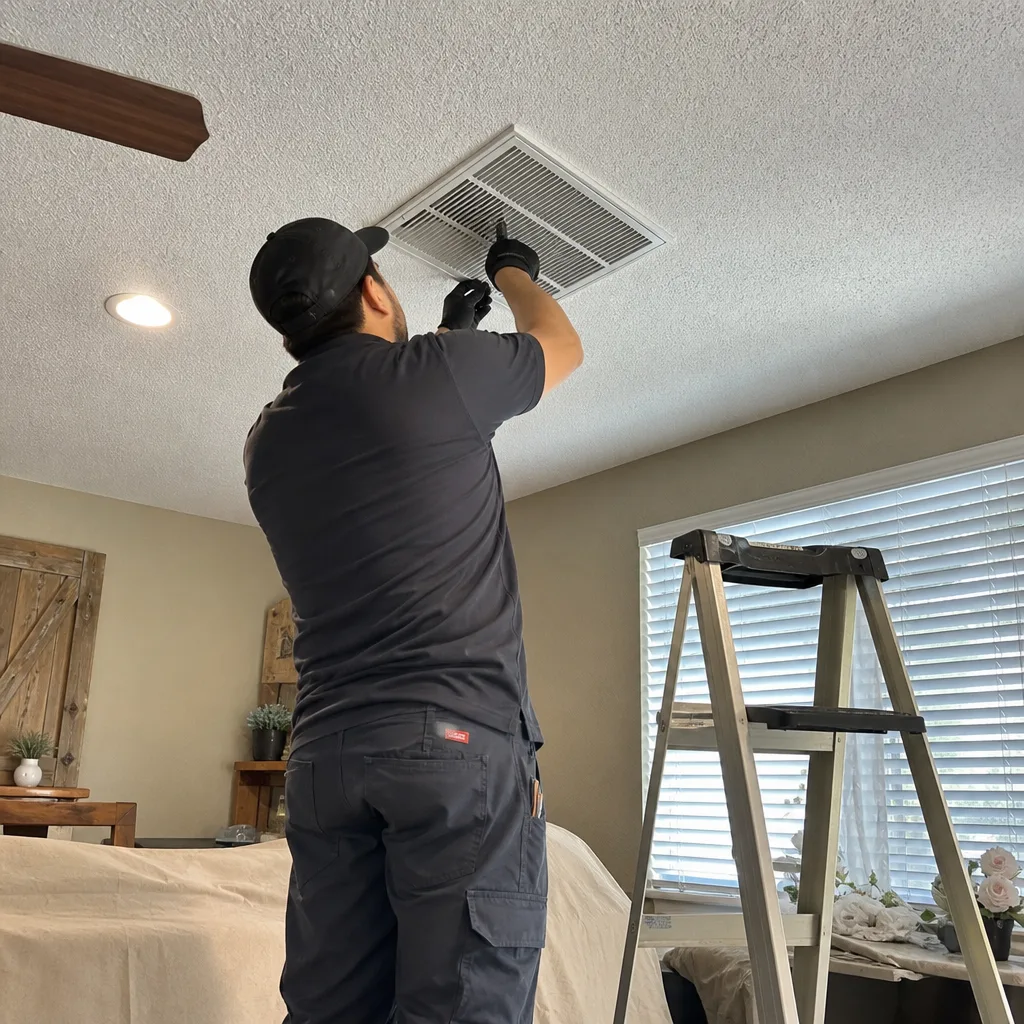 After
After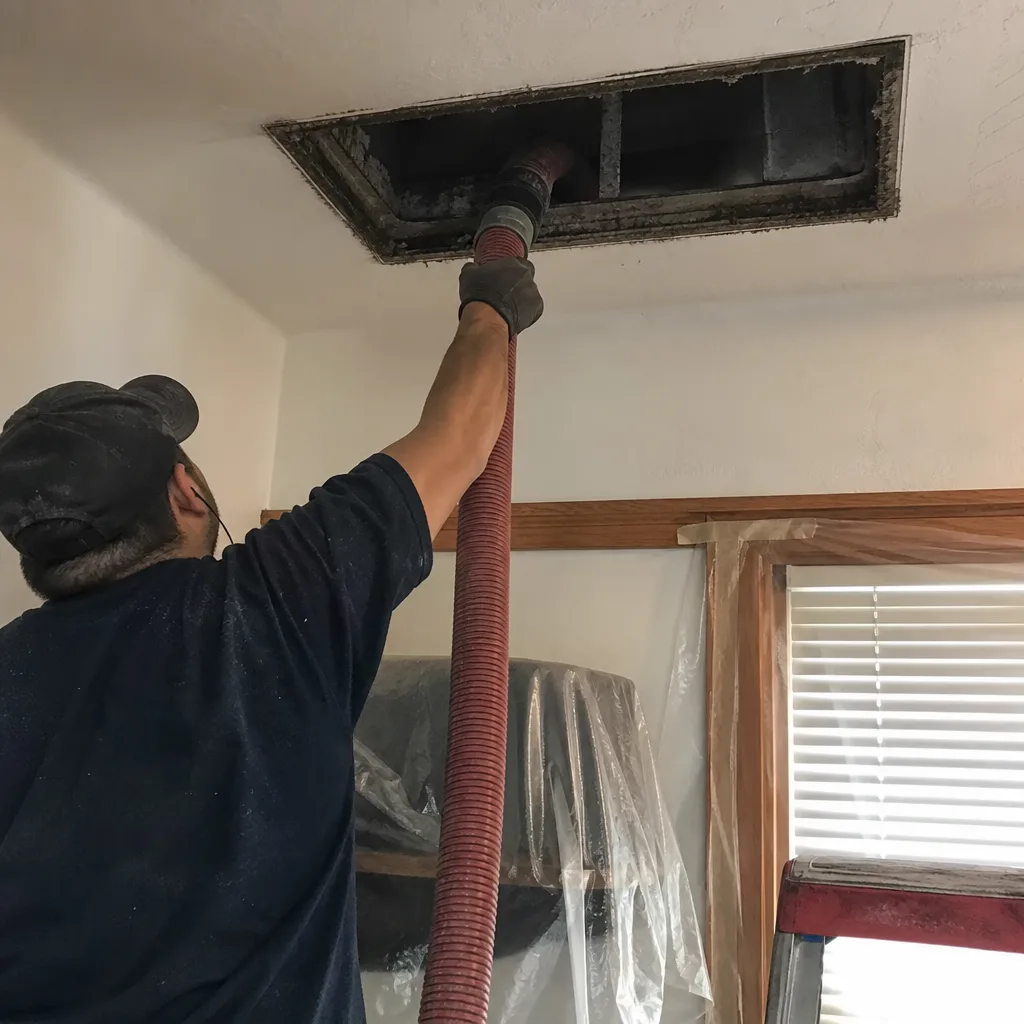 Before
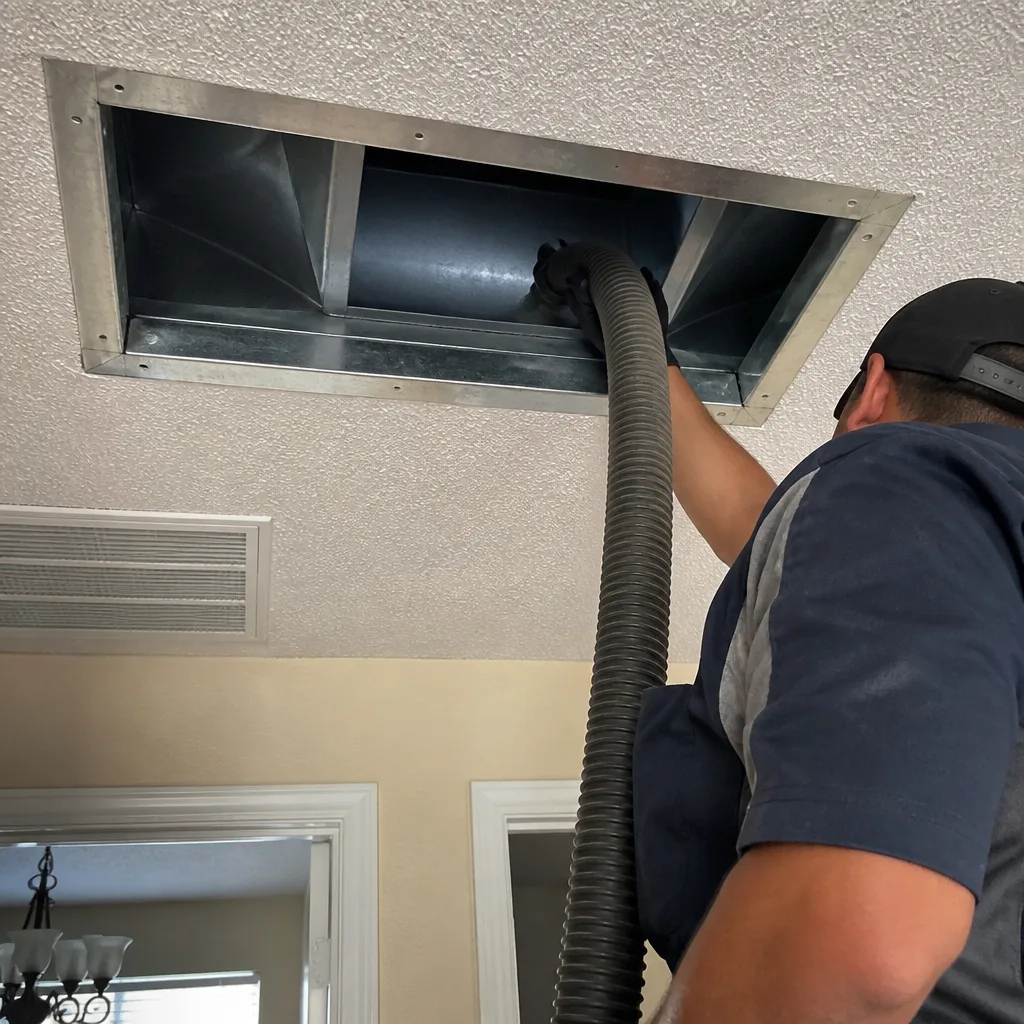 After
AfterAir Duct Cleaning Maintenance Checklist for Mesa Homeowners
The standard advice - clean your ducts every 3-5 years - was written for homes in temperate climates that run heating and cooling a few months each. A Mesa home running its AC eight months a year, pulling in monsoon dust, caliche powder, and cottonwood debris through a 110-degree summer, accumulates duct contamination at roughly twice that rate. Yet most checklists still treat Mesa like Cleveland with better sunsets. This guide gives you observable, photographable indicators tied to Mesa’s actual climate calendar, so every checklist item has a pass/fail answer, not a vague “consider having it checked” - and for Air Duct Cleaning Warning Signs: A Mesa Homeowner’s Reference Guide, see our companion resource.
Quick Answer
Mesa homeowners should inspect return grilles monthly with a white cloth test, replace filters every 30-60 days during peak cooling season, and schedule our Air Duct Cleaning services when debris buildup exceeds 1/8 inch or when the white cloth shows gray streaking that does not wipe clean. The critical maintenance windows are pre-monsoon (May), post-monsoon (October), and mid-summer (July-August) when filter load peaks.
Table of Contents
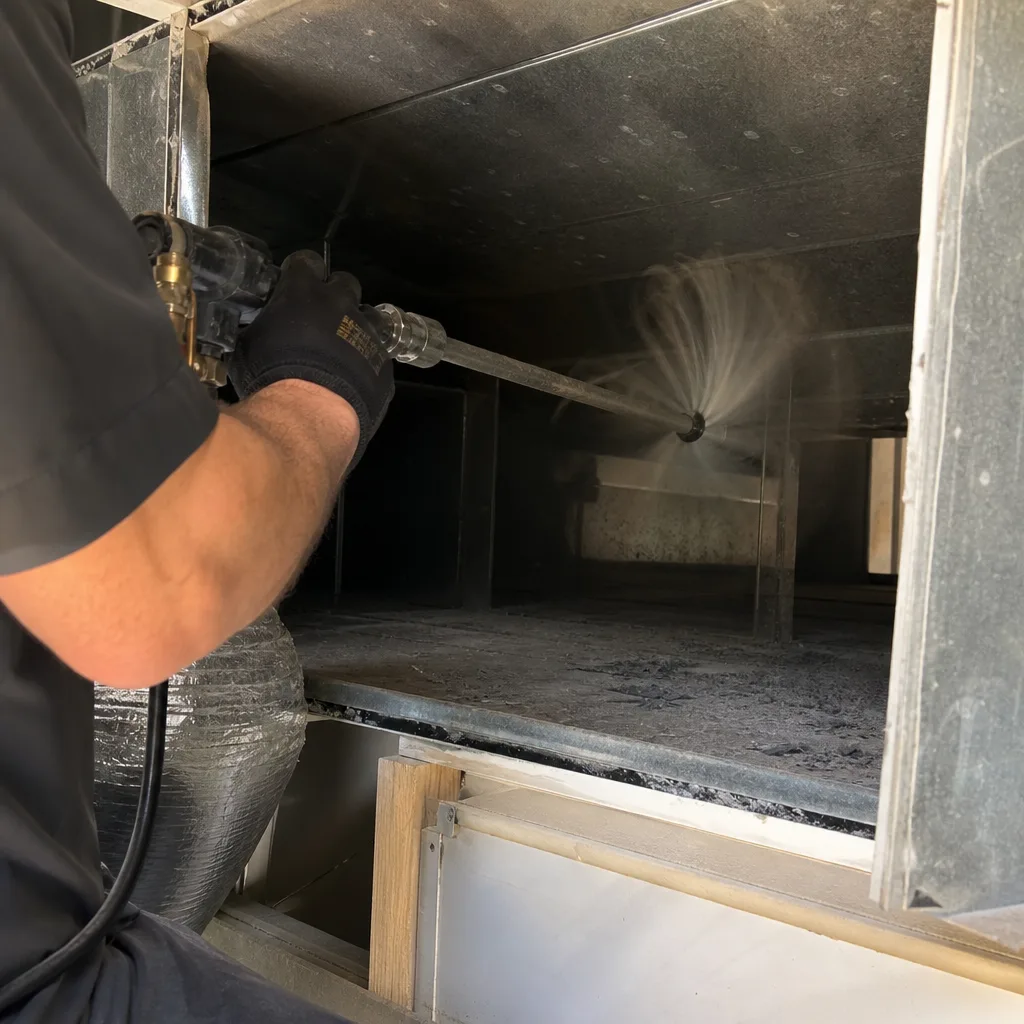
- The Mesa Climate Calendar: When Debris Actually Enters Your System
- The White Cloth Test: Reading Your Return Grilles Like a Technician
- Filter MERV Ratings and Static Pressure in Older Mesa Homes
- The Three-Point Access Inspection (No Tools Required)
- Building Your Own Documented Baseline
- Month-by-Month Maintenance Checklist
- What Your Equipment Is Telling You
- Common Mistakes to Avoid
- When to Call a Professional
- Frequently Asked Questions
BeforeAfterThe Mesa Climate Calendar: When Debris Actually Enters Your System
Mesa’s desert climate creates three distinct contamination windows that don’t appear on generic maintenance schedules. Understanding when debris enters your system lets you time inspections for maximum usefulness.
Pre-monsoon (late May through early June): The buildup to Arizona’s monsoon season brings sustained winds of 25-40 mph ahead of the first storms. In neighborhoods near the Salt River bed, like parts of Dobson Ranch and the Emerald Acres area, we’ve photographed return grilles caked with caliche dust so fine it passes through standard fiberglass filters. This is your last chance to inspect before the moisture arrives.
Peak cooling season (July-August): Your system runs 12-16 hours daily, and every cubic foot of air moves through the filter and ductwork. In Mesa’s 115-degree stretches, the air handler works at maximum capacity, and any restriction - clogged filter, debris in the evaporator plenum, the box that connects your air handler to the duct trunk - forces the blower motor to draw more amperage. This is when undetected problems become expensive ones.
Post-monsoon (October): The moisture that penetrated in July and August has now settled. Organic material that entered wet has dried, and the resulting particulate is lighter, more easily airborne, and more likely to carry microbial content. We’ve found that post-monsoon inspections in Mesa homes reveal debris colors distinctly different from pre-monsoon samples - more browns and blacks, less gray caliche.
Winter light-use period (December-February): Your system runs minimally. This is baseline-establishment season. Photograph your cleanest accessible register now, and you’ll have a comparison point for every future inspection.
The White Cloth Test: Reading Your Return Grilles Like a Technician
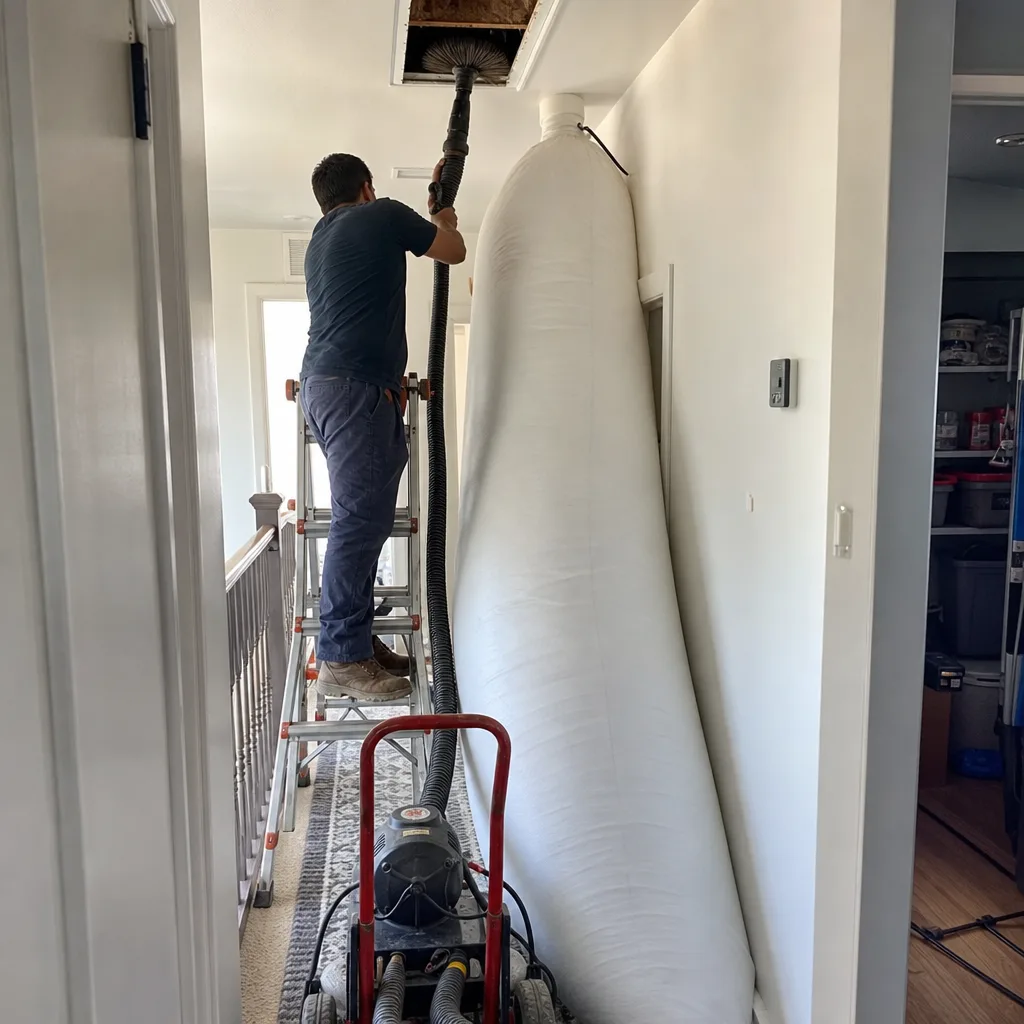
The white cloth test takes 60 seconds and tells you more than most “duct inspection” phone apps. You need a white microfiber cloth, a flashlight, and a camera phone.
- Turn your system off and wait two minutes for debris to settle.
- Wipe the interior surface of a return grille - the grille that pulls air in, not the supply register that blows air out - with the white cloth, using moderate pressure across a 4-inch square area.
- Photograph the cloth in natural light before it dries.
- Note the color, texture, and whether the mark wipes away with a clean section of cloth.
What the colors mean in Mesa homes:
- Gray, talc-fine dust: Caliche and desert mineral particulate. Common in newer Mesa subdivisions near construction zones, like parts of Eastmark or the developing areas southeast of Loop 202. This material is abrasive to blower motors and indicates your filter is either missing, improperly seated, or undersized for the air volume.
- Brown or tan, fibrous material: Organic debris - cottonwood seed, mesquite leaf fragment, pet dander concentrated by recirculation. In Mesa’s mature neighborhoods like Las Sendas or Alta Mesa, mature shade trees contribute heavily to this category. Brown debris that smears when dampened suggests recent moisture intrusion, possibly from a poorly sealed return chase in an exterior wall.
- Black or dark gray, sooty: This demands immediate attention. In Mesa, black particulate in ducts typically indicates one of three conditions: a cracked heat exchanger in a gas furnace (carbon monoxide risk), electrical arcing in the air handler, or - more commonly - a severely clogged filter that has collapsed and allowed unfiltered air to bypass. We’ve found collapsed filters in Mesa homes where homeowners upgraded to high-MERV pleated filters without verifying the filter rack could support the increased pressure drop.
- White, crystalline residue: Evaporator condensate that has carried mineral content from the water supply and dried. This indicates a drainage problem in your air handler’s drain pan, the shallow pan beneath the evaporator coil that catches condensation.
The photograph matters. Date it, note which room and which grille, and store it. When a contractor tells you your ducts “need” cleaning, you have a dated record of what normal looks like in your specific home.
Filter MERV Ratings and Static Pressure in Older Mesa Homes
Minimum Efficiency Reporting Value, or MERV, measures how effectively a filter captures particles of specific sizes. The scale runs 1-20. For residential HVAC, the common range is 8-16. The trap most Mesa homeowners fall into is assuming higher is always better.
Here’s the physics: every filter creates resistance to airflow, measured as pressure drop. A MERV 8 pleated filter might create 0.08 inches of water column pressure drop when clean. A MERV 13 of the same dimensions can create 0.22 inches or more. That difference matters enormously in Mesa’s older housing stock.
Mesa has significant neighborhoods built during the 1970s-1990s boom: Dobson Ranch, Leisure World, large sections of West Mesa near Alma School Road. The air handlers in these homes were typically sized with budget constraints and simpler filter designs. The blower motors are often permanent split-capacitor types, not the variable-speed ECM motors in post-2005 equipment. A PSC motor cannot compensate for increased restriction by ramping up; it simply draws more current, runs hotter, and fails sooner.
We’ve measured static pressure in Mesa homes where a homeowner’s well-intentioned MERV 13 upgrade pushed total external static pressure above 0.7 inches of water column. Manufacturer specification for most residential air handlers is 0.5 inches maximum. The result: reduced airflow across the evaporator coil, ice formation in summer, compressor damage, and - paradoxically - worse filtration because air bypasses the overloaded filter through gaps in the rack.
The Mesa-specific rule: Before upgrading above MERV 11, have a technician measure total external static pressure with the system running. This takes 10 minutes with a manometer, a pressure-measurement instrument. If your static pressure exceeds 0.4 inches with a clean MERV 8 installed, your system likely cannot handle a higher rating without duct modification. In Mesa’s climate, a properly functioning MERV 8 changed every 30 days outperforms a choked MERV 13 changed every 90 days.
For homeowners in newer Mesa construction - 2005 and later, common in Red Mountain Ranch, Las Sendas, or the newer Superstition Springs areas - ECM motors and larger filter cabinets often accommodate MERV 13 without issue. The check is still worth doing. HVAC cleaning in Mesa should include static pressure documentation as standard practice.
The Three-Point Access Inspection (No Tools Required)
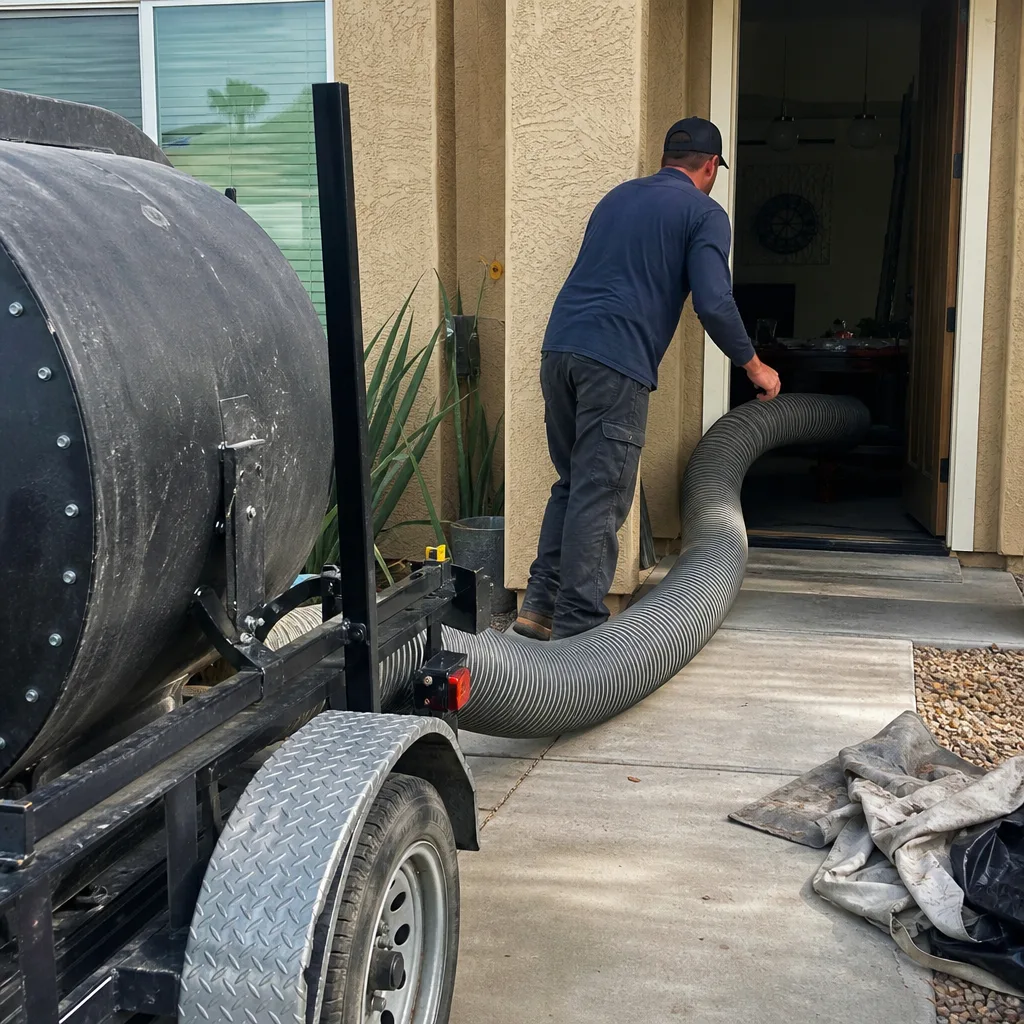
You do not need to open sealed ductwork to gather useful information. Three accessible points in every Mesa home tell most of the story.
Point 1: The Return Grille
Remove the grille - typically two spring clips or a thumb latch. Shine a flashlight into the duct boot, the short metal transition between the grille and the main trunk line. You’re looking for:
- Debris depth at the bottom of the boot. More than 1/8 inch of settled material suggests the trunk line has significant accumulation.
- Staining patterns on the metal. Dark streaks indicate air bypass, usually at filter edges or rack gaps.
- Moisture marks or corrosion. In Mesa, this is uncommon but critical when found; it suggests a humidifier malfunction or, in homes with evaporative cooling history, residual moisture damage from a “swamp cooler” conversion.
Point 2: The Supply Register Nearest the Air Handler
This register - usually in a hallway or central room - receives air with the least duct travel, so it shows the condition of air leaving the handler most directly. Remove the register and inspect:
- The back of the register itself. Heavy dust here means unfiltered air is reaching the supply side, which should not happen in a properly maintained system.
- The duct boot interior. Look upstream with your flashlight. In Mesa homes, we commonly find 1/4 to 1/2 inch of gray caliche dust coating the first 3-4 feet of supply duct from the plenum. This is the highest-velocity zone, where particulate impacts and adheres.
Point 3: The Air Handler Drain Pan
Located at the bottom of your indoor unit, typically in a closet, attic, or garage. In Mesa, attic installations are common in homes built 1985-2005. Access varies; some pans have a view window, others require removing a panel (usually four screws, but check your manual - some units have interlock switches that shut power when panels are removed).
What to look for:
- Standing water. The pan should be dry between cooling cycles. Persistent water indicates a clogged condensate line, a cracked pan, or - in Mesa’s hard water areas - mineral buildup elevating the drain port.
- Biological growth. Pink, orange, or black slime in the pan means microbial colonization. The same organism is almost certainly present on the evaporator coil and in the downstream ductwork.
- Rust or corrosion. Galvanized steel pans in Mesa homes often show accelerated corrosion from condensate chemistry. A compromised pan can leak into ceilings or walls before you notice any duct performance issue.
Photograph all three points. Date them. These are your baseline images.
Building Your Own Documented Baseline
The duct cleaning industry in Mesa, like everywhere, has a documentation problem. Most homeowners have no record of what their ducts looked like before service, no photograph of what “clean” was defined as, and no way to verify that work performed matched work promised. The result is predictable: a $79 coupon special that runs a vacuum hose for 20 minutes and leaves 80% of debris in place.
Your documented baseline protects you. Here’s how to build it.
- Establish the pre-condition record. Before any professional service, photograph every accessible point from the three-point inspection. Use your phone’s timestamp. Store images in a dedicated folder: “HVAC Baseline [Date].”
- Photograph the filter state. Remove the filter, photograph both sides against a neutral background, note the MERV rating and installation date written on the frame. This proves filter maintenance history if warranty or service disputes arise.
- Document any visible ductwork in unfinished spaces. Mesa homes with attic air handlers often have exposed flex duct or metal trunk lines in the attic. Photograph these for future comparison. Look for disconnected joints, crushed flex duct, or UV degradation of insulation (common in Mesa attics that exceed 140 degrees in summer).
- Request the contractor’s documentation before work begins. At CleanRun Air Duct Cleaning Mesa, every job includes a Documented Photo Record of every duct run, before and after, delivered as a standard job record. If a contractor cannot or will not provide this, that is information. The photo record is not a bonus; it is evidence that work occurred in the specific location claimed.
- Store the post-service record with the pre-service record. Compare. The difference should be visible, dramatic, and specific to your home’s ductwork, not stock photography.
We’ve served over 52,000 homes since 2013, and the customers who maintain their own documented baselines are the customers who never need our Free Second Opinion service. They already know what they have.
Month-by-Month Maintenance Checklist
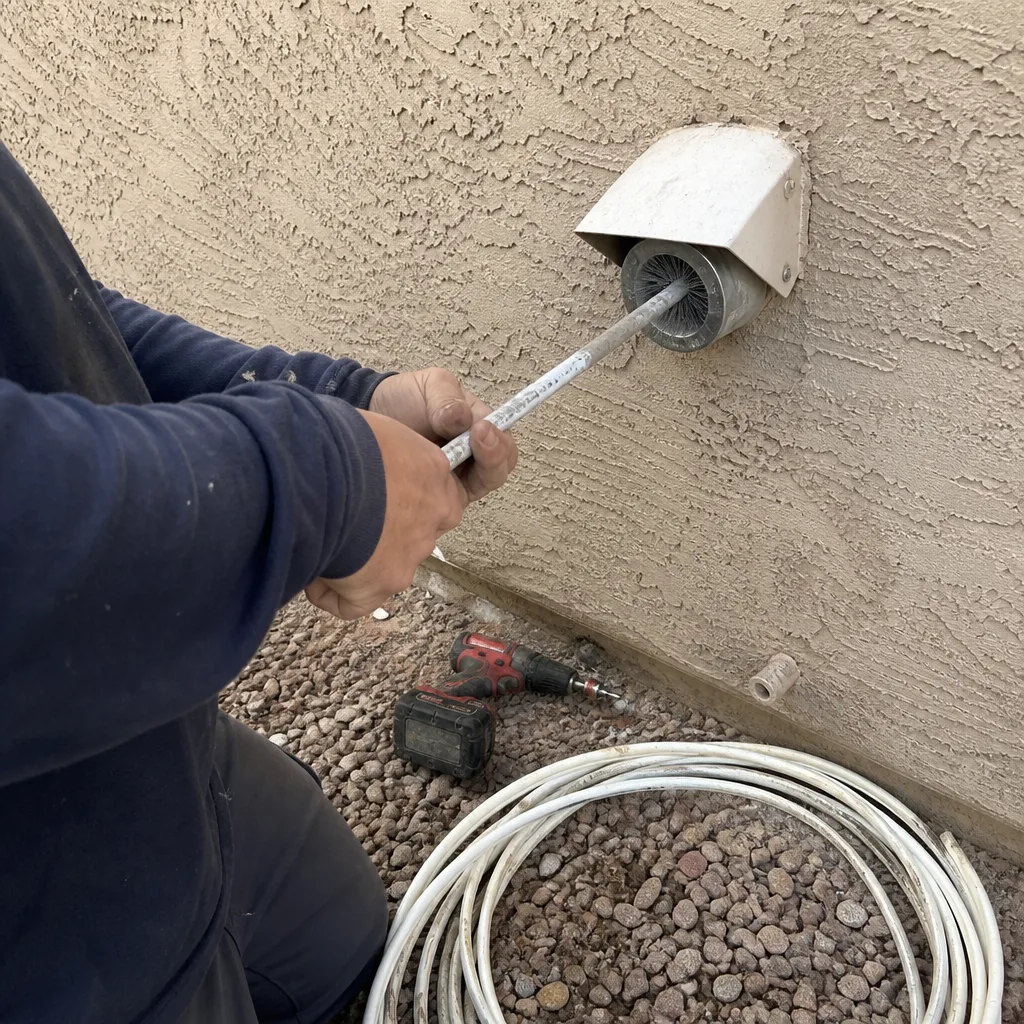
This checklist ties specific actions to Mesa’s climate reality. “Inspect” means perform the white cloth test and visual check. “Replace” means install a new filter regardless of apparent condition - Mesa’s dust load degrades filter media faster than visual inspection reveals.
| Month | Action | Mesa-Specific Trigger |
|---|---|---|
| January | Inspect; photograph baseline | Light use period; establish clean reference images |
| February | Inspect | Occasional heating use; check for heat exchanger debris if gas furnace |
| March | Replace filter | Cottonwood bud break begins; pre-pollen load |
| April | Inspect | Rising temperatures; first sustained AC use |
| May | Replace filter; full three-point inspection | Pre-monsoon winds; caliche dust peak |
| June | Inspect after first monsoon storm | Moisture intrusion check; debris composition changes |
| July | Replace filter | Peak cooling load; filter saturation accelerates |
| August | Replace filter; inspect | Sustained 110+ temperatures; maximum system stress |
| September | Inspect | Monsoon tail; humidity begins dropping |
| October | Replace filter; full three-point inspection | Post-monsoon organic debris dried and mobile |
| November | Inspect | Transition to heating; check for summer accumulation in furnace section |
| December | Inspect; update annual photo record | Year-end baseline comparison |
Filter replacement frequency assumes standard 1-inch pleated filters and continuous AC operation. Homes with 4-inch media filters, the thicker filters common in newer Mesa construction, can extend to 90-day intervals. Homes with multiple pets, active construction nearby, or residents with respiratory sensitivity should shorten intervals by 50%.
What Your Equipment Is Telling You
Your HVAC system produces observable symptoms that correspond to specific duct conditions. Learning to read them prevents small problems from becoming expensive ones.
Uneven cooling between rooms: In Mesa’s summer, a bedroom that won’t cool below 78 degrees while the living room holds 72 often indicates a disconnected or crushed supply duct, not a failing air conditioner. We’ve found completely separated flex duct in Mesa attics where 140-degree heat rendered the duct tape adhesive ineffective. The room receives no conditioned air; the thermostat, usually in a central location, reads satisfaction while the bedroom swelters.
Longer cooling cycles with less result: If your system runs continuously during afternoon hours but indoor temperature climbs, check the filter first, then the evaporator coil. A coil coated with debris acts as insulation, preventing heat exchange. In Mesa, this often follows a monsoon season where moisture carried particulate past the filter and deposited it on the wet coil surface. Air duct cleaning in Mesa should include coil inspection when this symptom appears.
Unusual blower noise: A rumble or vibration that changes with fan speed often indicates debris contacting the blower wheel. In Mesa homes, we’ve extracted construction debris - drywall screws, wood scraps, even a child’s small toy - that entered during original construction and circulated until lodging in the wheel. The noise is diagnostic; it localizes to the air handler, not the ductwork.
Musty odor at startup: A brief moldy smell when the system first cycles often indicates microbial growth on the evaporator coil or in the drain pan, not necessarily in the ducts themselves. In Mesa’s dry climate, this is less common than in humid regions, but it occurs in homes with oversized AC systems that short-cycle without adequate dehumidification, or in homes where evaporative cooling was converted to refrigerated air without proper duct drying.
Dust accumulation on furniture within 48 hours of cleaning: This indicates duct leakage, not dirty ducts. Conditioned air escaping through leaks in the return side draws attic or wall cavity dust into the system; supply-side leaks pressurize the cavity and drive dust through ceiling penetrations. In Mesa, attic duct leakage is particularly costly: you’re paying to cool 140-degree attic air that never reaches your living space. Dryer vent cleaning in Mesa addresses a different leakage path but the same principle: sealed systems perform, leaky ones waste.
Common Mistakes to Avoid
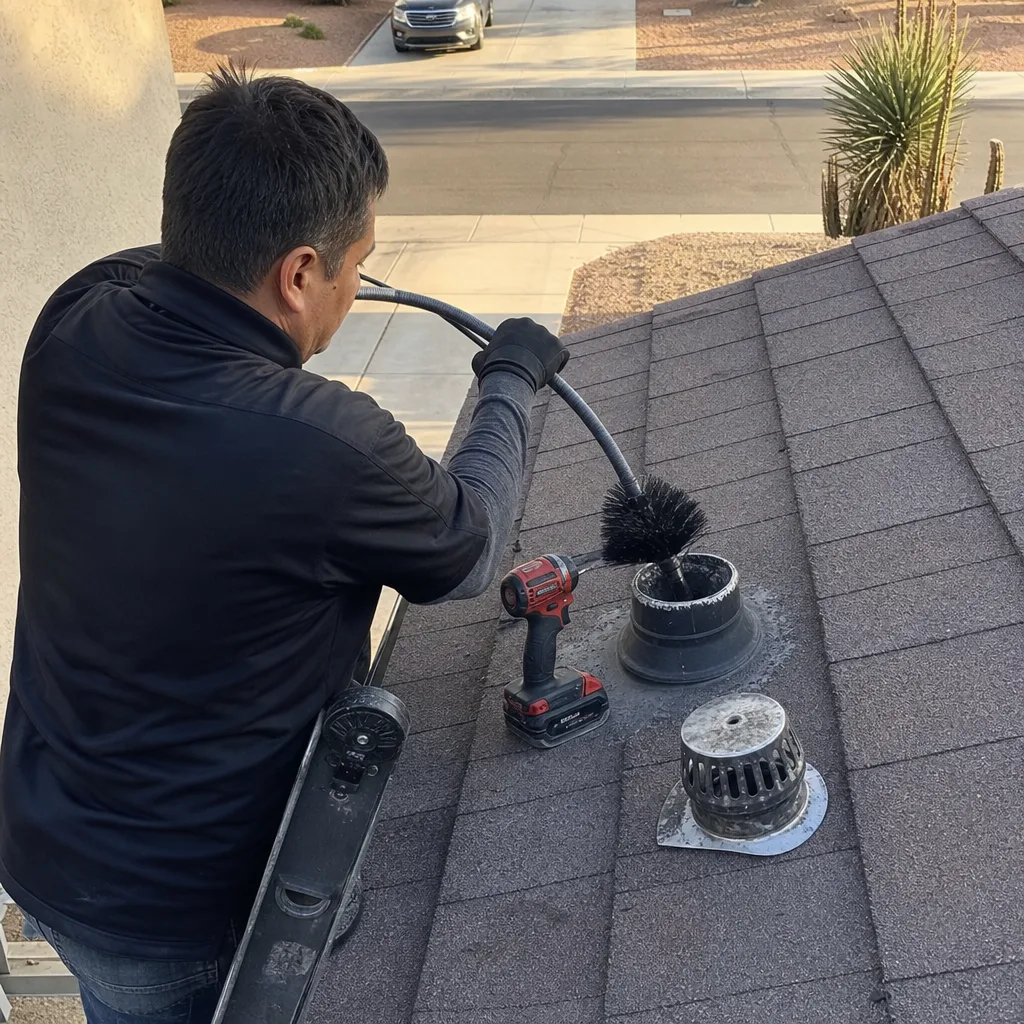
- Upgrading to MERV 13 without static pressure verification. We’ve replaced blower motors in Mesa homes where this single decision caused $800-$1,400 in damage. The filter is not “better” if it destroys the system it protects.
- Using the “filter slot” as a storage location for spare filters. We’ve found filters stored in the return air path, not installed in the rack, blocking airflow and creating a fire hazard. The slot is for one filter, installed correctly, with the airflow arrow pointing toward the blower.
- Ignoring the condensate drain until water appears. Mesa’s hard water mineral content builds gradually in drain lines. By the time water backs up into the pan or ceiling, the line is often completely occluded. Pour a cup of white vinegar through the drain port monthly during cooling season; the acidity dissolves mineral deposits without the damage that bleach causes to PVC.
- Accepting “duct cleaning” without specifying scope. A vacuum hose inserted at one register is not duct cleaning. Ask: how many access points will be created? Will the supply and return systems be cleaned separately? Will the plenum and coil be included? Will photographs be provided? CleanRun’s Haven Standard Clause 1 requires written scope and price before work begins; any contractor unwilling to specify is selling a visit, not a service.
- Sealing ducts with duct tape. The name is misleading. Standard cloth-backed duct tape fails within months in Mesa attic temperatures. Proper duct sealing uses mastic, a water-based paste that remains flexible, or foil-backed tape rated for high temperature. We’ve re-repaired countless “DIY seal” jobs where tape adhesive liquefied and dripped onto ceiling insulation.
- Assuming new construction means clean ducts. Mesa’s building boom has produced homes with construction debris in ductwork that was never protected during drywall sanding and flooring installation. We routinely find significant debris in homes less than two years old, particularly in fast-build subdivisions. The “new home” assumption costs homeowners years of reduced efficiency and excess dust.
When to Call a Professional
Call for professional evaluation when: the white cloth test shows black particulate; you observe standing water in the drain pan; cooling cycles lengthen without temperature reduction; a room becomes persistently warmer than others; or your documented baseline comparison shows visible degradation you cannot explain. These symptoms indicate conditions beyond routine homeowner maintenance. For regulatory context, read Air Duct Cleaning Permits, Codes & Inspections in AZ: What You Need to Know.
CleanRun Air Duct Cleaning Mesa offers free estimates in Mesa. Every estimate includes a written price before any work begins, under Haven Standard Clause 1, and every completed job includes a Documented Photo Record of every duct run. Call (602) 632-0849 to schedule. We also provide a Free Second Opinion on any written estimate from another contractor - bring their quote, and we’ll put our number next to it in writing.
Frequently Asked Questions
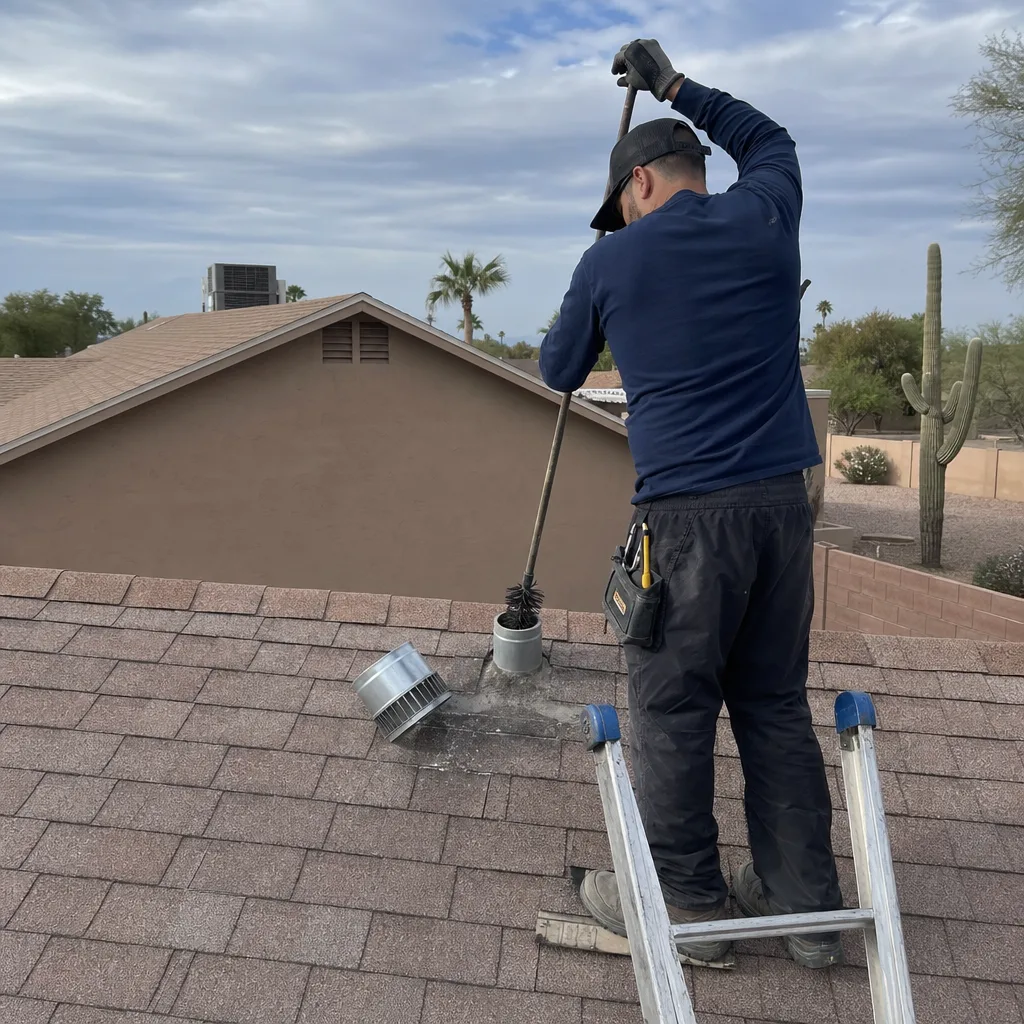
Whole-system duct cleaning for a typical Mesa home ranges from $450 to $850 depending on system size, accessibility, and contamination level. CleanRun provides a written price before any work begins; there is no per-vent pricing structure that inflates the final invoice. Call (602) 632-0849 for an exact quote - estimates are free.
The $79-$149 coupon specials typically cover a brief vacuum insertion at one or two access points, without negative-pressure extraction equipment, without access to the full duct network, and without documentation. The industry term is “blow-and-go.” A proper cleaning requires mechanical agitation - equipment like Rotobrush or Nikro systems - combined with negative-pressure containment, multiple access points, and photographic verification. The cheap quote becomes expensive when you pay twice for the same inadequate service.
Demand a documented photo record of every duct run, before and after, with timestamps. At CleanRun, this is standard on every job, included in the base price, delivered to the customer as part of the job record. If a contractor’s “proof” is verbal assurance or a generic after-photo that could be from any home, you have no evidence specific to your system. The photo record is your protection against paying for vacuum noise.
For Mesa’s climate, every 2-3 years for homes with standard maintenance, every 1-2 years for homes with pets, recent construction nearby, or residents with allergies. The generic “3-5 year” advice underestimates desert dust load by half. Use the white cloth test monthly; when debris accumulation exceeds 1/8 inch or the test shows persistent gray streaking, schedule service regardless of elapsed time.
You can and should maintain filters, grilles, and visible access points. You cannot safely or effectively clean the full duct network without negative-pressure extraction equipment and mechanical agitation tools. More importantly, you cannot document the condition of interior duct surfaces without a borescope camera. Professional service is justified by the equipment required and the documentation produced, not merely by labor.
Modestly and conditionally. The Department of Energy estimates that duct cleaning alone improves HVAC efficiency by 10-15% in systems with significant debris accumulation. The larger savings come from sealing duct leaks, which CleanRun addresses through CleanRun Air Duct Cleaning Mesa home services including duct repair and sealing. In Mesa’s climate, a 10% efficiency improvement on a $300 monthly summer cooling bill returns the cleaning cost in one season.
The Bottom Line
Mesa’s climate demands a maintenance checklist built for eight months of continuous AC operation, monsoon moisture events, and desert particulate loads that generic schedules underestimate. For more guides & resources on keeping your system running efficiently, explore our blog. The white cloth test, the three-point inspection, and a self-maintained photo baseline give you objective pass/fail criteria for every decision. Filter maintenance is not a calendar guess; it’s a pressure-and-load calculation specific to your home’s age and equipment. Documentation protects you from an industry that too often sells confidence instead of evidence. The maintenance that matters is the maintenance you can verify.
Written by Tomas Reyes, Owner at CleanRun Air Duct Cleaning Mesa, serving Mesa since 2013.