
Last updated September 23, 2026
Whole-system duct and dryer vent check with before-and-after photos - you see exactly what came out of your vents
That "$99 whole-house special" is a bait ad - the real number appears once they are in your hallway, or the "clean" is a shop-vac at the register. We photograph the inside of your ducts before and after instead.
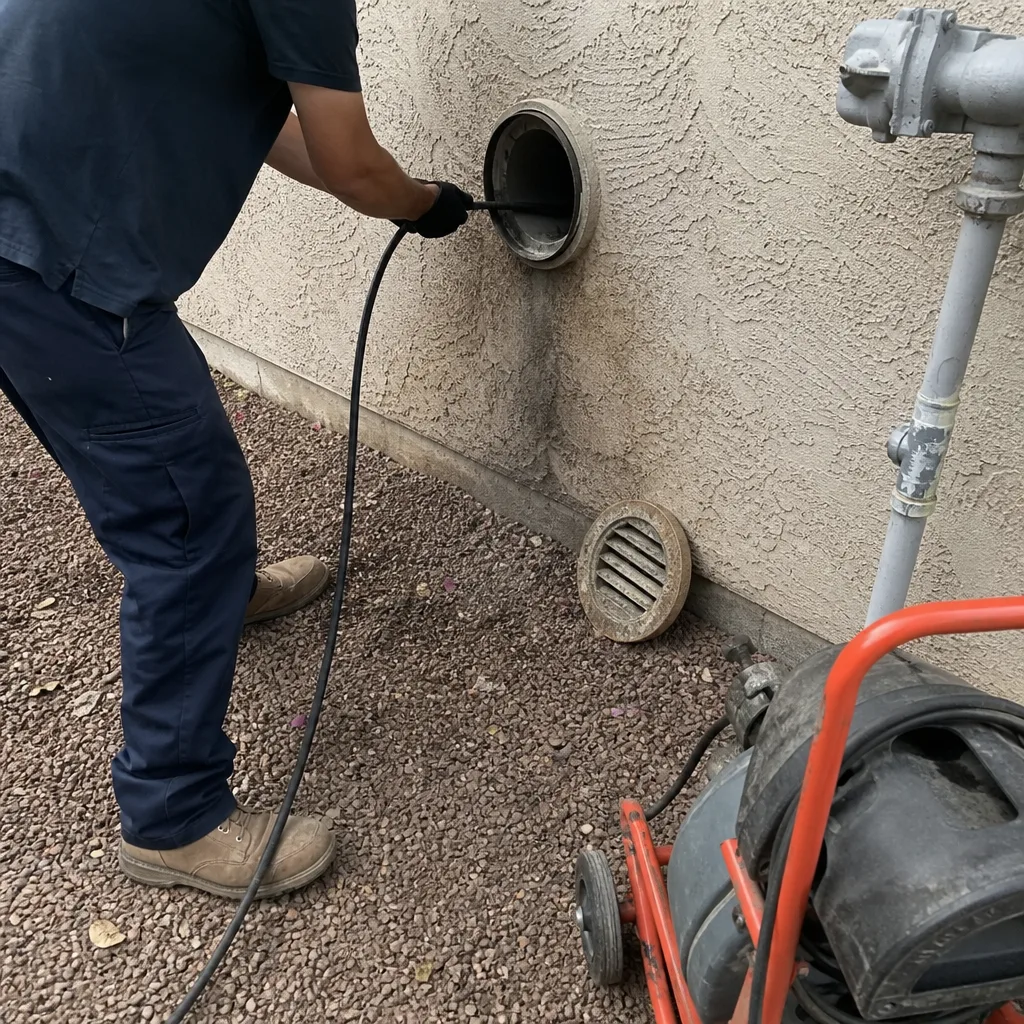 Before
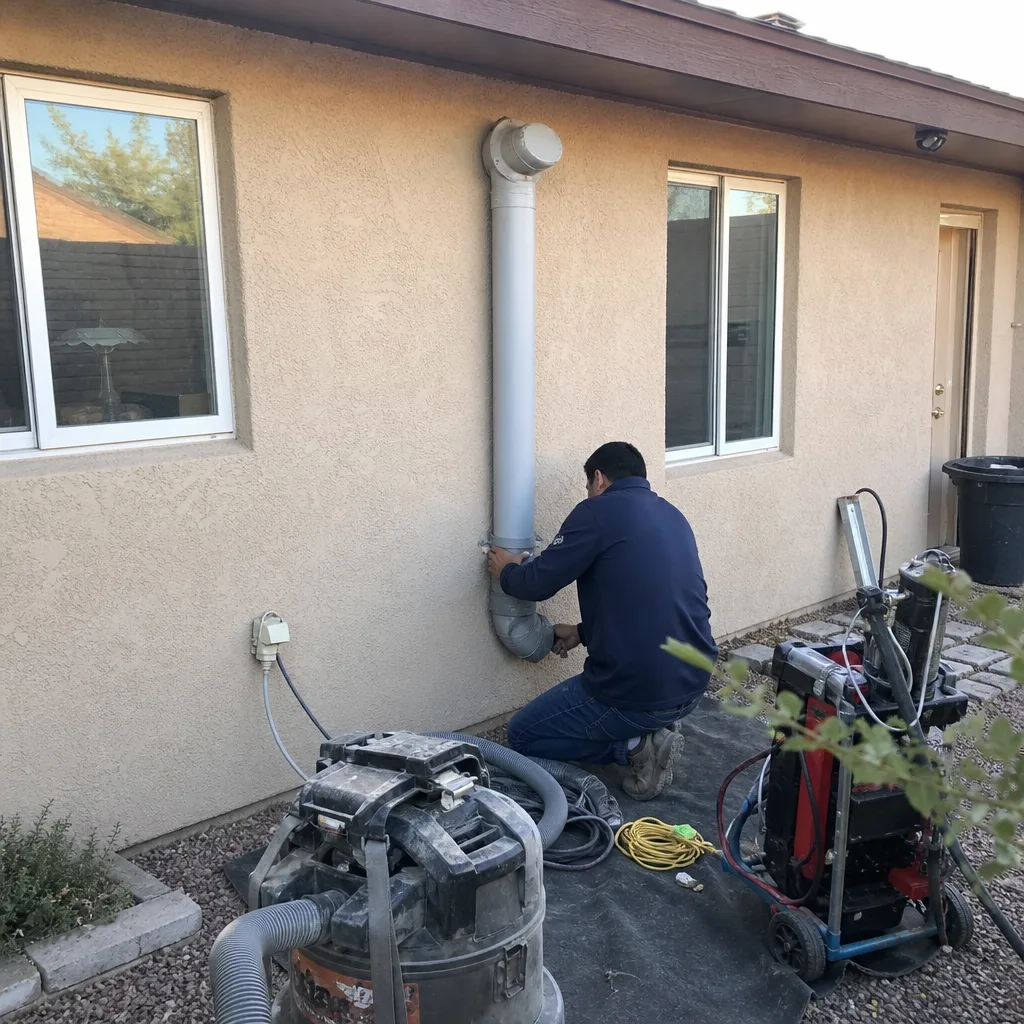 After
After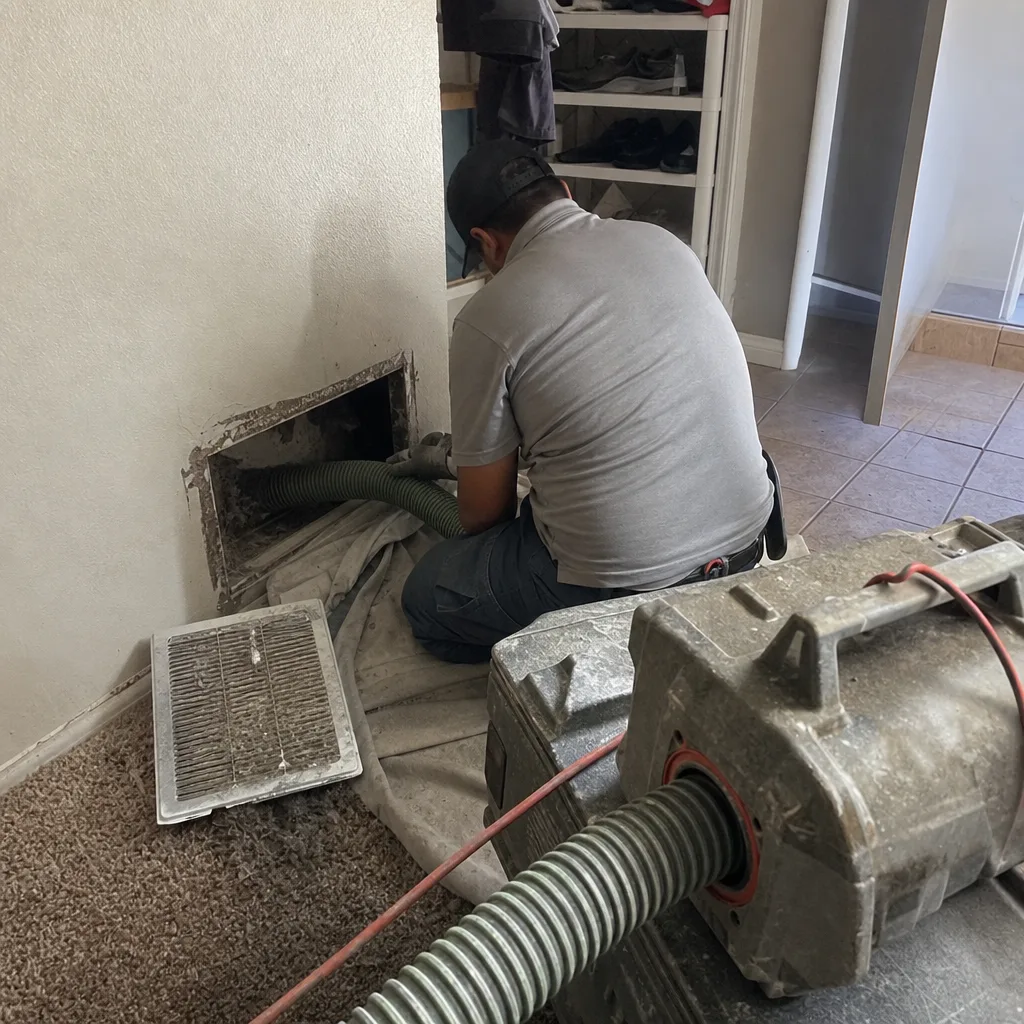 Before
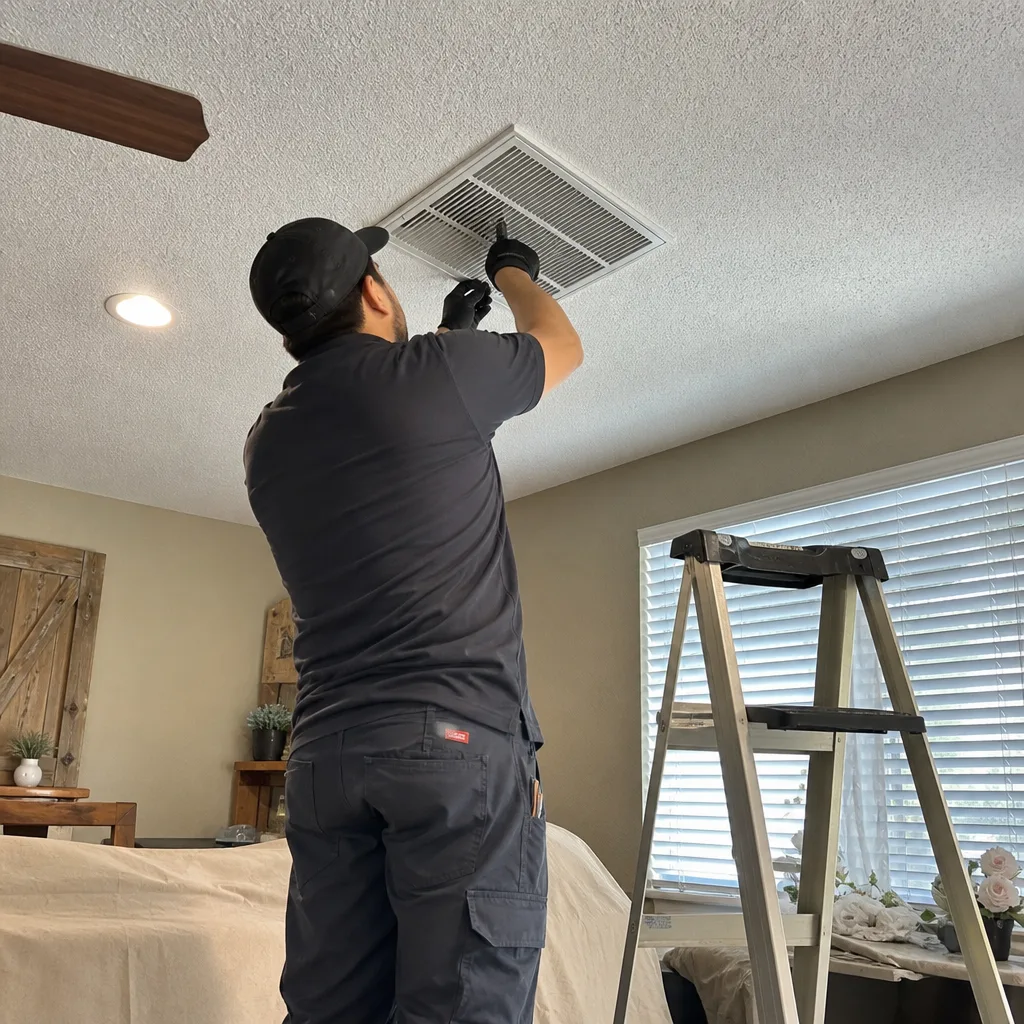 After
After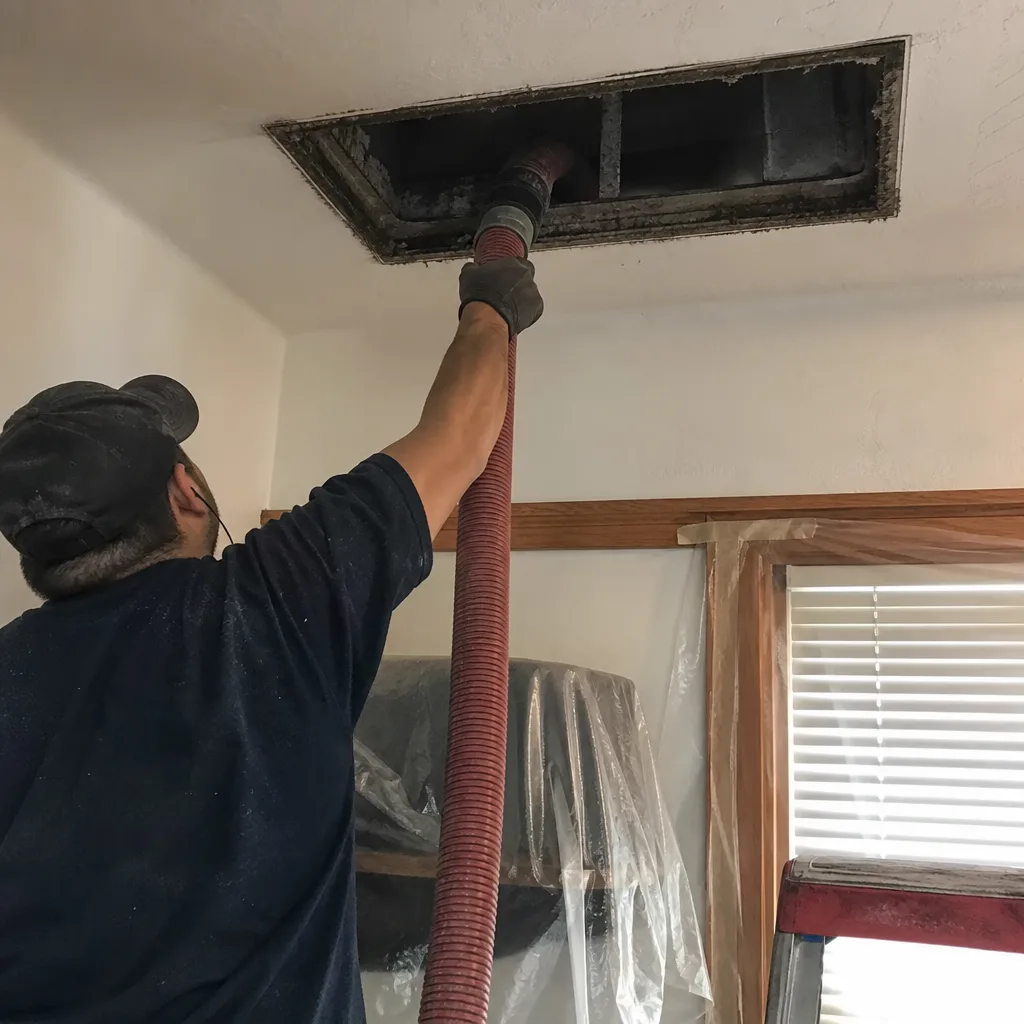 Before
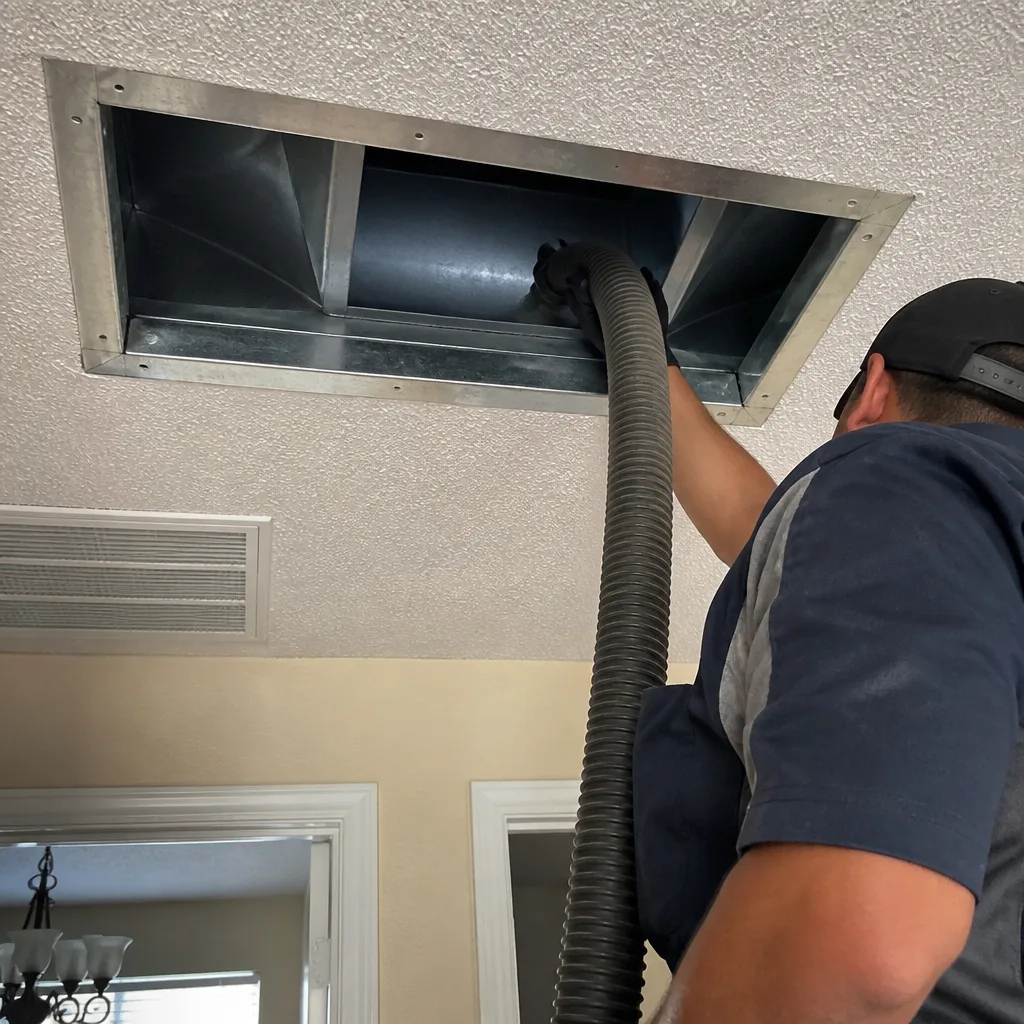 After
AfterAir Duct Cleaning Permits, Codes & Inspections in AZ: What You Need to Know
Here’s the surprise most Mesa homeowners learn too late: standard air duct cleaning requires zero permits in Arizona, but the exact same technician with the exact same truck can cross into criminal unlicensed contracting the moment they cut an access panel, replace a collapsed duct segment, or install a UV sanitizer. We’ve been called to homes in Dobson Ranch and Las Sendas where a simple our Air Duct Cleaning services turned into a $4,000 retrofit, only for the seller to discover at closing that none of it was permitted. The Arizona Mechanical Code draws a sharp line between maintenance and alteration, and this guide shows you exactly where that line sits, what it costs to fix a permit mistake, and the specific questions to ask before any panel comes off your ductwork.
Quick Answer
Air duct cleaning itself - the removal of debris from existing ductwork using negative-pressure extraction or rotary brushing - is classified as routine maintenance under the Arizona Mechanical Code and requires no permit, as detailed in The Complete Guide to Air Duct Cleaning in Mesa. However, any modification to the duct layout, replacement of duct segments, installation of access panels, or addition of mechanical components like UV lights or electronic air cleaners triggers permit and inspection requirements under AMC Section 107, with work required to be performed by a licensed contractor. In Mesa, after-the-fact permits for unpermitted ductwork cost roughly double the original fee and require visible access for inspection.
Table of Contents
- The Arizona Mechanical Code: Maintenance vs. Alteration
- When Duct Cleaning Becomes Construction Work
- How Mesa Handles Ductwork Permits and Inspections
- The Cost and Process of After-the-Fact Permits
- Insurance Implications of Unpermitted Duct Modifications
- What to Ask a Contractor Before They Cut Into Your Ductwork
- How CleanRun Documents Every Job Under the H.A.V.E.N. Standard
- Common Mistakes to Avoid
- When to Call a Professional
- Frequently Asked Questions
BeforeAfterThe Arizona Mechanical Code: Maintenance vs. Alteration
The Arizona Mechanical Code, which adopts the 2018 International Mechanical Code with state amendments, governs all mechanical work in Maricopa County. Section 107 establishes the permitting framework, but the critical distinction appears in how the code defines “repair” versus “alteration” in mechanical systems.
Maintenance and repair - the activities that keep existing equipment in operating condition - do not require permits. This includes:
- Cleaning debris from existing duct runs (the enclosed pathways that carry conditioned air)
- Removing and reattaching registers and grilles for access
- Applying mastic sealant to existing joints without changing duct routing
- Replacing filters and cleaning coils within existing housings
Alteration, by contrast, is any work that changes the capacity, layout, or design of the system. The AMC specifically references ductwork modifications that affect airflow distribution, which includes cutting new access panels (permanent openings not part of original design), replacing duct segments with different materials or diameters, rerouting ducts to serve different spaces, and installing new mechanical components like UV germicidal lamps or whole-house dehumidifiers.
The climate context matters here. In Mesa, where summer attic temperatures routinely exceed 140°F, flex duct deteriorates faster than in cooler markets. A technician performing routine cleaning in a 2017-built home in Eastmark may discover collapsed or separated flex duct, one of the Air Duct Cleaning Warning Signs: A Mesa Homeowner’s Reference Guide. The moment they propose replacing that segment rather than cleaning around it, the job classification shifts from maintenance to alteration under AMC interpretation.
We’ve documented this exact scenario in our photo records from jobs in Alta Mesa and Red Mountain Ranch. The camera shows a separated duct at the plenum connection (the main distribution box where the air handler meets the duct system). Cleaning alone is pointless - the disconnected duct is dumping conditioned air into the attic. But reconnecting or replacing that duct requires a permit if the work involves new materials or changed routing.
The licensed contractor distinction is equally specific. Arizona Revised Statutes §32-1151 defines contracting without a license as a class 1 misdemeanor for first offenses and a class 6 felony for subsequent violations. A duct cleaning company operating without a contractor’s license cannot legally perform alteration work, regardless of their technical competence.
When Duct Cleaning Becomes Construction Work
The transition from maintenance to construction isn’t always obvious. We’ve identified five specific scenarios where duct cleaning operations cross into permitted work territory.
- Access panel installation. Many residential duct systems lack adequate access points for thorough cleaning. A technician may propose cutting a 12×12 inch access panel into the main trunk line or plenum. This is permanent modification to the duct envelope - alteration under AMC Section 107. The panel must be listed for HVAC use, gasketed, and the installation inspected for structural integrity and seal.
- Duct segment replacement. When flex duct has collapsed, torn, or separated at the collar, cleaning becomes moot. Replacement with new flex duct or conversion to rigid ductwork changes the system’s design characteristics. Even maintaining the same diameter, new materials have different friction coefficients and insulation values that affect system performance.
- Duct sealing beyond maintenance scope. Here’s where it gets nuanced. Spot-sealing accessible joints with foil tape or mastic during cleaning is routine maintenance. But systematic sealing of an entire duct system - particularly when it involves accessing and sealing joints inside walls or between floors - constitutes alteration if it changes the system’s tested airflow characteristics. The determining factor is whether the work requires access methods or materials beyond the original construction.
- UV light or air cleaner installation. These devices mount inside the ductwork or at the air handler and require electrical connections. They’re mechanical components added to the system, not maintenance of existing equipment. The installation requires both mechanical and electrical permits in Mesa.
- Return air modifications. Adding or enlarging return air pathways to improve system balance involves structural modifications and always requires permitting.
The Mesa building department’s interpretation, confirmed through our direct inquiries, holds that any work requiring tools to modify the duct envelope - cutting, fastening new materials, or installing penetrations - triggers permit requirements. Work performed entirely within existing openings using existing fasteners does not.
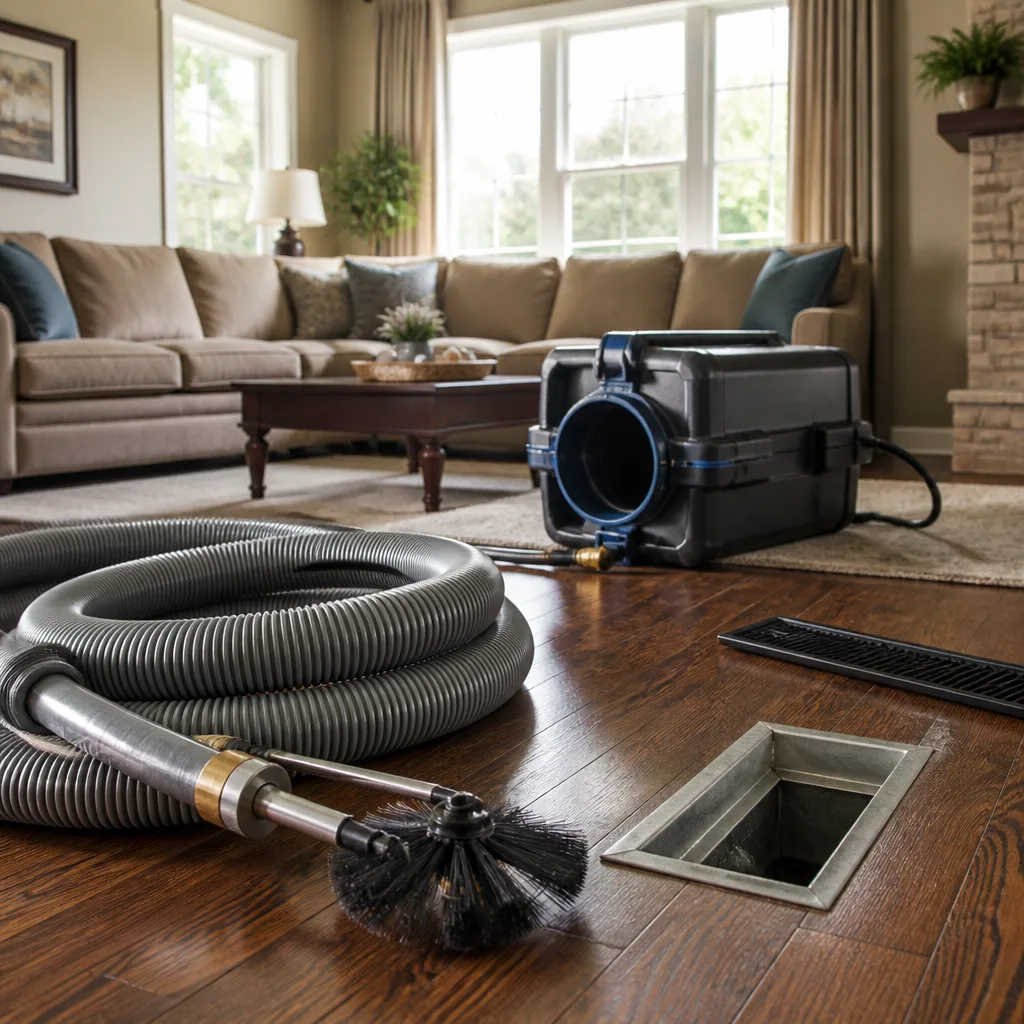
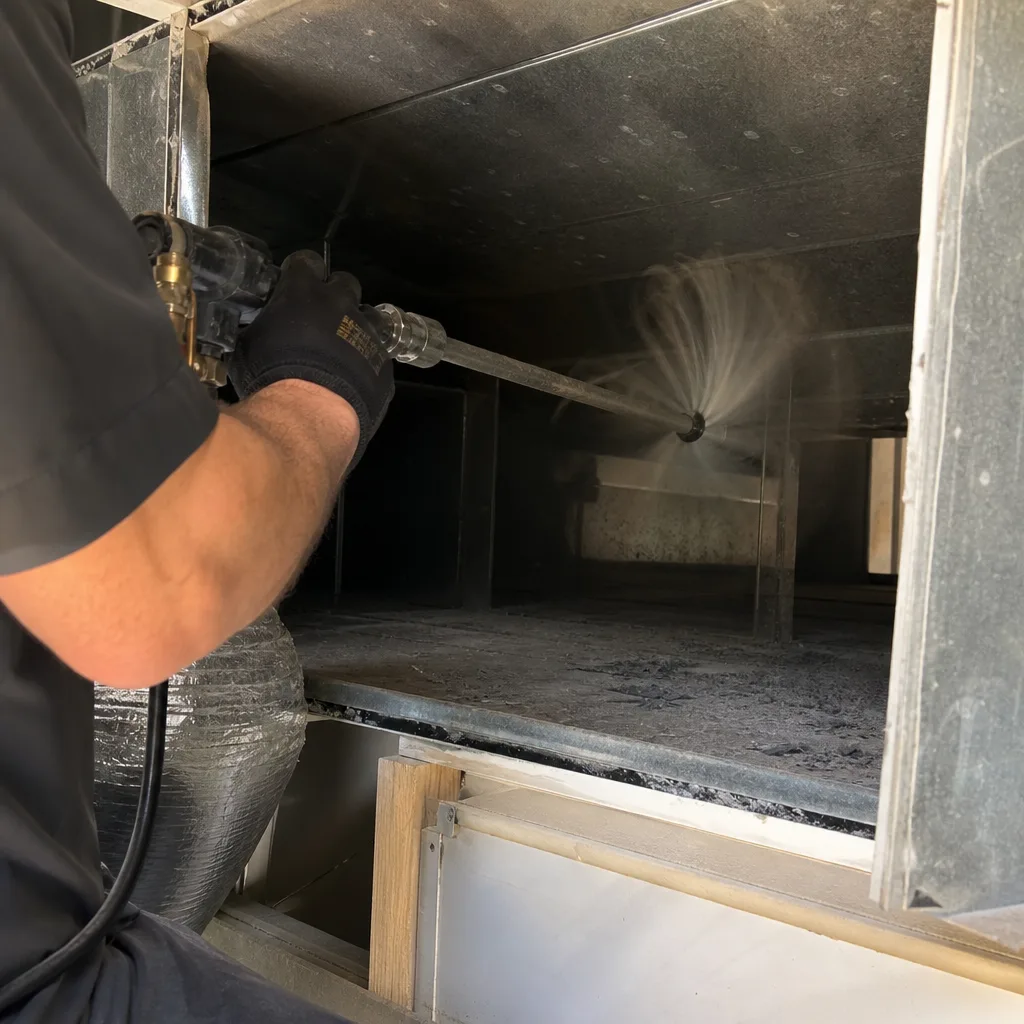
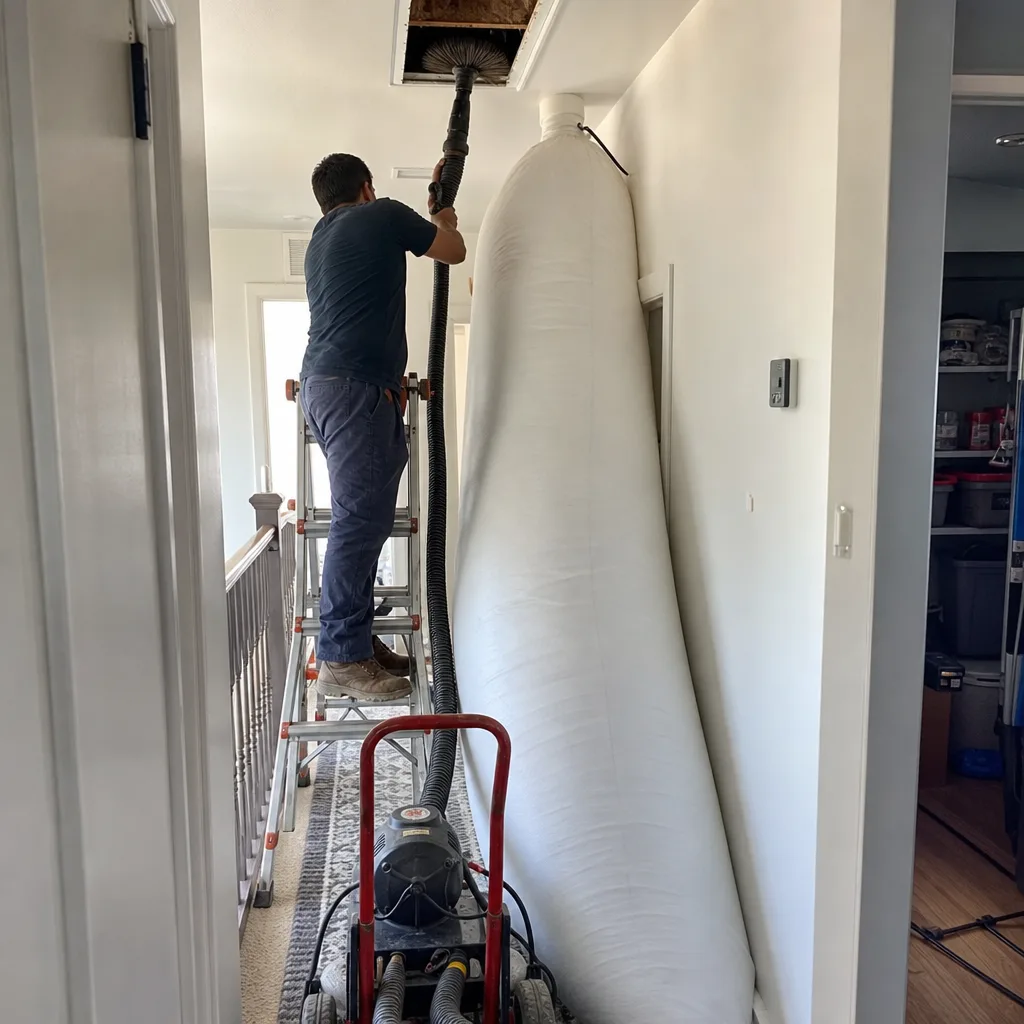
Our crews carry two distinct tool kits on every Mesa job. The cleaning kit contains rotary brushes, negative-pressure extraction hoses from Nikro, and inspection cameras. The repair kit, used only when we’ve confirmed permit status, contains shears, crimpers, and fastening tools for duct modification. We don’t open the second kit until the permit question is resolved.
How Mesa Handles Ductwork Permits and Inspections
Mesa’s Development Services Department processes mechanical permits through the One Stop Shop on the first floor of City Hall at 20 E. Main Street. For residential ductwork alterations, the process follows a specific sequence that homeowners should understand before work begins.
First, the licensed contractor submits an application with a scope description, floor plan showing duct routing, and equipment specifications. For simple duct segment replacement, this can be a hand-drawn sketch; for whole-system modifications, engineered drawings may be required. The permit fee for residential mechanical work in Mesa starts at approximately $85 for minor alterations and scales with project value.
Second, the permit undergoes plan review. Simple duct repairs often qualify for over-the-counter issuance same day. More complex projects, particularly those involving load calculations or energy code compliance, may require several days of review.
Third, the contractor performs the work and schedules inspection. Mesa mechanical inspectors verify that materials match approved plans, joints are properly sealed, supports meet span requirements, and the system passes a smoke or pressure test for leakage. Inspections occur during business hours, typically with next-day availability.
The climate-specific inspection criteria matter in Mesa. Inspectors pay particular attention to attic ductwork insulation ratings, given our extreme temperature differentials. R-6 insulation is minimum for flex duct in ventilated attics; R-8 is common for new Mesa construction but wasn’t required until 2012 code cycles. A 2015 home in Somerset may have R-6 ductwork that an inspector will flag if replacement doesn’t meet current standards.
For homeowners in historic districts like West Second Place or Evergreen Historic District, additional design review may apply if ductwork modifications affect exterior appearance - though this is rare for interior mechanical work.
The critical timeline issue: work cannot proceed until permit issuance, and inspection must occur before concealment. A contractor who completes work and then pulls a permit risks failing inspection with finished drywall already in place.
The Cost and Process of After-the-Fact Permits
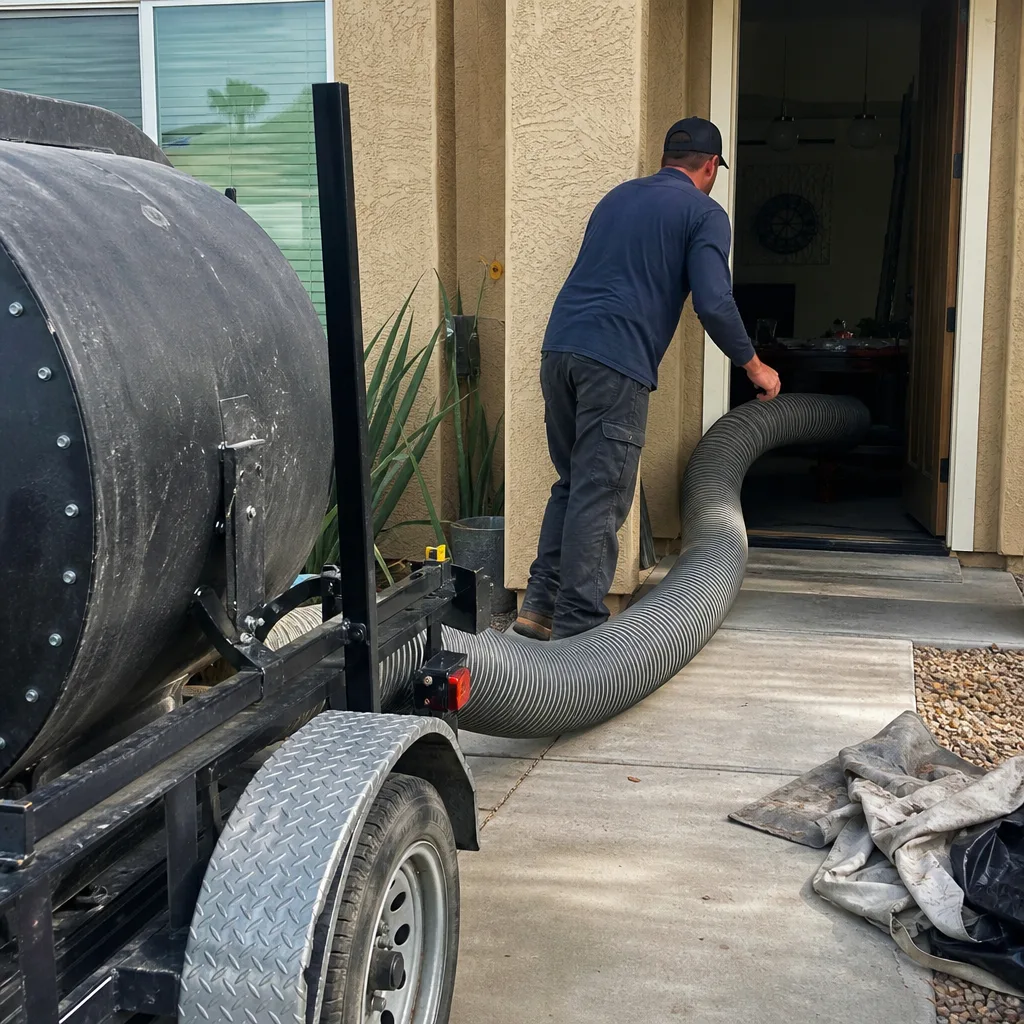
After-the-fact permits - the mechanism for legalizing work already performed without permit - carry significant penalties that most Mesa homeowners underestimate.
The base process requires:
- Application with full disclosure of work performed, when, and by whom
- Payment of double the original permit fee as penalty
- Exposed work for inspector verification, which may require opening walls or ceilings
- Possible requirement for engineered verification of structural or mechanical adequacy
- Compliance with current code, not code in effect when work was performed
We’ve consulted with homeowners in Leisure World who discovered unpermitted duct modifications during pre-sale inspections. The original work - a bathroom exhaust duct rerouting performed by a previous owner’s handyman - cost perhaps $200 in 2019. The after-the-fact permit process in 2024 required $340 in fees, $800 in drywall repair and repainting, and a three-week delay in closing.
The code-year issue is particularly consequential. A duct system modified in 2016 under 2012 code may need significant upgrades to meet 2018 AMC requirements if discovered today. This can include insulation upgrades, seismic bracing in attics, or combustion air provisions for gas furnaces that weren’t triggered by the original scope.
Mesa’s enforcement posture has tightened since 2021, when the city adopted enhanced residential resale inspection requirements in certain zoning districts. Homes in these areas now trigger automatic mechanical system verification when sold, increasing detection of unpermitted work.
The practical advice we give Mesa homeowners: if you suspect previous unpermitted ductwork, address it before listing. The city’s voluntary compliance program offers reduced penalties for self-reported work, and you control the timeline rather than a buyer’s inspection contingency.
Insurance Implications of Unpermitted Duct Modifications
The insurance consequence of unpermitted mechanical work is the least understood risk we encounter. Arizona homeowner’s insurance policies contain standard provisions that can void coverage for losses resulting from work performed without required permits or by unlicensed contractors.
The specific mechanism is the “known loss” and “intentional act” exclusions combined with duty-to-maintain clauses. If a homeowner knowingly permitted unpermitted duct modification - or failed to verify contractor licensing - and that work later contributes to a loss, the insurer may deny the claim.
Consider the scenario: a Mesa homeowner in Gateway Estates hires an unlicensed duct cleaner to install a UV light system. The installation involves drilling into the plenum and running 120V wiring without proper strain relief or disconnect. Two years later, an electrical fault at the connection ignites accumulated dust in the ductwork. The resulting HVAC fire causes $45,000 in smoke and fire damage.
The insurer’s investigation discovers the unpermitted electrical and mechanical work. The claim denial cites:
- Failure to obtain required permits, violating municipal code compliance warranties in the policy
- Use of an unlicensed contractor, potentially triggering the “work performed by qualified persons” clause
- Electrical modification without permit, constituting an unreported alteration to the insured structure
We’ve reviewed photo records from fire restoration contractors in Mesa where exactly this sequence occurred. The homeowner’s “savings” on the original UV installation - perhaps $300 versus a permitted, licensed installation at $900 - became a $45,000 uninsured loss plus potential liability if the fire spread to neighboring units.
The documentation gap compounds the problem. Legitimate contractors provide permit records, inspection sign-offs, and equipment specifications. Unpermitted work leaves no paper trail, making it impossible to prove the work met any standard even if it was technically competent.
Our H.A.V.E.N. Standard requires that any CleanRun technician who observes evidence of unpermitted previous work - incompatible materials, non-standard connections, missing supports - documents it in the job record and advises the homeowner. We’ve flagged this in homes throughout Mesa, from 1960s ranch homes in Knoell Mesa to new construction in Cadence at Gateway.
What to Ask a Contractor Before They Cut Into Your Ductwork
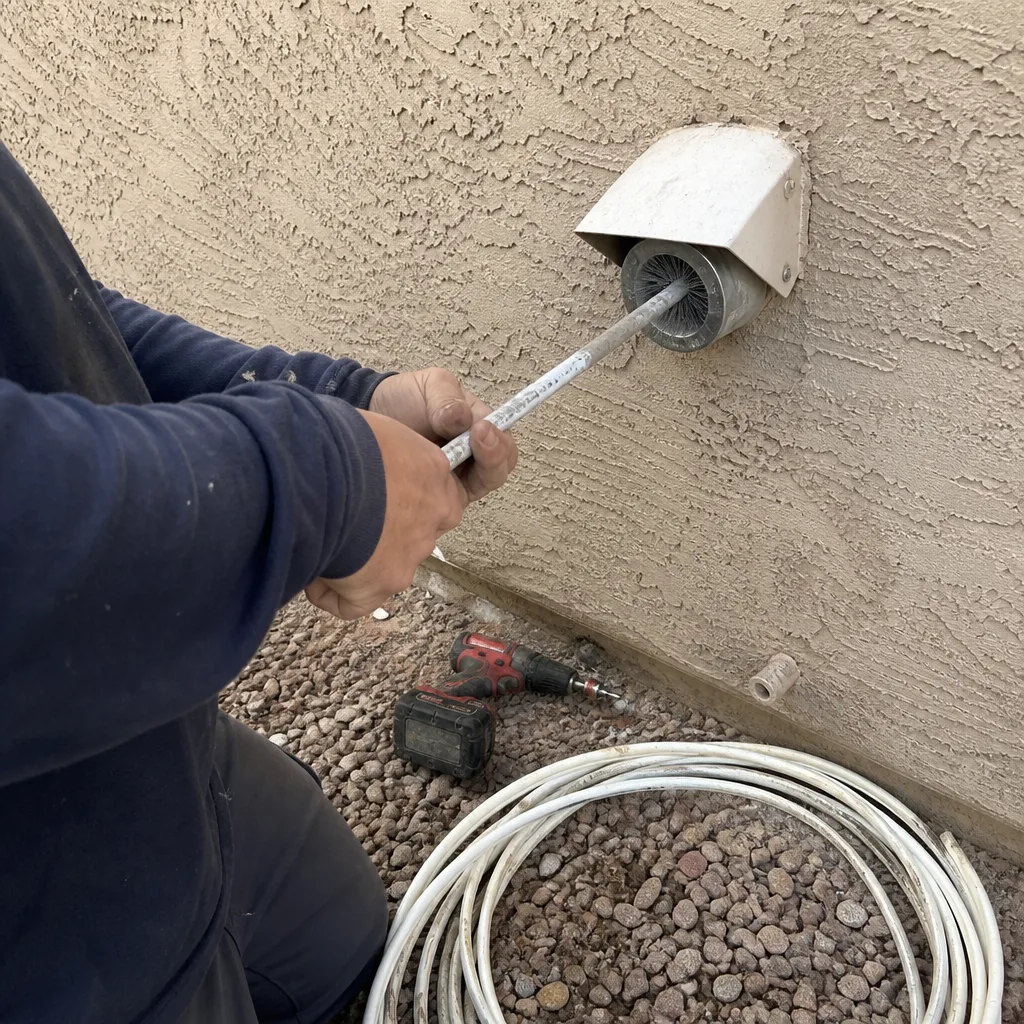
The questions that separate legitimate contractors from permit-evaders are specific and documentable. We advise Mesa homeowners to obtain written answers to each before work proceeds.
- “Will this scope require any permits, and who will pull them?” The correct answer identifies specific permit types and confirms the contractor will obtain them. Vague responses like “we’ll take care of everything” without naming the permit or department warrant follow-up. CleanRun provides a written scope classification on every job - maintenance or alteration - with permit requirements stated explicitly under Haven Standard Clause 1.
- “What is your Arizona Registrar of Contractors license number?” Verify this at azroc.gov. A duct cleaning-only company without a contractor’s license cannot legally perform alteration work. Our license is published on every page and provided in writing with every estimate.
- “Will I receive copies of permits and inspection sign-offs?” Legitimate contractors provide these as a matter of course. They’re your proof of compliance for future sale or insurance purposes.
- “What specific materials and methods will you use?” Generic answers suggest untrained labor. Specificity - “R-6 insulated flex duct with UL181 listed mastic at all joints, supported at 4-foot intervals per AMC Table 603.4” - indicates professional knowledge. Our crews specify equipment by manufacturer: Rotobrush rotary cleaning systems for debris removal, Abatement Technologies negative-pressure extractors for containment, Guardsman access panels where permitted installation is required.
- “What documentation will I receive when work is complete?” The answer should include photographic documentation, written scope completion, and warranty terms. CleanRun’s Documented Photo Record shows every duct run before and after, delivered as a standard job deliverable - not an upsell.
- “What happens if inspection fails?” Legitimate contractors warranty their work against inspection failure and correct deficiencies at their cost. We warranty all permitted work through the 365-Day Done Right Promise, backed in writing on every job.
The red flags that should halt any negotiation: refusal to put permit responsibility in writing, pressure to proceed “before the inspector gets involved,” pricing significantly below market without explanation, or insistence that “cleaning companies don’t need licenses.” In Mesa, we’ve seen unlicensed operators quote $89 whole-house cleaning that somehow includes “free” access panel installation - a physical impossibility at legitimate cost, and a permit violation waiting to be discovered.
How CleanRun Documents Every Job Under the H.A.V.E.N. Standard
Our documentation protocol exists specifically to eliminate the ambiguity that leads to permit problems. Every CleanRun job in Mesa follows the same sequence, whether it’s routine maintenance or permitted alteration work.
Haven Standard Clause 1: Written Price Before Any Work Starts. The scope classification appears on every estimate - “Maintenance: no permit required” or “Alteration: permit to be pulled by CleanRun, $XXX fee included.” The customer initials this classification before work proceeds. There is no “call for a quote” in our process; the written price is the price.
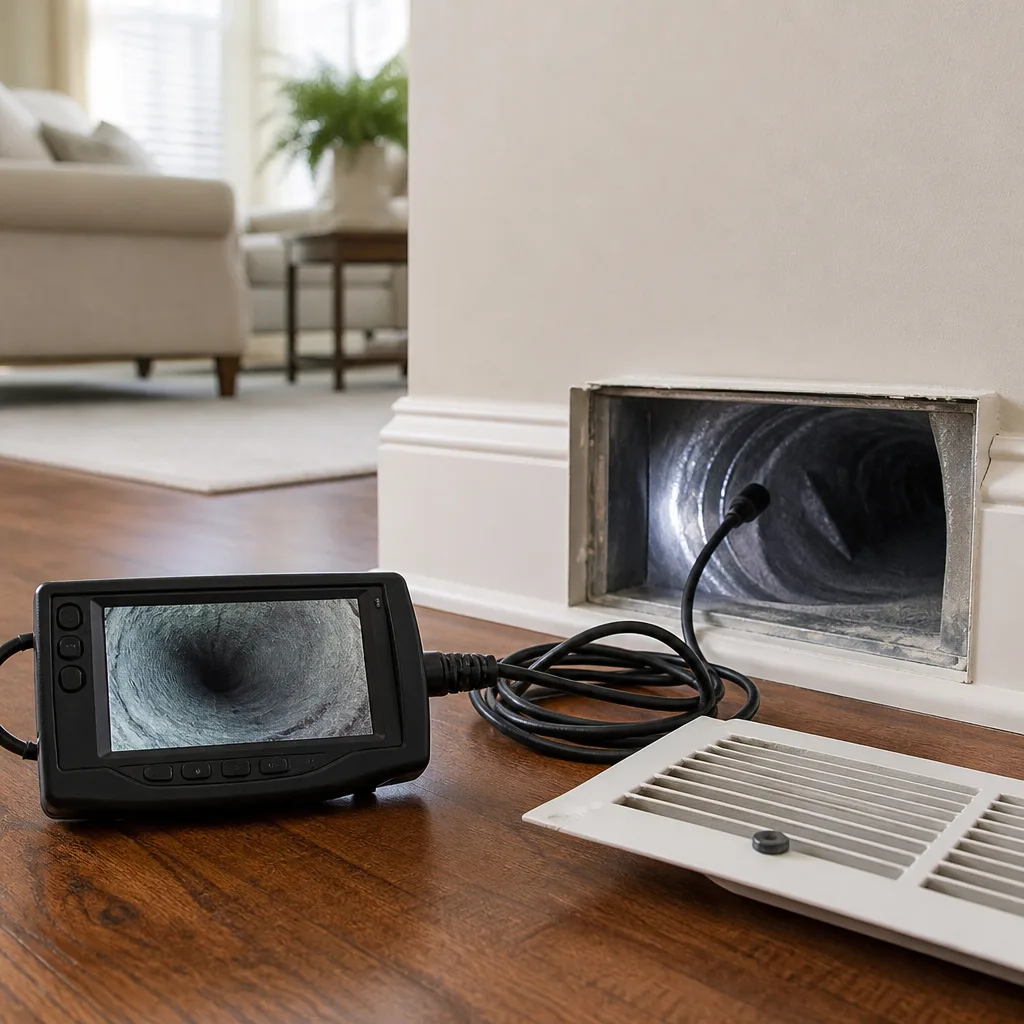
Haven Standard Clause 2: Documented Photo Record. Our technicians photograph the interior of every duct run with inspection cameras before cleaning and after completion. These images show the actual condition found - a 2-inch debris layer at the first elbow, a separated flex duct collar, a previous contractor’s unpermitted access panel cut with tin snips and left unsealed. The photo record is delivered as a standard job deliverable, not held hostage for a review or additional fee.
Haven Standard Clause 3: Verified Crews. Every technician is background-checked, uniformed, and identified by name before arrival. License status is verified annually. Equipment is maintained to manufacturer specifications - our Rotobrush systems and Nikro extractors receive documented service per manufacturer intervals.
When alteration work is required, we handle the full permit lifecycle: application, fee payment, inspection scheduling, and sign-off delivery to the customer. The permit record becomes part of the permanent job file, available for future reference.
Our equipment roster - Abatement Technologies HEPA filtration, Honeywell and Aprilaire air quality components, Guardsman access hardware - is specified in writing so customers can verify manufacturer specifications independently. We don’t make performance claims beyond what these manufacturers publish; the documentation speaks for itself.
Since 2013, we’ve served over 52,000 homes with this protocol. Every job started with a written price. Every job concluded with a photo record. The 365-Day Done Right Promise means that if any documentation proves inaccurate or any work fails to meet the written scope, we correct it - not as a favor, but as a contractual obligation.
Common Mistakes to Avoid
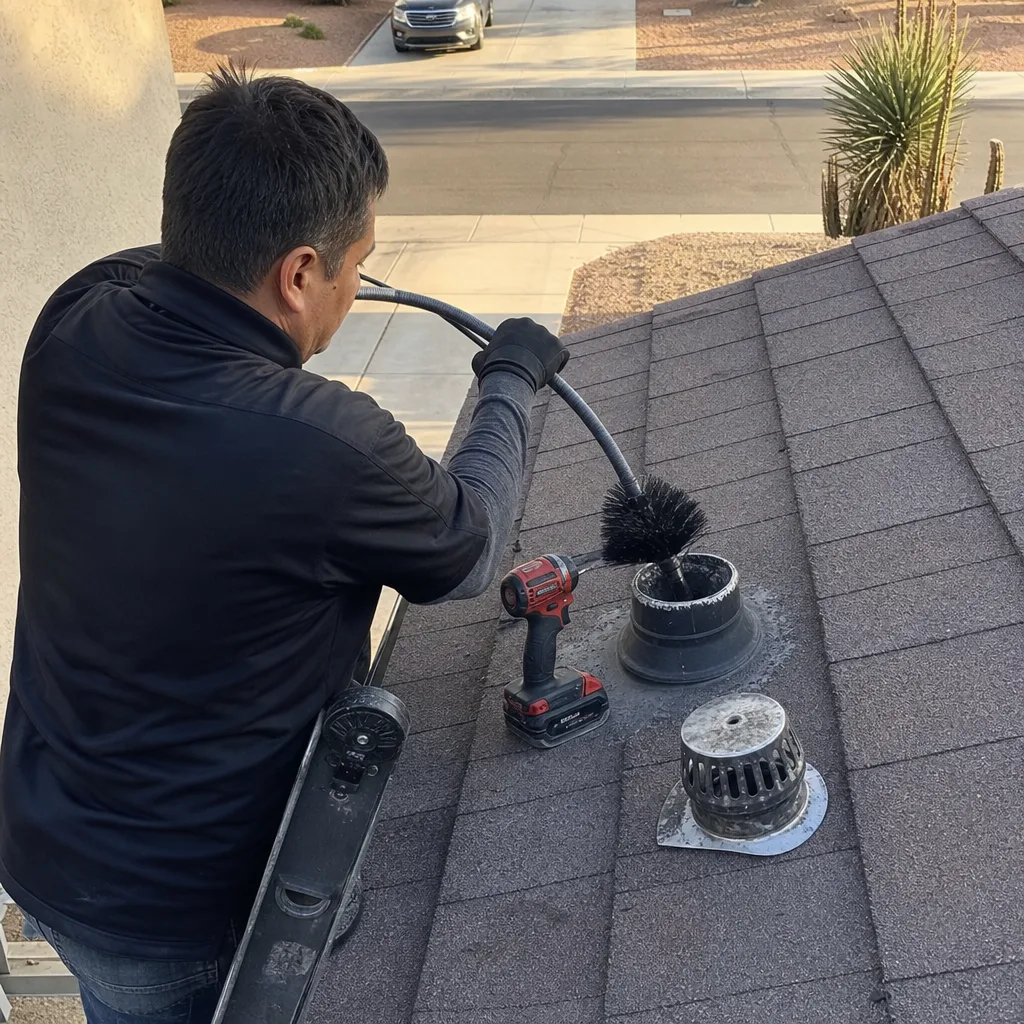
- Assuming “cleaning” covers everything. Many Mesa homeowners sign a duct cleaning proposal without realizing it includes access panel installation or duct segment replacement. Read the scope description; if it mentions cutting, replacing, or installing, ask about permits.
- Accepting verbal permit assurances. A contractor who says “I’ll take care of it” but won’t put permit responsibility in writing is planning to skip it. Legitimate contractors document permit handling as a line item.
- Ignoring permit status during home purchase. Mesa resale inspections in certain districts now verify mechanical permits. Unpermitted work discovered during buyer due diligence becomes a negotiation point or deal-killer. Review permit history through the city’s online portal before listing.
- Hiring based on lowest price without license verification. The $79 whole-house cleaning that includes “free” repairs is mathematically impossible at legitimate cost. The difference is made up in unpermitted work, uninsured labor, or bait-and-switch pricing once the truck arrives.
- Failing to request inspection sign-offs. Even permitted work isn’t complete without inspector approval. Request the signed inspection card before final payment; it’s your proof of compliance.
- Assuming previous owner permits transferred. Permits run with the property, but documentation doesn’t always survive sale. If you’re unsure about previous ductwork, verify through Mesa’s permit lookup or request a CleanRun Free Second Opinion to assess what we find inside the system.
- DIY duct modification without understanding code requirements. Homeowners can perform their own mechanical work in Arizona, but they must still pull permits and pass inspection. The amateur duct rerouting you “saved” $500 on may cost $2,000 to legalize when discovered.
When to Call a Professional
Call a licensed mechanical contractor when your ductwork needs extend beyond debris removal from existing pathways. For more guides & resources, visit our blog. Specific triggers: visible duct damage requiring segment replacement, persistent airflow imbalance suggesting duct modification, installation of UV lights or electronic air cleaners, addition or relocation of registers, or any work requiring tools to cut or fasten new duct materials.
Call for documentation review if you’re purchasing a Mesa home and the seller’s disclosure mentions “recent ductwork” without permit numbers. Call for a second opinion if another contractor’s proposal seems to include alteration work without permit discussion.
CleanRun Air Duct Cleaning Mesa offers free estimates throughout Mesa - call (602) 632-0849. Every estimate includes explicit scope classification, written pricing, and permit requirements stated before any work is scheduled. For competitor quotes that seem unclear on permit status, our Free Second Opinion puts our written scope next to theirs, line by line.
Frequently Asked Questions
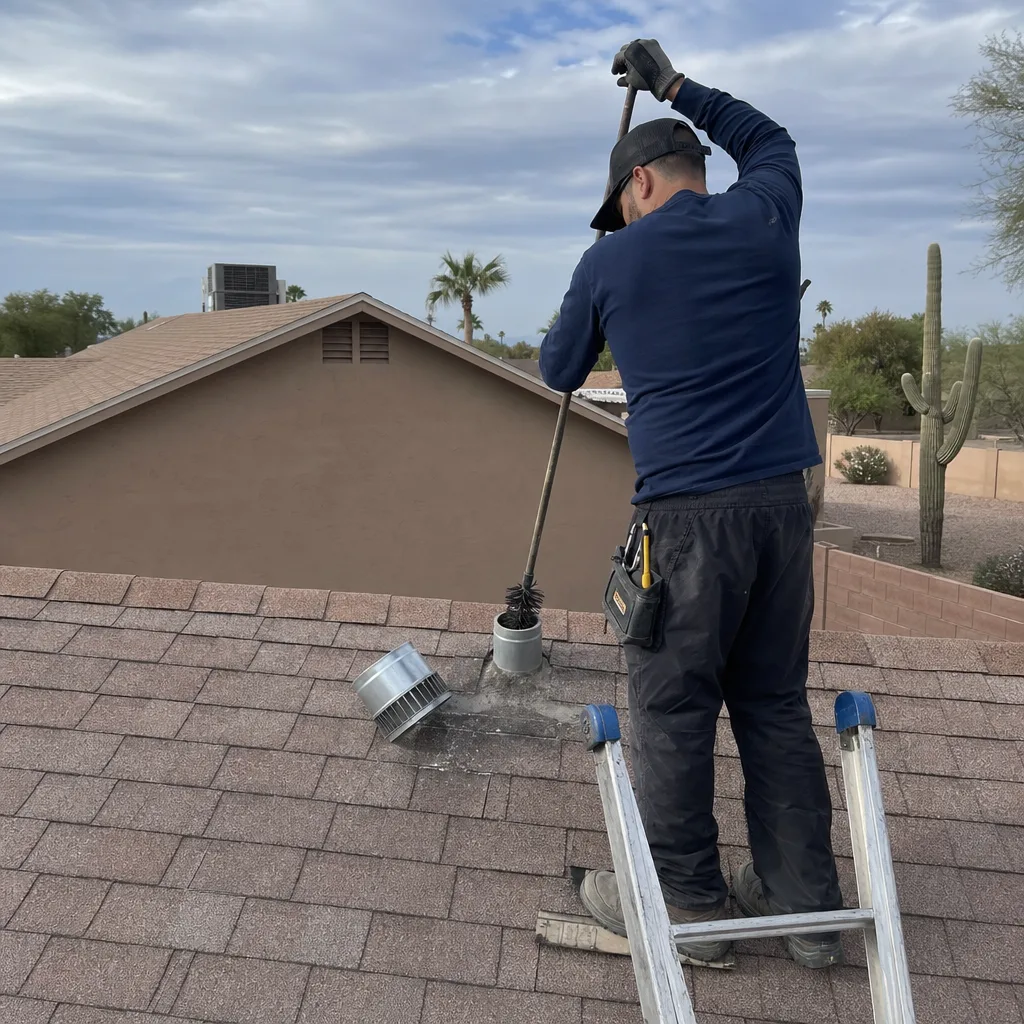
No. The Arizona Mechanical Code classifies debris removal from existing ductwork as routine maintenance, not requiring permit or inspection. This includes rotary brushing, negative-pressure extraction, and register removal for access. The moment work involves cutting, replacing, or installing duct materials, the classification changes to alteration and permitting is required.
Residential mechanical permits in Mesa start at approximately $85 for minor alterations and increase based on project valuation. After-the-fact permits for unpermitted work cost double the original fee. For context, a simple duct segment replacement with proper permitting typically runs $85-$150 in fees; the same work discovered unpermitted costs $170-$300 plus potential costs to expose concealed work for inspection.
Yes. Mesa’s Development Services Department maintains permit records searchable by property address through the city’s online portal. For work performed before digital records (roughly pre-2010), in-person record requests at City Hall may be required. CleanRun technicians can also identify signs of unpermitted work during routine cleaning inspection - previous access panels without listed hardware, incompatible materials, or non-standard connections - and document findings in your job record.
Possibly not. Arizona policies typically exclude losses resulting from work performed without required permits or by unlicensed contractors. If unpermitted duct modification contributes to a fire, water damage, or HVAC failure, the insurer may deny the claim based on code compliance and qualified-personnel exclusions. The specific policy language controls, but we’ve seen denials upheld in Mesa cases where homeowners could not produce permit records.
Spot-sealing accessible joints with mastic or foil tape during cleaning is maintenance. Systematic sealing that requires accessing concealed joints, changing duct routing, or modifying the plenum connection is alteration requiring permit. The determining factor is whether the work changes the system’s tested airflow characteristics or requires access methods beyond original construction. In Mesa’s climate, where thermal expansion stresses joints more severely, we frequently find that “simple” sealing reveals more extensive modification needs once the camera goes in.
Yes. UV germicidal lamps are mechanical components added to the system, not maintenance of existing equipment. Installation requires mechanical permit for the duct penetration and electrical permit for the 120V connection. In Mesa, this typically means two permits, two inspections, and work performed by a contractor licensed for both trades or with proper subcontractor documentation. Unlicensed installation of UV systems is among the most common violations we encounter in Mesa homes.
Request written scope classification. Legitimate contractors specify “maintenance - no permit” or “alteration - permit included.” Be alert for language like “we’ll take a look when we get there” or “we might need to cut in if it’s bad” - vagueness that permits unpermitted work after you’ve committed. CleanRun’s written estimates under Haven Standard Clause 1 classify every job before scheduling; there is no “we’ll see” in our process. Call (602) 632-0849 for a written estimate with explicit permit status.
The Bottom Line
Air duct cleaning in Mesa requires no permit; air duct modification always does, and the line between them is drawn by whether tools cut new materials or merely clean existing ones. The Arizona Mechanical Code’s maintenance-versus-alteration framework is clear, but enforcement falls on homeowners who discover unpermitted work during sale, insurance claim, or city inspection. The cost of after-the-fact compliance - double fees, exposed work, potential code upgrades - far exceeds proper permitting upfront. Before any contractor opens your ductwork, get written scope classification, verify the license, and demand documentation of permits and inspections. The photo record of what’s actually inside your ducts matters, but so does the paper record of who put it there and whether they were authorized to do so.
Written by Tomas Reyes, Owner at CleanRun Air Duct Cleaning Mesa, serving Mesa since 2013.