
Last updated September 23, 2026
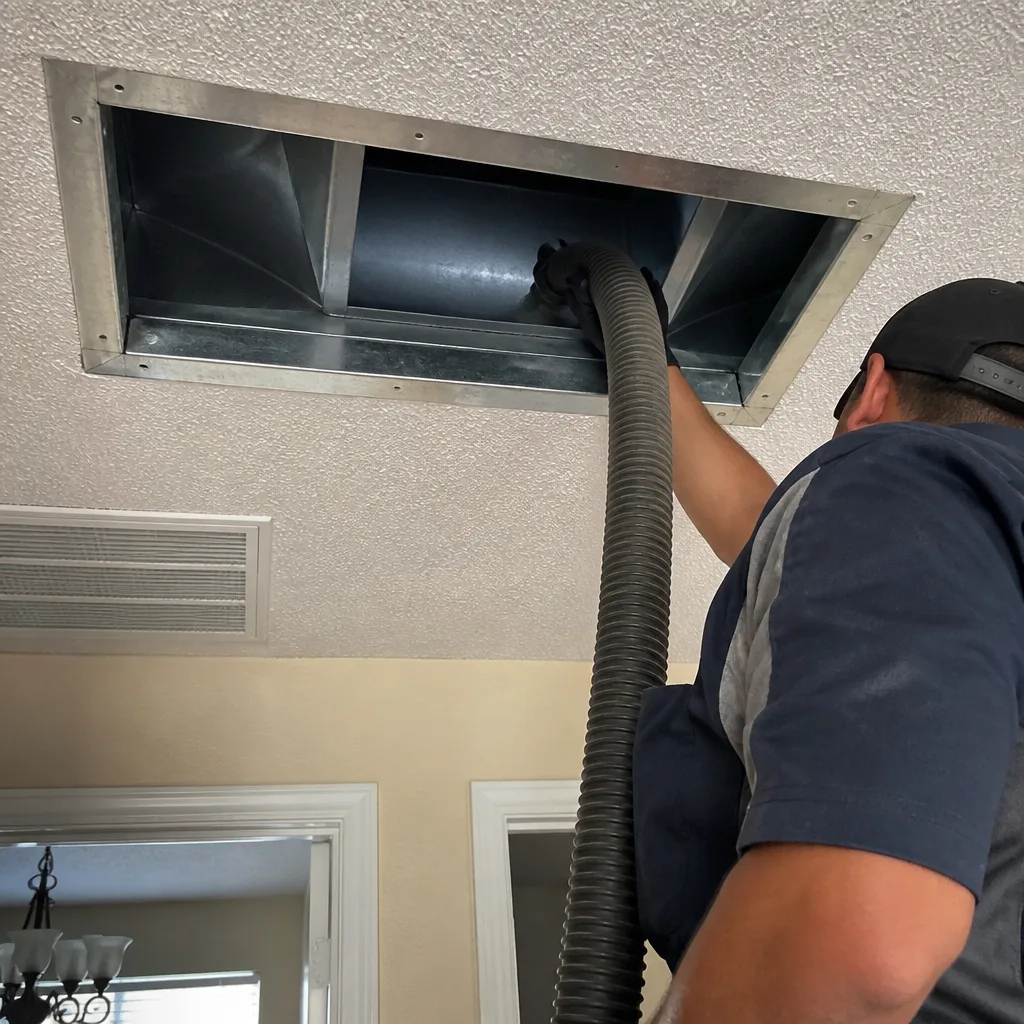
Whole-system duct and dryer vent check with before-and-after photos - you see exactly what came out of your vents
That "$99 whole-house special" is a bait ad - the real number appears once they are in your hallway, or the "clean" is a shop-vac at the register. We photograph the inside of your ducts before and after instead.
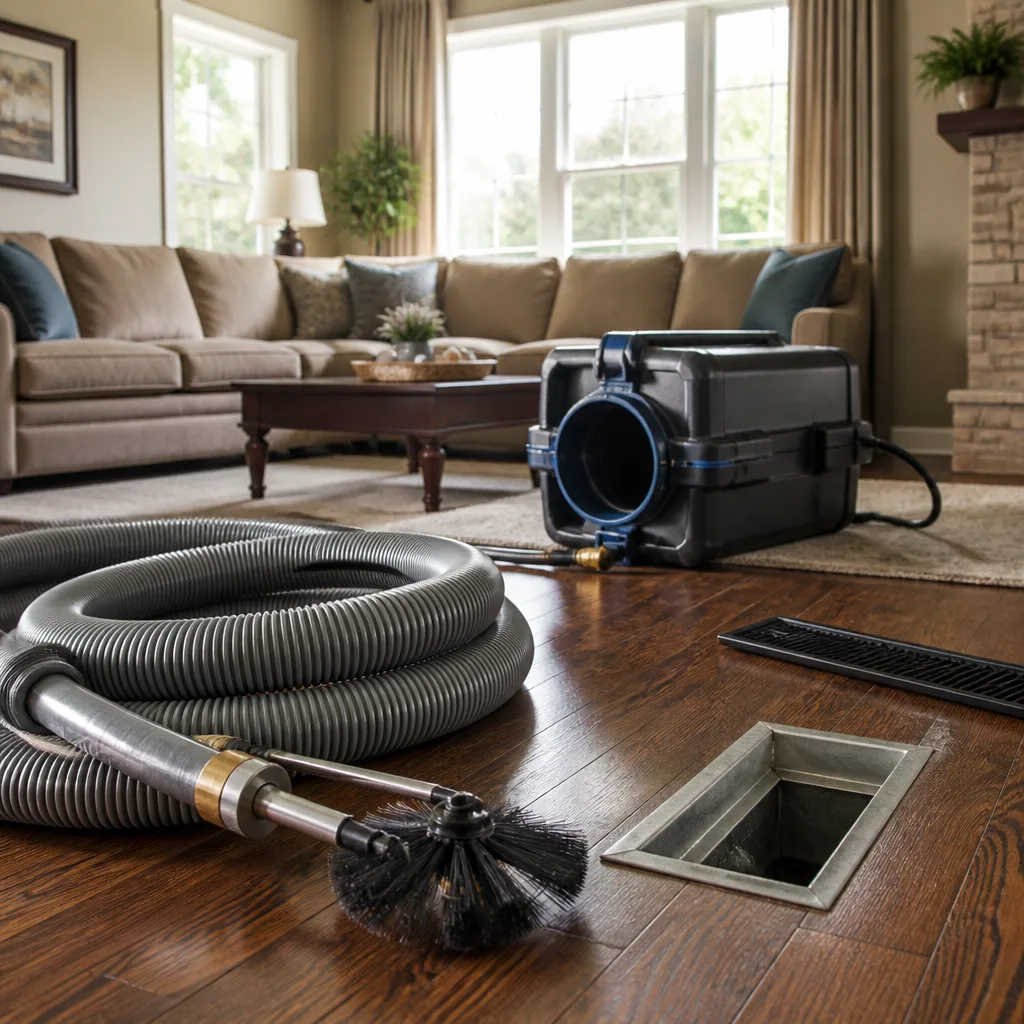
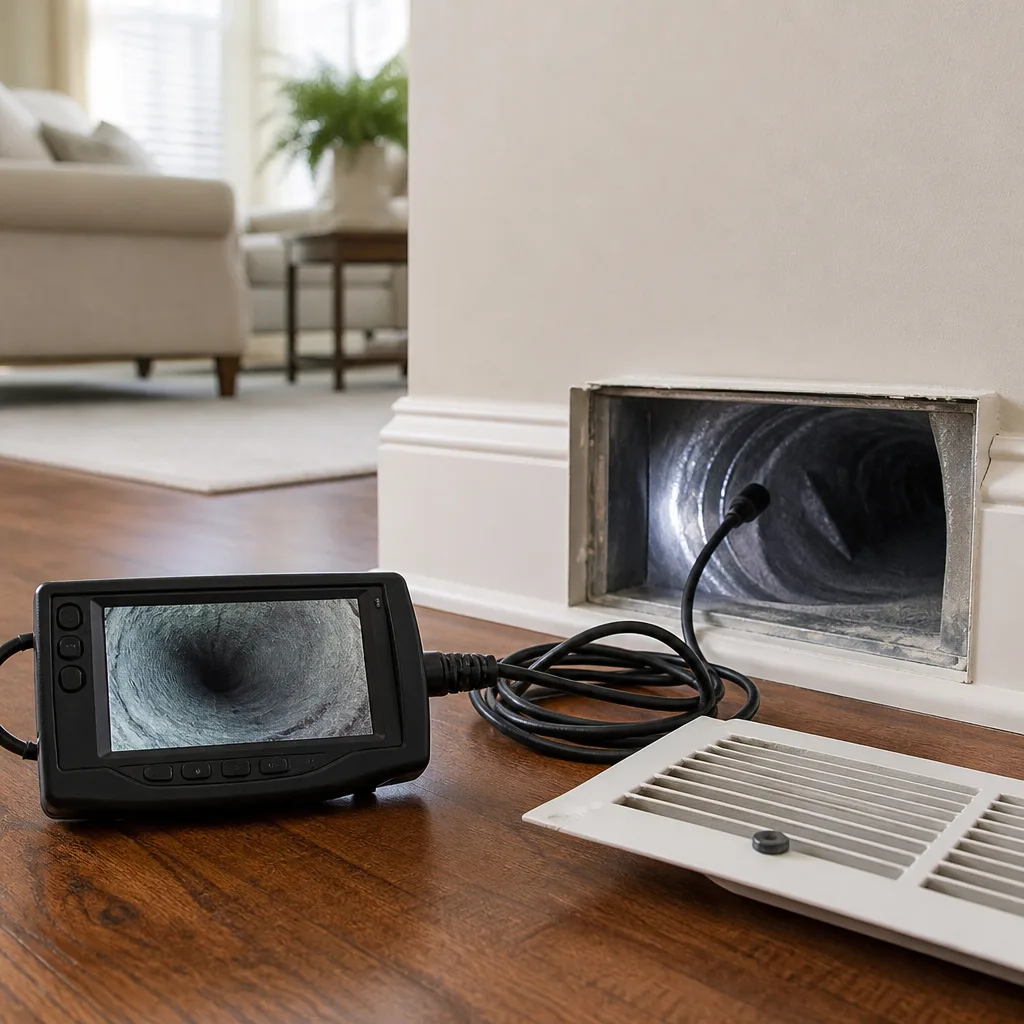
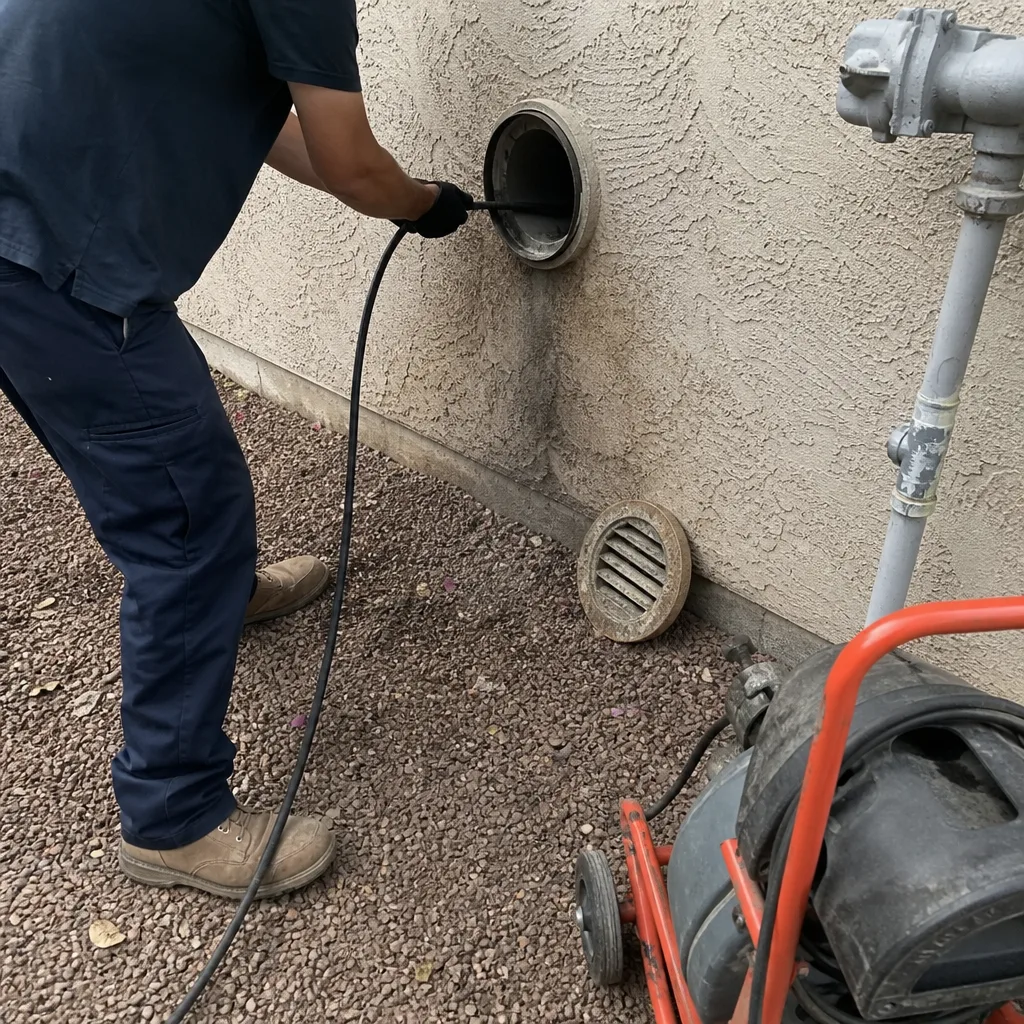 Before
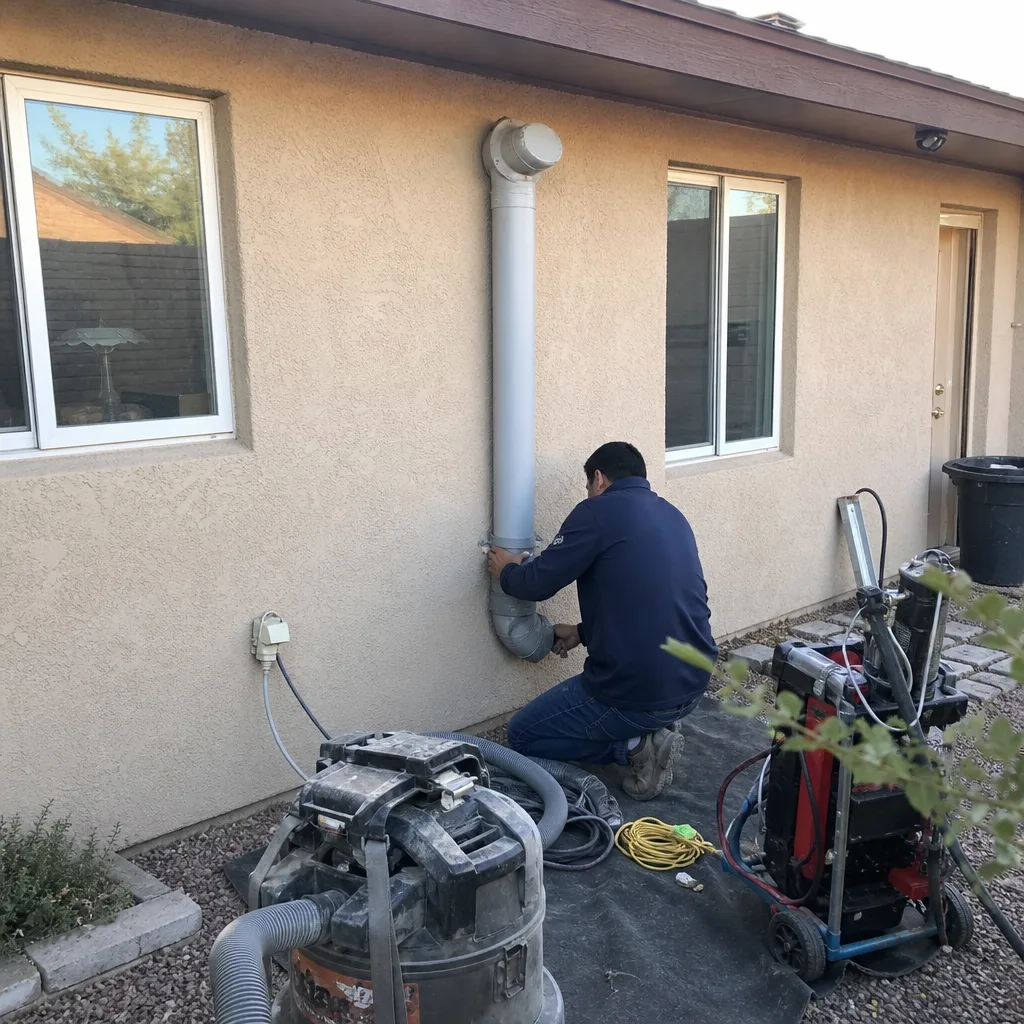 After
After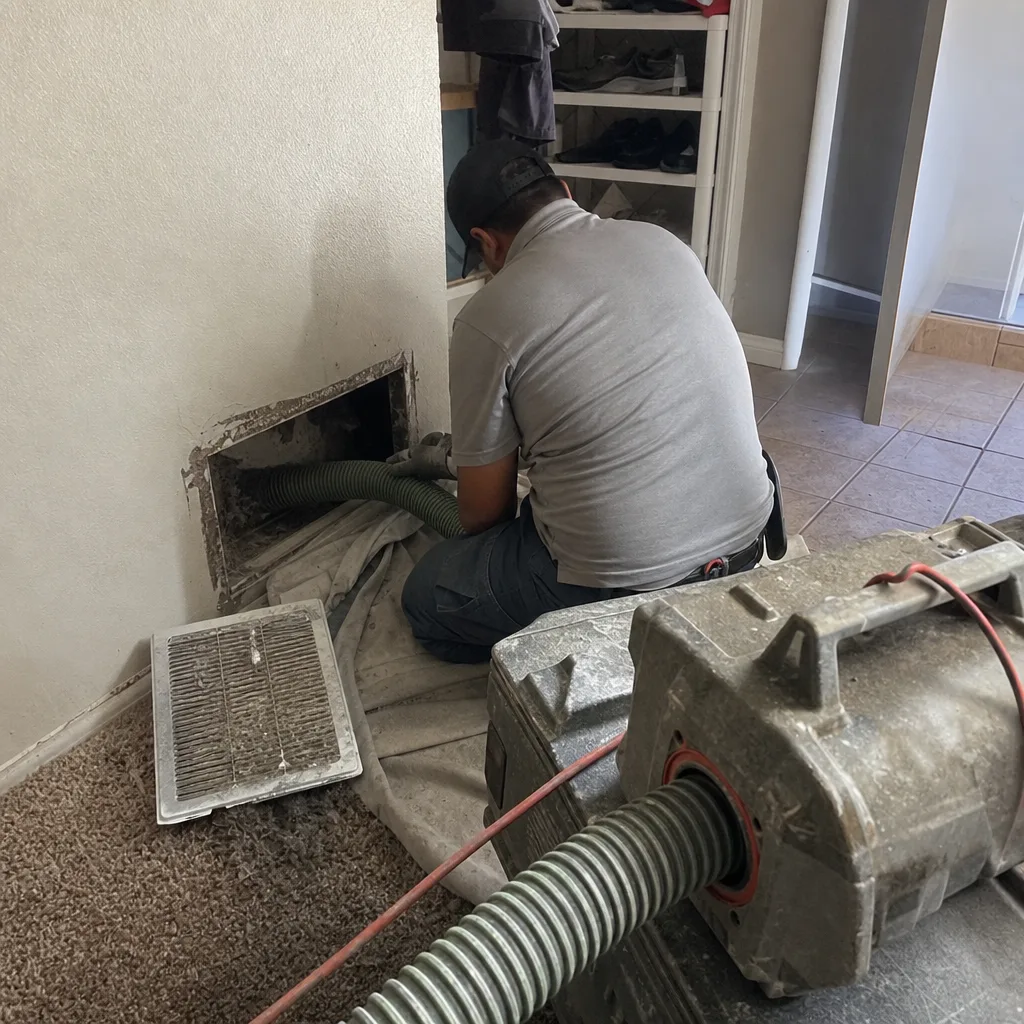 Before
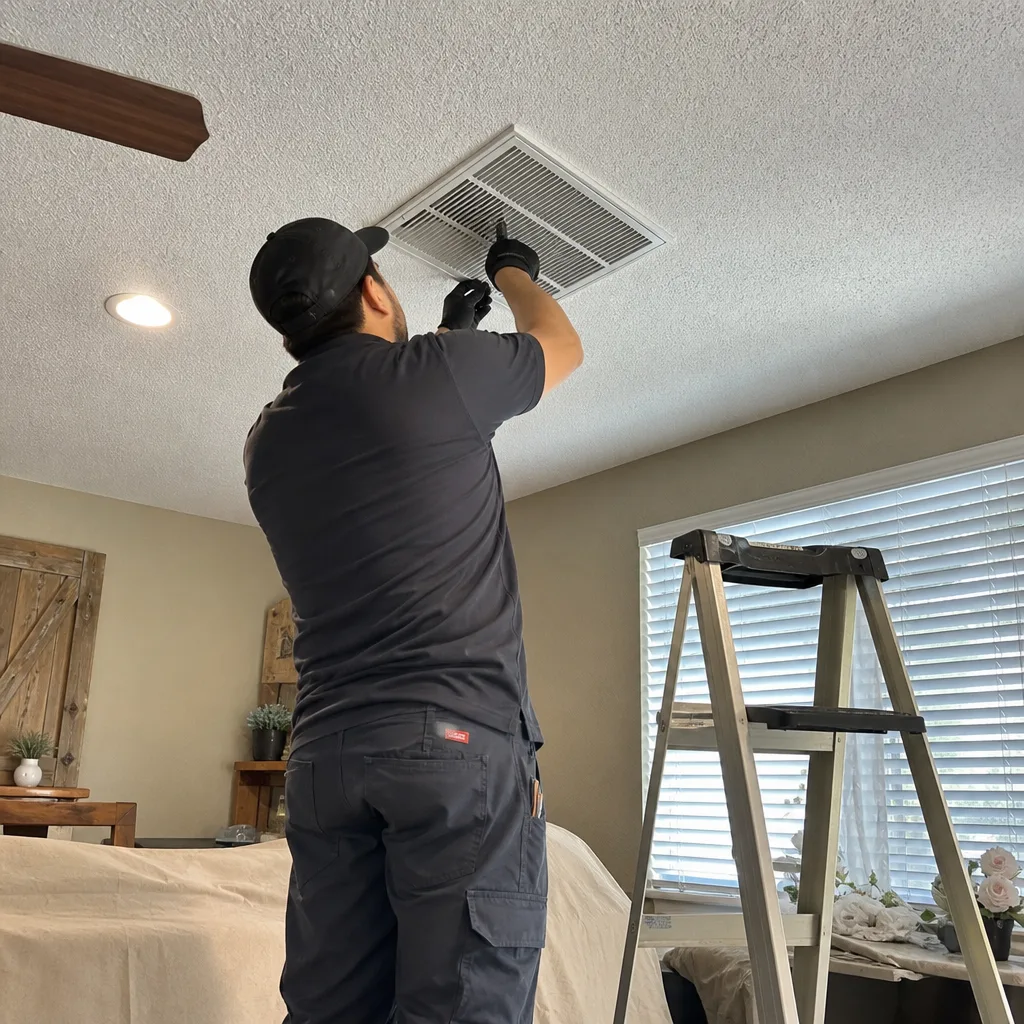 After
After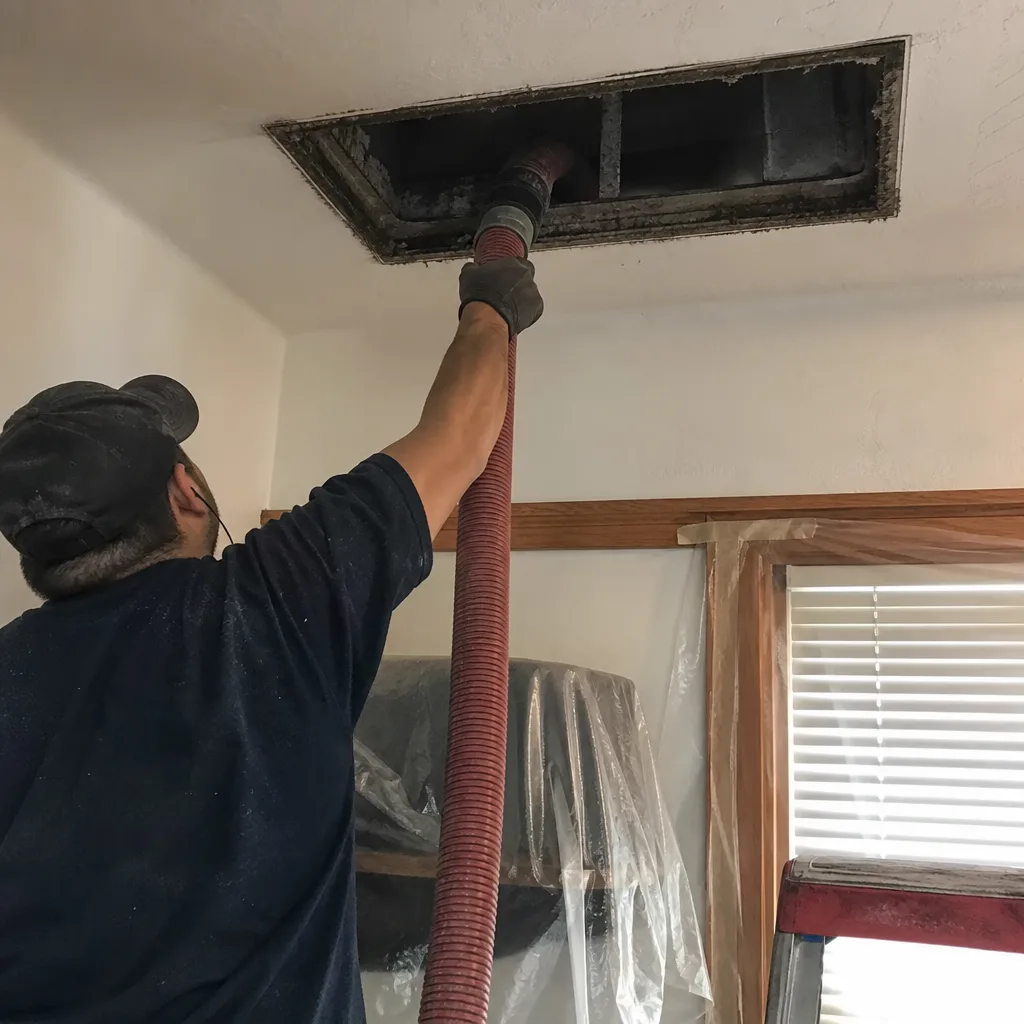 Before
 After
AfterAir Duct Cleaning Cost Breakdown: The Mesa Homeowner’s Reference for 2026
The $79 duct cleaning special is a real service. It cleans approximately what a shop vac can reach from each register opening, which is the first 18 inches of each duct run. The remaining 90% of the system is untouched, and no photograph will show you that. In Mesa, where summer dust storms load particulate into attic systems and monsoon humidity can activate dormant debris, the gap between a coupon visit and a documented cleaning is wider than most homeowners realize. This guide breaks down every line item in legitimate our Air Duct Cleaning services pricing, names what each costs and why, and shows exactly what separates a professional job with a photo record from a loss-leader coupon visit. You’ll leave knowing how to read a quote, what variables move the price in Mesa’s market, and how to avoid paying for work you cannot verify.
Quick Answer
In Mesa, a documented full-system air duct cleaning with before-and-after photography for a typical 1,500-2,500 square foot home runs $350-$550 in 2026, as detailed in our Air Duct Cleaning Maintenance Checklist for Mesa Homeowners. The final number depends on the number of return ducts, accessibility of the air handler, and whether the evaporator coil or dryer vent is included. Per-vent pricing and $79 specials almost always exclude the components that actually determine whether your system is clean.
Table of Contents
- What the $79 Special Actually Covers
- Mesa Market Pricing by Home Size
- Line-Item Breakdown: Where Your Money Goes
- Add-Ons That Matter vs. Upsell Theater
- How to Read a Quote for Hidden Costs
- The Real Cost of Not Cleaning Your Ducts
- What Documentation Should You Receive
- How Often Mesa Homes Need Duct Cleaning
BeforeAfterWhat the $79 Special Actually Covers
The $79 duct cleaning special operates on a simple mechanical reality: a standard shop vacuum or portable unit with a 25-foot hose can reach approximately 18 inches past each register opening. In a typical Mesa home with 10-12 supply registers, that means roughly 15-20 linear feet of ductwork receives any contact. The average residential system in Mesa contains 150-250 linear feet of ductwork, meaning the coupon special touches 8-13% of the total run length.
Here’s what actually happens during most $79 visits:
- A portable vacuum unit is carried inside and connected to registers one at a time.
- A rotary brush, if used at all, runs a short distance into each supply duct.
- Return ducts, which collect the most debris, are often excluded or charged as an upgrade.
- The air handler cabinet, plenum (the main distribution box attached to your furnace or air handler), and evaporator coil are not opened.
- No access holes are cut; no before-and-after photography is performed.
- The visit concludes in 45-60 minutes, and the technician presents upsell options.
The business model depends on this upsell. The $79 price covers fuel and technician time only if the customer converts to additional services. In our experience across Mesa neighborhoods from Dobson Ranch to Las Sendas, roughly 70% of $79 appointments result in invoices between $300 and $600 after the technician identifies “problems” that were not mentioned in the original offer.
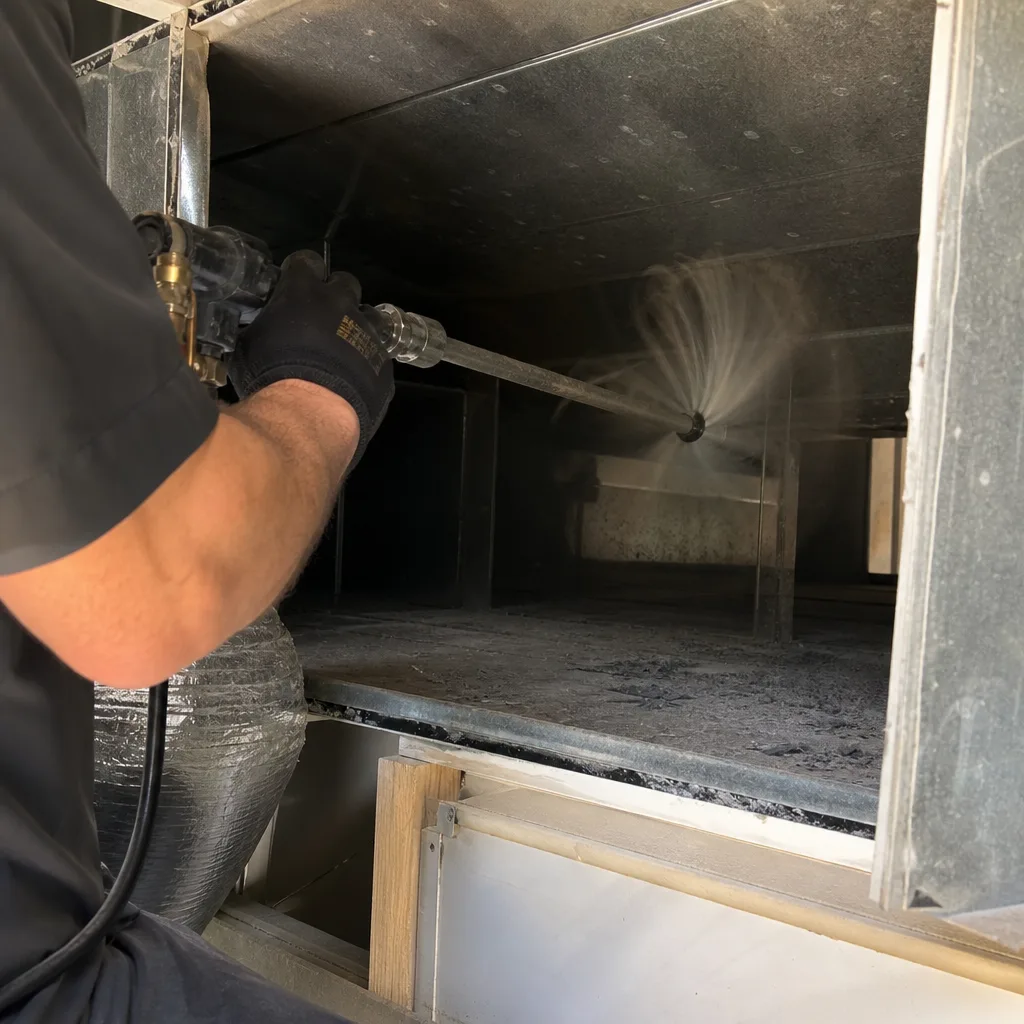
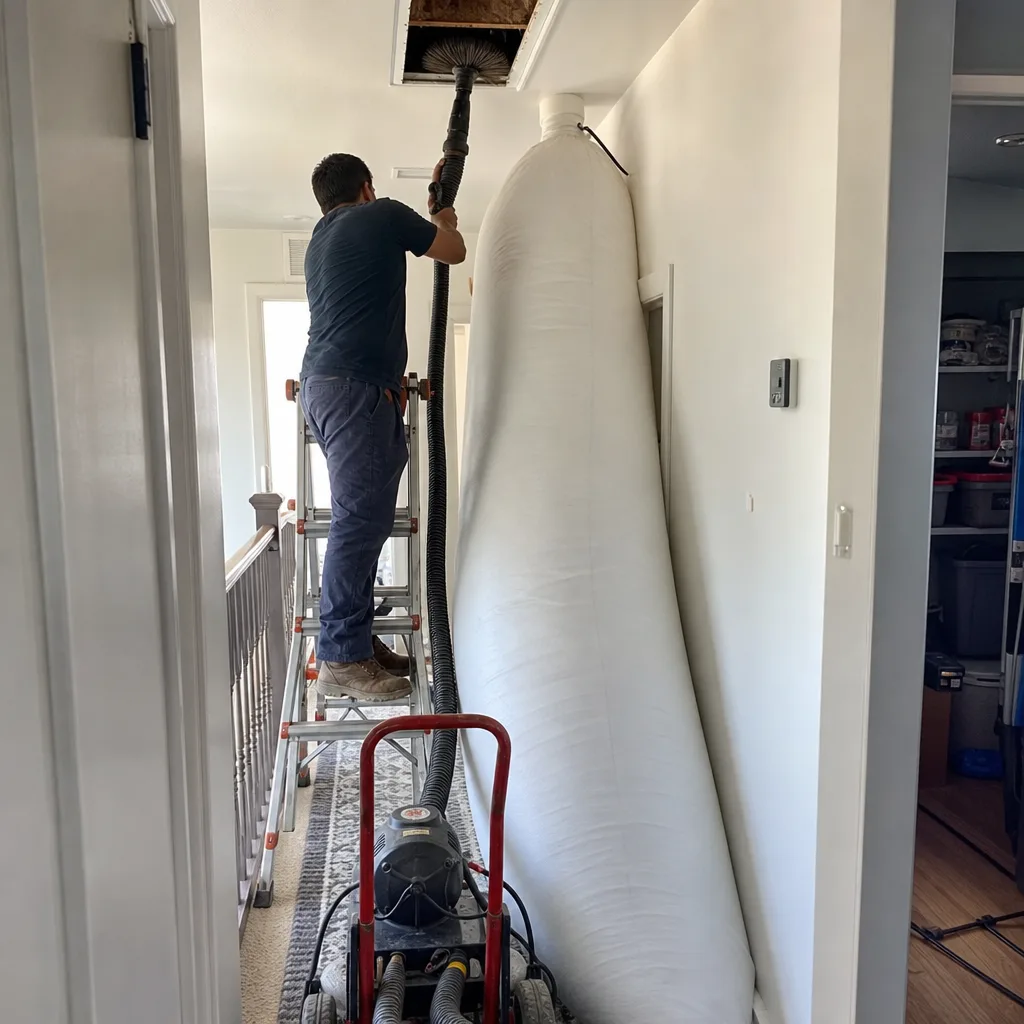
The critical distinction: a legitimate full-system cleaning requires negative-pressure extraction, which means a truck-mounted or large portable vacuum creating suction at the air handler while agitation tools travel the full length of each duct run. Learn about Air Duct Cleaning Permits, Codes & Inspections in AZ: What You Need to Know before scheduling. This equipment cannot be deployed in 45 minutes, and it cannot operate through a register opening alone. The plenum must be accessed, return ducts must be connected to suction, and the system must be sealed to maintain pressure. These steps are what the $79 special omits by design.
In Mesa specifically, the desert climate compounds this problem. Fine caliche dust and pollen particulate settle in horizontal attic duct runs during our dry spring months. When July monsoons raise humidity above 40%, this debris can adhere to duct walls and support microbial growth. A surface vacuuming at the register does not address material that has settled in low points or bonded to metal. Only full-system extraction with mechanical agitation removes it, and only photography through access holes can verify the result.
Mesa Market Pricing by Home Size
Based on our written quotes delivered in Mesa during 2024-2025, here is what full-system duct cleaning costs by home size when performed with documented before-and-after photography, written scope, and warranty. These ranges reflect CleanRun’s actual pricing under Haven Standard Clause 1, and they align with quotes we’ve reviewed from two other established Mesa companies that also provide written upfront pricing.
| Home Size | Typical Supply/Return Count | Full-System Cleaning Range | With Coil & Dryer Vent |
|---|---|---|---|
| Under 1,200 sq ft | 6-8 supplies, 1-2 returns | $280-$380 | $420-$520 |
| 1,200-1,800 sq ft | 8-12 supplies, 2 returns | $320-$450 | $480-$610 |
| 1,800-2,500 sq ft | 12-16 supplies, 2-3 returns | $380-$550 | $540-$710 |
| 2,500-3,500 sq ft | 16-22 supplies, 3-4 returns | $480-$680 | $660-$860 |
| Over 3,500 sq ft | 22+ supplies, 4+ returns | $620-$900+ | $820-$1,100+ |
These ranges assume standard accessibility: air handler in attic, garage, or closet with adequate working space. Several variables can move the number within or above these brackets:
- Number of returns: Each return duct requires separate connection to negative-pressure equipment and typically adds 30-45 minutes of labor. Homes in Red Mountain Ranch and other northeast Mesa developments often have 3-4 returns due to larger square footage and zoned designs.
- Handler location: Air handlers in tight attic spaces or rooftop package units require additional setup time and safety equipment. Mesa’s 110°F summer attic temperatures also limit continuous work periods, extending job duration.
- Duct material and condition: Flexible ductwork (common in Mesa homes built 1995-2010) requires gentler agitation and slower vacuum passes to avoid damage. Older galvanized steel ducts in historic Mesa neighborhoods near downtown may have rust scale or failed liner that requires repair before cleaning can proceed safely.
- Evaporator coil access: Some coils require panel removal or refrigerant line disconnection to access and clean properly. This is a separate mechanical task from duct cleaning and is priced accordingly.
- Contamination type: Heavy construction debris in newer Mesa infill homes, rodent activity in established neighborhoods with mature landscaping, or visible mold presence all require additional containment, disposal, and documentation procedures.
The $79 special does not vary by these factors because it does not address them. One flat price for all homes is possible only when the scope is identically minimal regardless of system configuration.
Line-Item Breakdown: Where Your Money Goes
A legitimate duct cleaning quote reflects actual costs that continue whether the job is priced at $79 or $790. Understanding these line items helps you evaluate whether a quote is covering real work or subsidizing a bait-and-switch model.
Equipment amortization and maintenance: Truck-mounted negative-pressure systems from manufacturers like Nikro and Abatement Technologies represent capital investments of $15,000-$35,000 per vehicle. HEPA filtration banks require replacement at 500-1,000 operating hours. Rotary brush systems and pneumatic whips wear and require replacement. A single crew running two jobs daily in Mesa’s climate accumulates approximately 2,000 operating hours annually. Equipment cost per job: $45-$85.
HEPA filter disposal and waste handling: Collected debris in Mesa homes typically contains fine silica dust, pollen, skin cells, and synthetic fibers. EPA guidelines and Maricopa County waste regulations require HEPA-filtered collection systems and sealed disposal. Filter disposal and waste handling per job: $15-$30.
Technician time per duct run: A thorough cleaning of one supply duct run, from plenum to register, with mechanical agitation and negative-pressure extraction, requires 12-20 minutes of active tool time plus setup and breakdown. A 12-supply, 2-return system with plenum and air handler cabinet cleaning requires 3.5-5.5 technician-hours. At Mesa market labor rates for trained, background-checked technicians: $180-$320.
Documentation time: Photography of each duct run before and after cleaning, upload to job record, and customer delivery adds 30-45 minutes per job. This is not optional at CleanRun; it is a standard deliverable included in every price. Documentation labor and system cost per job: $35-$55.
Warranty administration: The 365-Day Done Right Promise requires record retention, callback response capability, and reserve allocation for remediation work. Administrative cost per job: $20-$35.
Vehicle, fuel, and overhead: Mesa’s geographic spread, from Queen Creek border homes to the Salt River Pima-Maricopa Indian Community edge, means average round-trip travel of 25-40 miles per job. Vehicle, fuel, insurance, and facility overhead per job: $40-$70.
Summing these minimums: $335. At the upper end: $595. This is why $350-$550 represents the honest floor for a documented, warranted, full-system cleaning in Mesa’s market. The $79 special covers none of these line items adequately; it is designed to recover costs through upsell conversion or volume throughput with minimal service delivery.
Add-Ons That Matter vs. Upsell Theater
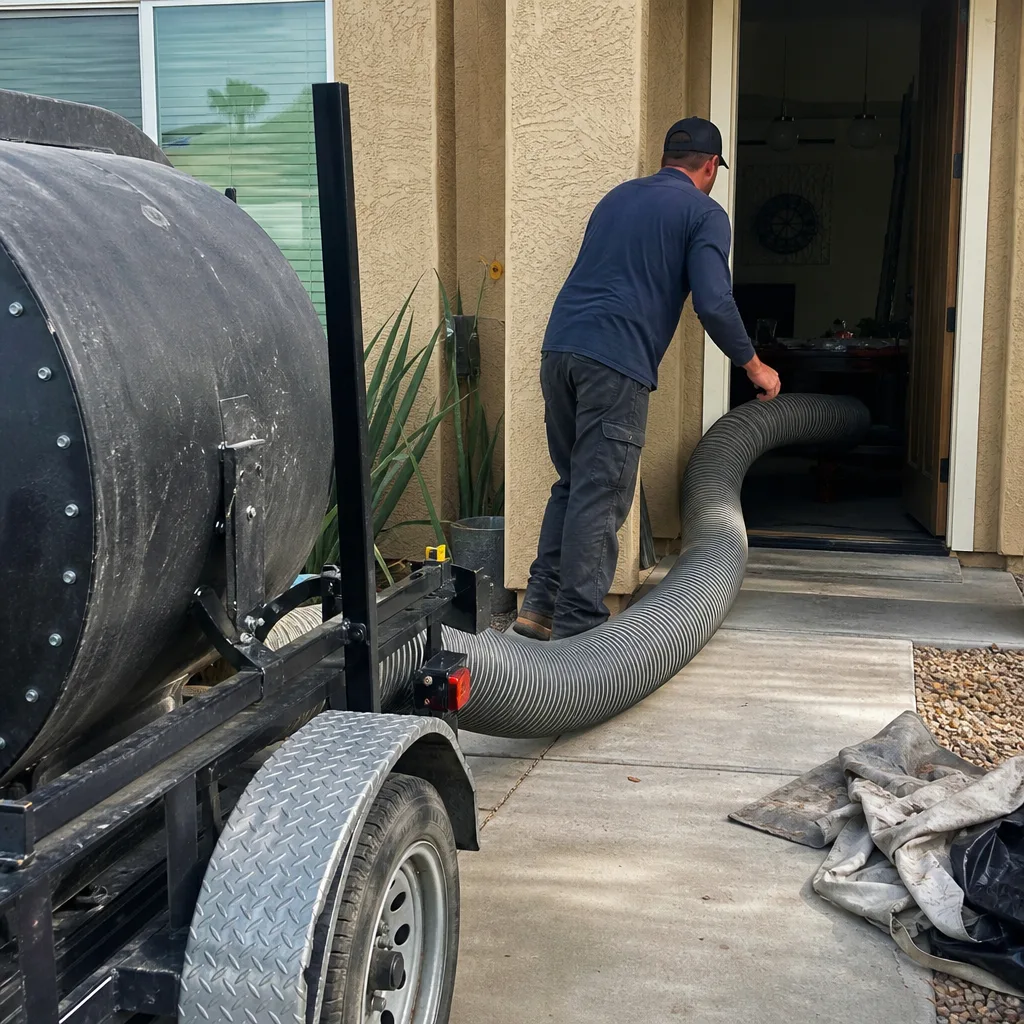
The duct cleaning industry has trained homeowners to reflexively refuse all add-ons, which is rational given the upsell environment. Some add-ons, however, address real conditions that cleaning alone does not resolve. The distinction lies in whether the recommendation is supported by documentation you can see.
Legitimate add-ons with specific use cases:
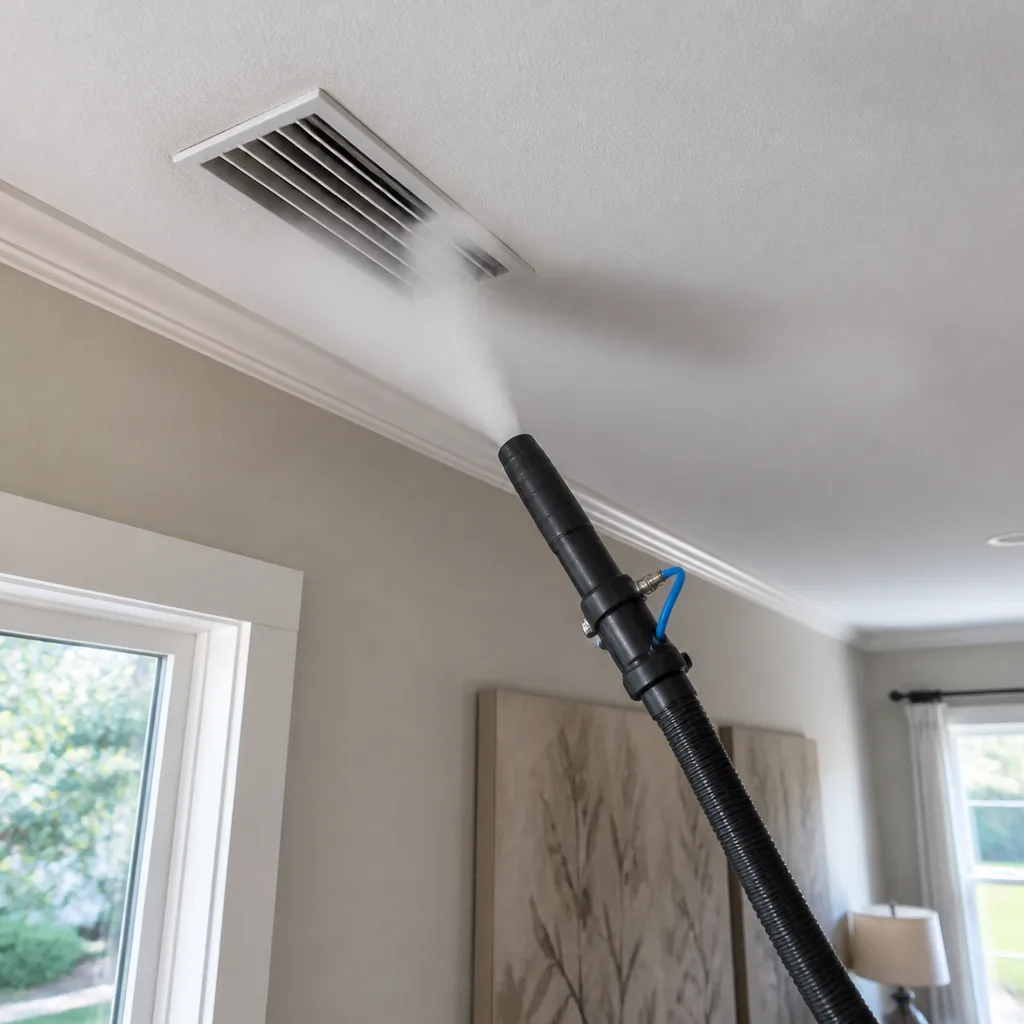
- Duct sanitizer application: EPA-registered sanitizers applied as fog or mist have a defined use case: documented microbial growth inside ductwork. At CleanRun, we apply sanitizer only when pre-cleaning photography shows visible mold or when a customer provides laboratory confirmation of elevated fungal levels. The application is photographed, and the product EPA registration number is recorded on the job document. Cost in Mesa market: $75-$150 depending on system size. “Deodorizer” without documented odor source is not the same service and is rarely necessary.
- Evaporator coil cleaning: The coil sits downstream of the filter and upstream of the supply plenum. It is not part of the duct network but directly affects airflow and efficiency. A 0.042-inch debris layer increases energy consumption by approximately 21% according to EPA field data. In Mesa, where cooling loads run 2,500-3,000 annual hours, that translates to $180-$340 in additional annual electricity cost for a typical 3-ton system. Coil cleaning as an add-on: $120-$220.
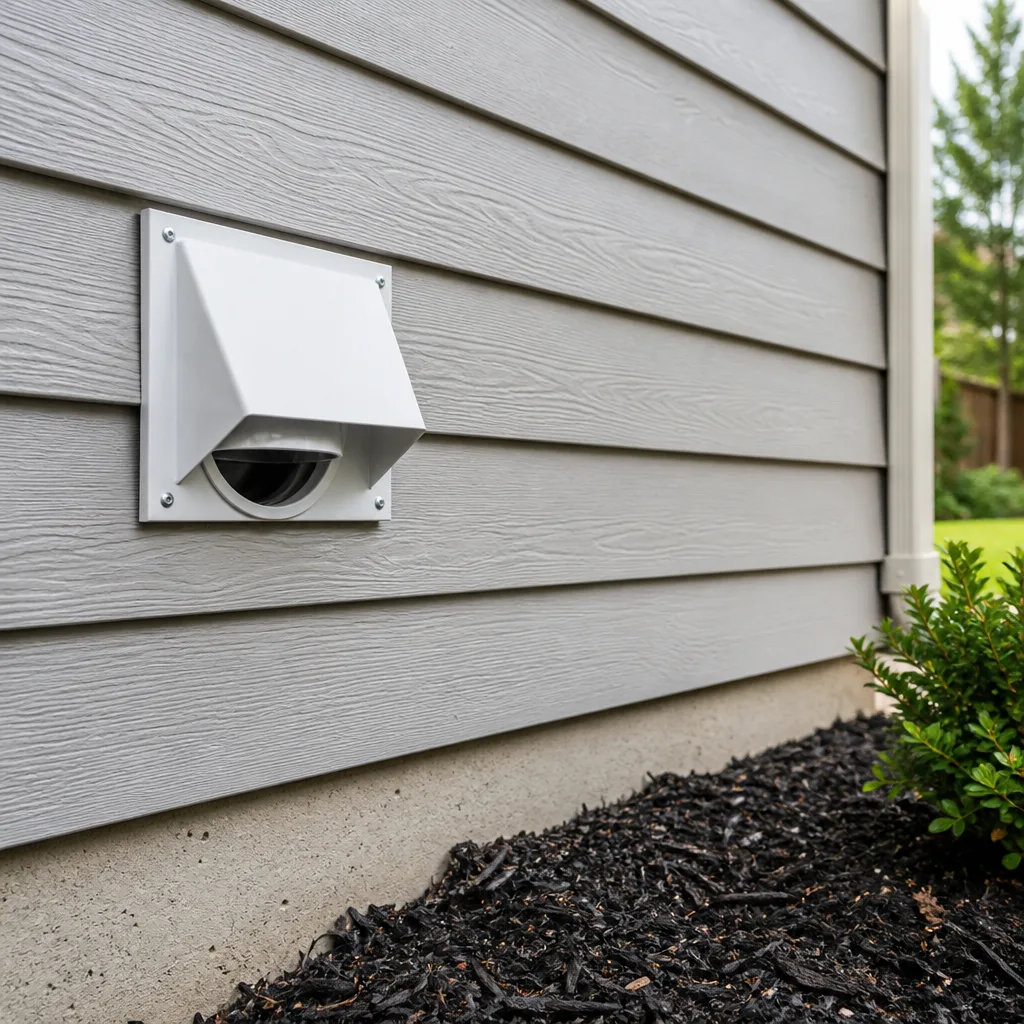
- Dryer vent cleaning: A separate mechanical system with distinct fire safety implications. The lint accumulation rate depends on duct length, elbows, and vent cap design. In Mesa’s single-family homes with roof vents or long horizontal runs through garages, annual cleaning is often warranted. Dryer Vent Cleaning in Mesa is priced independently; bundling with duct cleaning typically saves $30-$50. Cost: $120-$180 standalone.
- Duct repair and sealing: Disconnected or leaking ducts cannot be cleaned effectively and waste conditioned air. Metal tape or mastic sealing of accessible joints, or replacement of damaged flexible duct sections, is legitimate when inspection reveals failure. This is mechanical repair work, not cleaning, and is priced by scope.
Add-ons that function primarily as upsell theater:
- “Deodorizer” or “fresh scent” application: Masking agents with no sanitizing properties, applied to create a perceptible change that implies cleaning occurred. No documentation value; no health or efficiency benefit.
- UV light installation: A legitimate mechanical service when properly specified for coil irradiation, but frequently sold as duct cleaning add-on with undersized units placed for visual effect rather than effective dosage. UV installation is a separate HVAC mechanical task requiring load calculation and electrical work, not a cleaning supplement.
- “Lifetime” or “permanent” filters: Often high-resistance media that reduce airflow and strain blower motors. MERV rating and pressure drop specifications should be matched to system design by an HVAC professional, not sold as a cleaning add-on.
- Vague “system rejuvenation” or “total refresh” packages: Bundled services without itemized scope, preventing comparison or verification.
At CleanRun, every add-on is itemized in writing with its specific scope and cost before work begins. Haven Standard Clause 1 requires this; there is no verbal-only pricing.
How to Read a Quote for Hidden Costs
The structure of a duct cleaning quote reveals as much as the bottom line. Three common pricing structures obscure actual scope and almost always result in higher final invoices than initial quotes suggest.
Per-vent pricing: Advertised as “$15 per vent” or similar, this structure appears transparent but obscures critical variables. Does “vent” mean supply register, return grille, or both? Are basement or attic registers counted separately? Is the air handler cabinet and plenum included, or priced separately? Most importantly, does the price include the negative-pressure connection at the air handler, without which no meaningful extraction occurs? In our review of competitor quotes across Mesa, per-vent pricing averages 40% higher than the advertised rate once returns, plenum, and “required” equipment fees are added.
Per-system or whole-house flat rate without itemization: A single number with no breakdown prevents verification of what was actually performed. A legitimate flat rate, like CleanRun’s Haven Standard pricing, includes a written scope document listing each component to be cleaned: number of supply duct runs, number of return duct runs, plenum, air handler cabinet, and coil if included. Without this itemization, “whole house” means whatever the technician decides to do.
Teaser rates with mandatory “inspection” upgrades: The $79 special frequently converts to a higher price through a “free inspection” that identifies “recommended” services. The inspection itself is not free; its cost is embedded in the conversion rate. A legitimate inspection for duct condition is a standalone service with a defined deliverable, typically $75-$125 in Mesa, and includes written findings with photography.
When evaluating any quote, request these specific elements:
- Written scope listing every duct run by location (e.g., “master bedroom supply, northeast corner”)
- Confirmation that negative-pressure extraction will be performed at the air handler, not just register vacuuming
- Before-and-after photography included as a standard deliverable, not an upgrade
- Itemized pricing for any add-ons with specific product names and EPA or manufacturer registration numbers
- Warranty terms in writing, including response procedure and duration
CleanRun provides all five on every job. Our Air Duct Cleaning in Mesa page details the full scope standard on every residential system.
The Real Cost of Not Cleaning Your Ducts
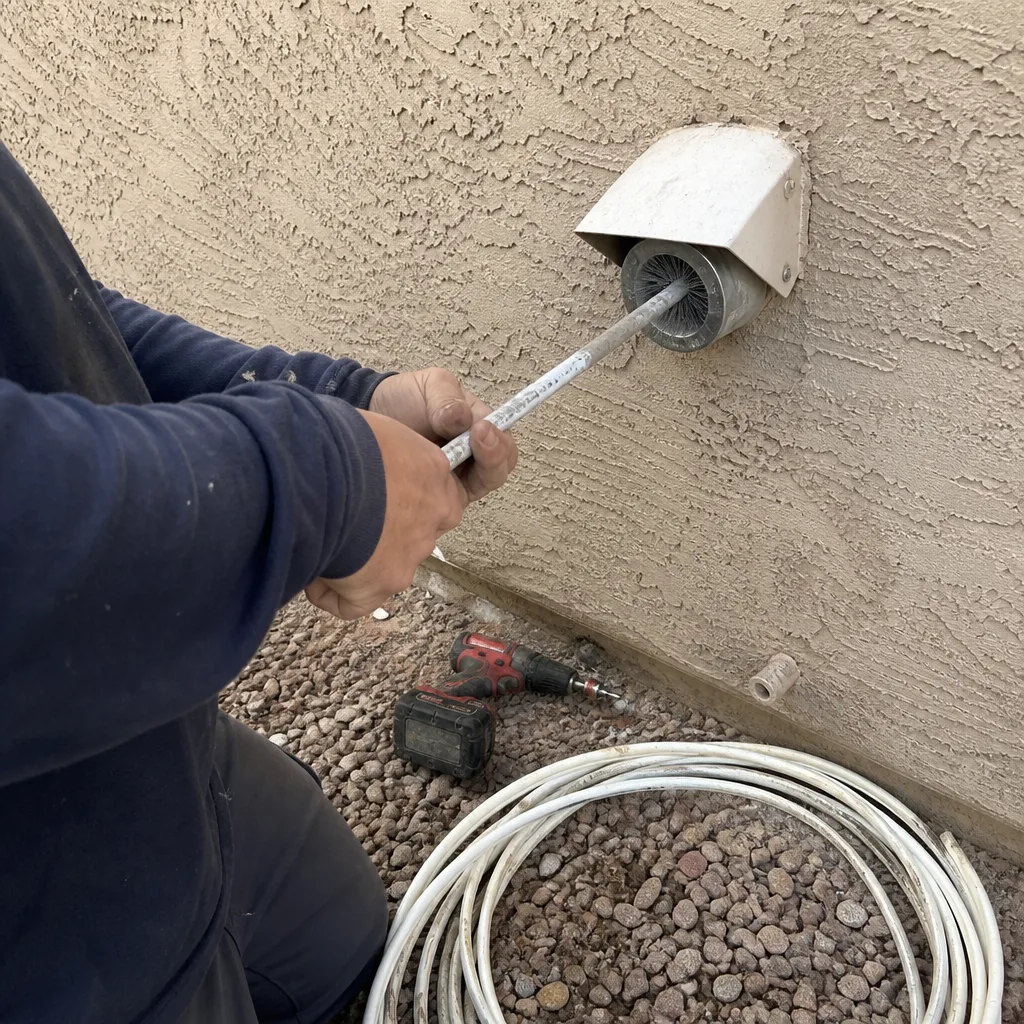
The financial case for duct cleaning is often framed in health terms that are difficult to quantify. The efficiency case is concrete and measurable.
A 2009 EPA field study documented that a 0.042-inch debris layer on an evaporator coil increases energy consumption by approximately 21%. In Mesa, where a 3-ton air conditioning system operates 2,500-3,000 hours annually and electricity rates from SRP and APS average $0.13-$0.15 per kWh, this translates to:
- Baseline annual cooling cost for 3-ton system: $850-$1,100
- 21% increase from coil debris: $180-$230 additional annual cost
- Five-year accumulated excess cost: $900-$1,150
This calculation assumes only coil debris, not additional restriction from dirty ducts. Supply duct debris reduces airflow, causing longer run times and reduced sensible heat removal. Return duct leaks or blockages draw unconditioned attic air, increasing load. The combined effect of neglected duct and coil maintenance in Mesa’s climate commonly produces 25-35% efficiency degradation in systems that have not been serviced in 8-10 years.
Equipment lifespan compounds this cost. Blower motors operating against restricted airflow draw higher amperage and fail prematurely. Compressors running longer hours with reduced refrigerant saturation experience accelerated wear. The replacement cost of a failed blower motor ($400-$800) or compressor ($1,800-$3,200) dwarfs preventive cleaning expense.
In specific Mesa contexts, additional costs accumulate:
- Dust storm debris: The July-September monsoon pattern produces haboob events that load particulate into attic spaces and through vented soffits. Homes near undeveloped desert or agricultural land in east Mesa experience higher loading rates.
- New construction residue: Mesa’s active building market means many homeowners occupy homes with construction debris in ducts. Drywall dust, wood particulate, and fastener debris from rough construction can remain in systems for years, abrading blower wheels and coating coils.
- Remodeling contamination: Kitchen and bathroom renovations generate fine dust that bypasses temporary barriers. We have documented 2-4 inch debris layers in return ducts following major remodels in Alta Mesa and Dobson Ranch homes.
The cost of not cleaning is not abstract. It appears on summer utility bills, in premature equipment replacement, and in reduced comfort during Mesa’s most extreme weather.
What Documentation Should You Receive
Documentation is the only proof that work occurred. Without it, you have paid for a service you cannot verify, and the company has delivered a product with no accountability. At CleanRun, documentation is not a courtesy; it is a standard deliverable on every job, maintained since our first residential cleaning in 2013.
Every customer receives:
- Written scope and price agreement: Signed before work begins, listing every component to be cleaned, every add-on with its cost, and the total price under Haven Standard Clause 1. No changes without written amendment.
- Before-and-after photography: Interior of every duct run, photographed through access holes cut for tool insertion. Images show the full circumference of the duct, not selective angles. Delivered electronically within 24 hours of job completion.
- Job completion checklist: Technician-signed verification that each listed component was cleaned, access holes were patched and sealed, and system was restored to operational condition.
- Warranty document: The 365-Day Done Right Promise in writing, with specific response procedure and contact method. Not a policy; a contractual obligation.
- Equipment and product record: If sanitizers or sealants were applied, EPA registration numbers and manufacturer specifications are recorded for customer reference and verification.
This documentation serves three purposes beyond verification. It supports warranty claims with dated evidence. It establishes baseline condition for future maintenance decisions. And it creates accountability that shapes technician behavior, knowing every duct run will be photographed and reviewed.
Companies that resist providing photography, that offer “verbal reports” or “technician notes” in place of images, or that claim photography is “not standard” are asking for trust they have not earned. In an industry where the work product is invisible by design, documentation is the only currency of credibility.
How Often Mesa Homes Need Duct Cleaning
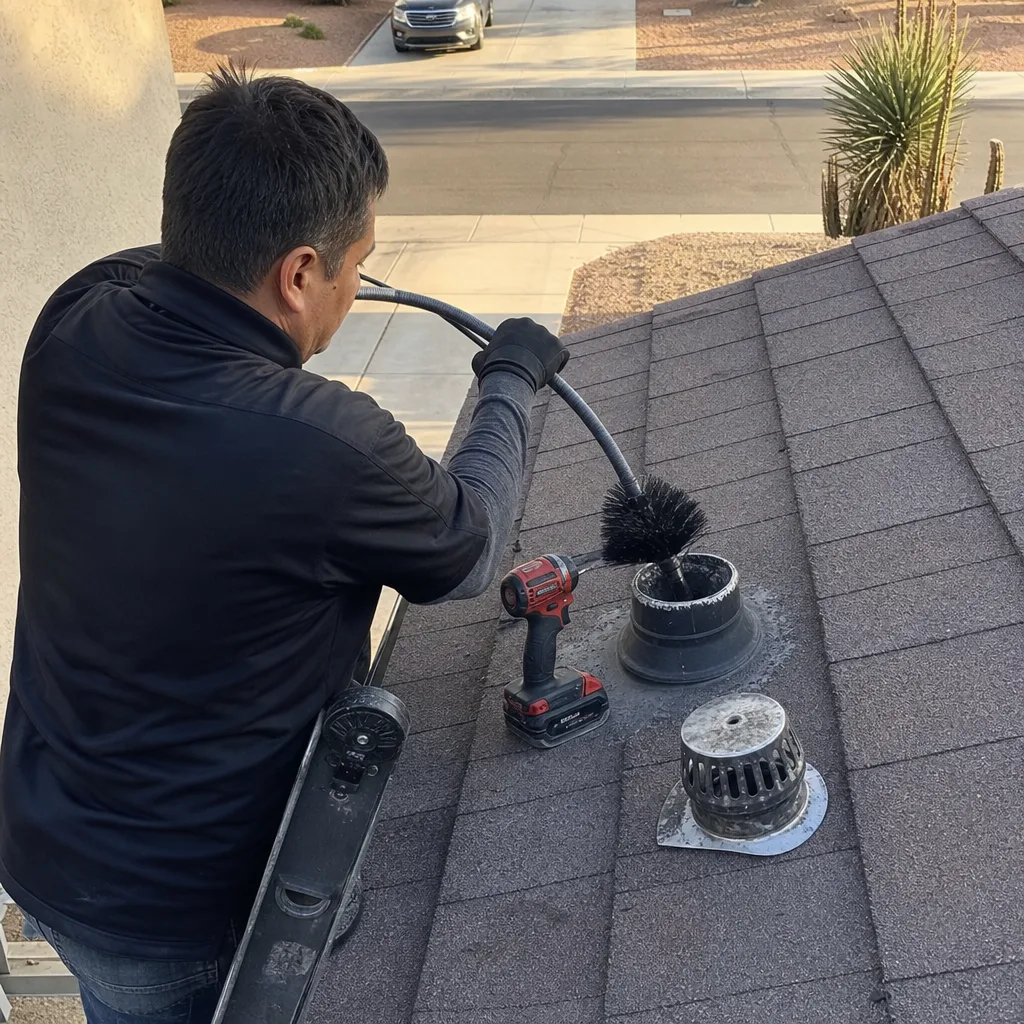
Frequency recommendations vary widely because conditions vary widely. A single answer for all Mesa homes is as misleading as a single price. These are the intervals we observe in our 52,000+ jobs, applied to Mesa’s specific environment.
Every 3-5 years: Standard residential systems in Mesa with no pets, no smokers, no recent construction, and regular filter changes (MERV 8-11, changed every 60-90 days). This describes many homes in established neighborhoods like Leisure World and the original Dobson Ranch sections, where systems were installed in the 1980s-1990s and have accumulated moderate debris without acute contamination.
Every 2-3 years: Homes with multiple pets, residents with allergies or respiratory conditions, or homes near active construction or undeveloped desert. The northeast Mesa corridor, from Las Sendas to Red Mountain Ranch, experiences higher dust loading due to elevation exposure and wind patterns. Homes with shedding pets accumulate dander and hair in returns that restricts airflow more rapidly than dust alone.
Annually: Homes with recent construction or remodeling, documented rodent activity, visible mold conditions, or systems that have experienced water intrusion. Mesa’s monsoon season produces roof leaks and condensate drain overflows that can wet duct insulation and support mold growth. Annual inspection and cleaning is warranted until the underlying condition is resolved and verified clear.
Post-event: Any fire, flood, or significant smoke exposure requires immediate duct inspection and likely cleaning. Wildfire smoke from regional fires in 2020 and 2024 deposited particulate in Mesa attic systems that remained active in airflow for months without cleaning.
Filter maintenance extends these intervals; neglect accelerates them. The most common error we observe in Mesa is extended filter intervals during mild weather months (November-March), when homeowners forget maintenance because the system runs less. Debris accumulated during these months is then forced through the system when cooling season begins in April.
For HVAC Cleaning in Mesa that includes coil and blower maintenance alongside duct cleaning, intervals can often be extended because the entire airflow path is addressed, not just the distribution network.
Common Mistakes to Avoid
- Booking by price alone without scope verification. The lowest quoted price almost always excludes components that determine whether the system is actually clean. Request written scope before comparing numbers.
- Accepting verbal estimates or phone quotes without inspection. System configuration varies too widely for accurate remote pricing. CleanRun provides written quotes after inspection, with no obligation, under Haven Standard Clause 1.
- Ignoring return ducts. Returns collect more debris than supplies because they draw unfiltered air. A quote that prices supplies separately from returns, or excludes returns entirely, is not a full-system cleaning.
- Assuming new homes are clean. Construction debris in Mesa’s active building market frequently exceeds contamination in 20-year-old systems. New homeowners should schedule initial cleaning within the first 18 months.
- Neglecting dryer vents while focusing on ducts. Dryer vent fires exceed 2,900 annually in the U.S., with peak risk in warm, dry climates. Dryer Vent Cleaning in Mesa is a separate service with distinct safety implications.
- Failing to request documentation. Without before-and-after photography, you have no verification of work performed and no basis for warranty claim if problems arise.
- Delaying until symptoms appear. Reduced airflow, uneven cooling, or elevated utility bills indicate advanced debris accumulation. Preventive cleaning costs less than reactive repair.
When to Call a Professional
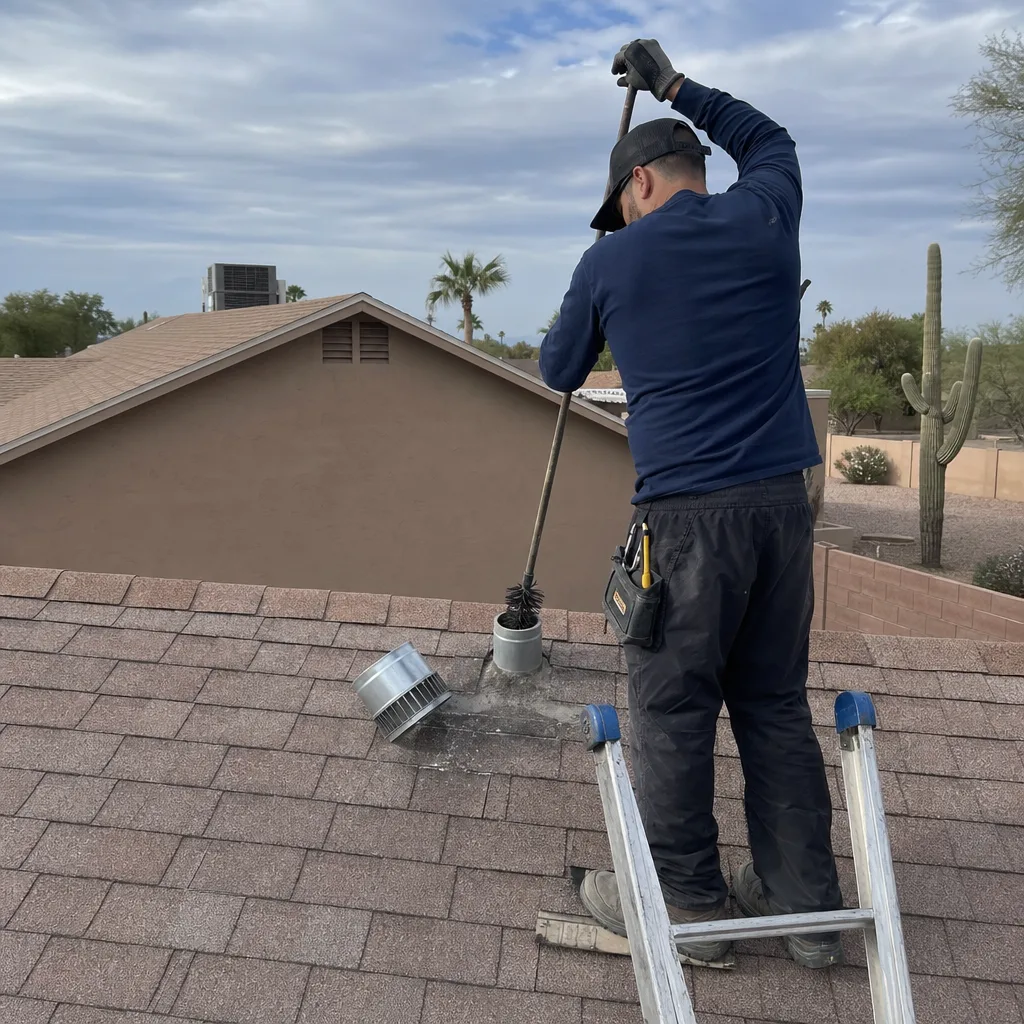
Call for inspection and written quote when you observe visible dust emission from registers, persistent musty odor when the system operates, uneven cooling between rooms, or utility bills that increase without rate changes or usage changes. After any construction, remodeling, or water intrusion event, schedule inspection regardless of apparent system function.
In Mesa’s climate, preventive cleaning before peak cooling season (April-May) ensures maximum efficiency during highest-load months. Systems cleaned in spring operate at designed efficiency through summer, when electricity costs are highest.
CleanRun Air Duct Cleaning Mesa offers free estimates in Mesa. Every estimate includes written scope, itemized pricing, and no obligation. Call (602) 632-0849 to schedule. We also provide a Free Second Opinion on any written estimate from another company, placing our scope and price alongside theirs for direct comparison. Explore more guides & resources to make an informed decision.
Frequently Asked Questions
A documented full-system cleaning with before-and-after photography for a typical Mesa home runs $350-$550 in 2026. Smaller homes or limited-scope cleaning may start near $280; larger homes with multiple returns, coil cleaning, or dryer vent service can reach $700-$900. The exact price depends on system size, accessibility, and contamination level, which is why CleanRun provides written quotes after inspection, never verbal estimates. Call (602) 632-0849 for an exact quote; estimates are free.
Low quotes almost always reflect limited scope, not efficiency. The $79 special cleans approximately 18 inches past each register opening, leaving 90% of ductwork untouched. Per-vent pricing obscures whether returns, plenum, and air handler are included. A legitimate full-system quote accounts for equipment, technician time, documentation, and warranty, all of which have real costs that cannot be eliminated without eliminating the service itself. When a quote seems too low, request written scope and ask specifically whether negative-pressure extraction will be performed at the air handler.
Demand before-and-after photography of every duct run, delivered as a standard job record, not an upgrade. At CleanRun, this photography has been mandatory on every job since 2013. Images should show the full interior circumference of each duct, not selective angles or register-only views. Without documentation, you have paid for invisible work with no verification. With documentation, you have dated evidence of condition and a basis for warranty claim if issues arise.
Every 3-5 years for standard Mesa homes with regular filter changes; every 2-3 years for homes with pets, allergies, or proximity to construction or desert exposure; annually for homes with recent water intrusion, remodeling, or documented contamination. New homes should receive initial cleaning within 18 months of occupancy due to construction debris accumulation. Filter maintenance extends intervals; neglect accelerates them.
Duct sanitizer has a specific use case: documented microbial growth inside ductwork. At CleanRun, we apply EPA-registered sanitizer only when pre-cleaning photography shows visible mold or when laboratory testing confirms elevated fungal levels. The application is photographed, and the EPA registration number is recorded. “Deodorizer” without documented odor source is not the same service and is rarely necessary. If a company recommends sanitizer without showing you photographic evidence of mold, ask for the specific condition that warrants it.
Yes. Mesa’s combination of fine desert dust, seasonal pollen loads, and monsoon humidity creates conditions that accelerate debris accumulation and adhesion. Dust storms deposit particulate that settles in attic ductwork; monsoon humidity can activate dormant debris and support microbial growth. Homes in elevated northeast Mesa areas experience higher wind exposure and dust loading. The cooling-dominated climate means systems operate continuously for 6-8 months, circulating accumulated debris rather than allowing seasonal dormancy.
The Bottom Line
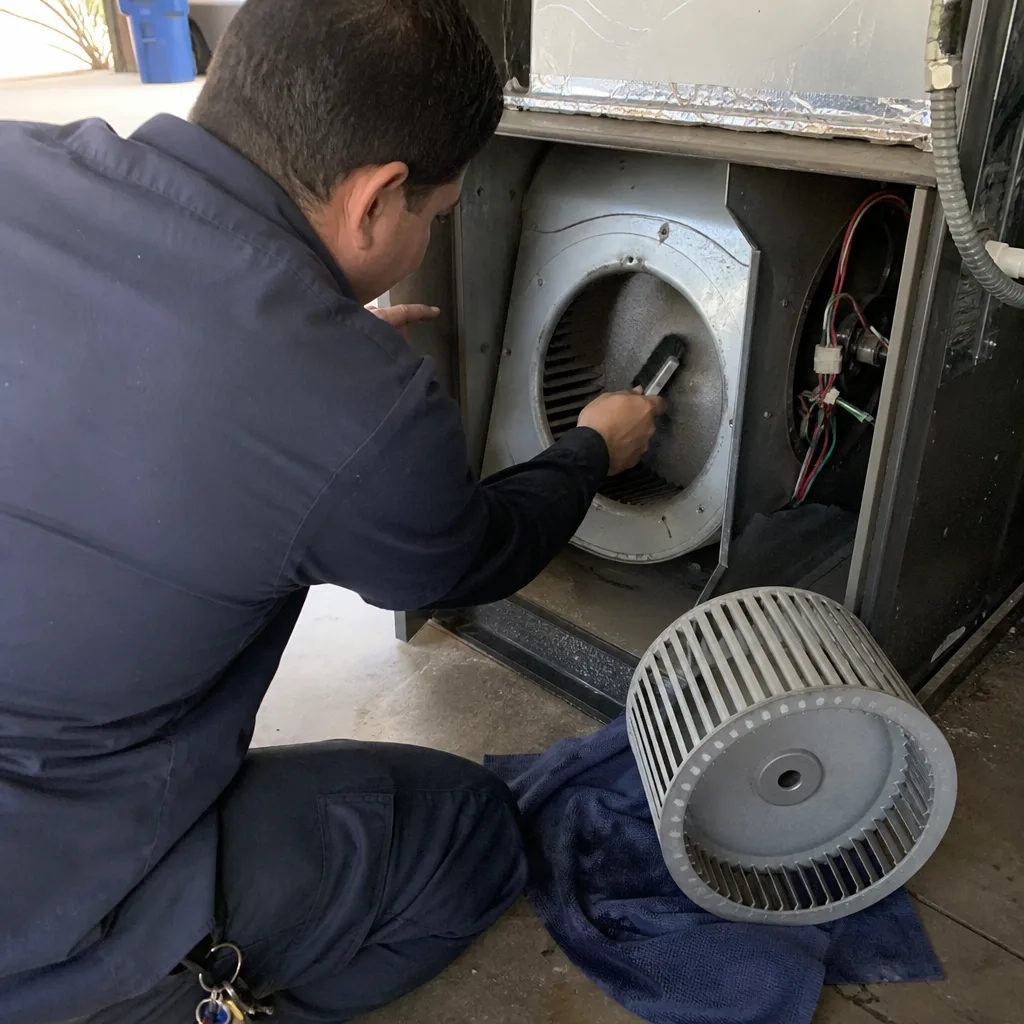
Duct cleaning pricing in Mesa is not mysterious; it is obscured by an industry that profits from confusion. The true cost of a documented, warranted, full-system cleaning, $350-$550 for most homes, reflects real equipment, trained labor, and accountability that survives the technician’s departure. The $79 alternative is not a discount version of the same service; it is a fundamentally different product that touches a fraction of the system and provides no verification.
The homeowner’s task is simple: request written scope, verify what components are included, demand photographic documentation, and compare warranties in writing. These steps eliminate bait-and-switch pricing and distinguish legitimate service from vacuum noise. In Mesa’s climate, where system efficiency directly affects summer utility costs, the difference between real cleaning and surface cleaning is measured in dollars every month.
CleanRun Air Duct Cleaning Mesa home has operated under these principles since 2013: written price before work starts, documented photo record on every visit, and the 365-Day Done Right Promise in writing on every job. No exceptions, no urgency theatre, no work you cannot verify.
Written by Tomas Reyes, Owner at CleanRun Air Duct Cleaning Mesa, serving Mesa since 2013.