
Last updated September 23, 2026
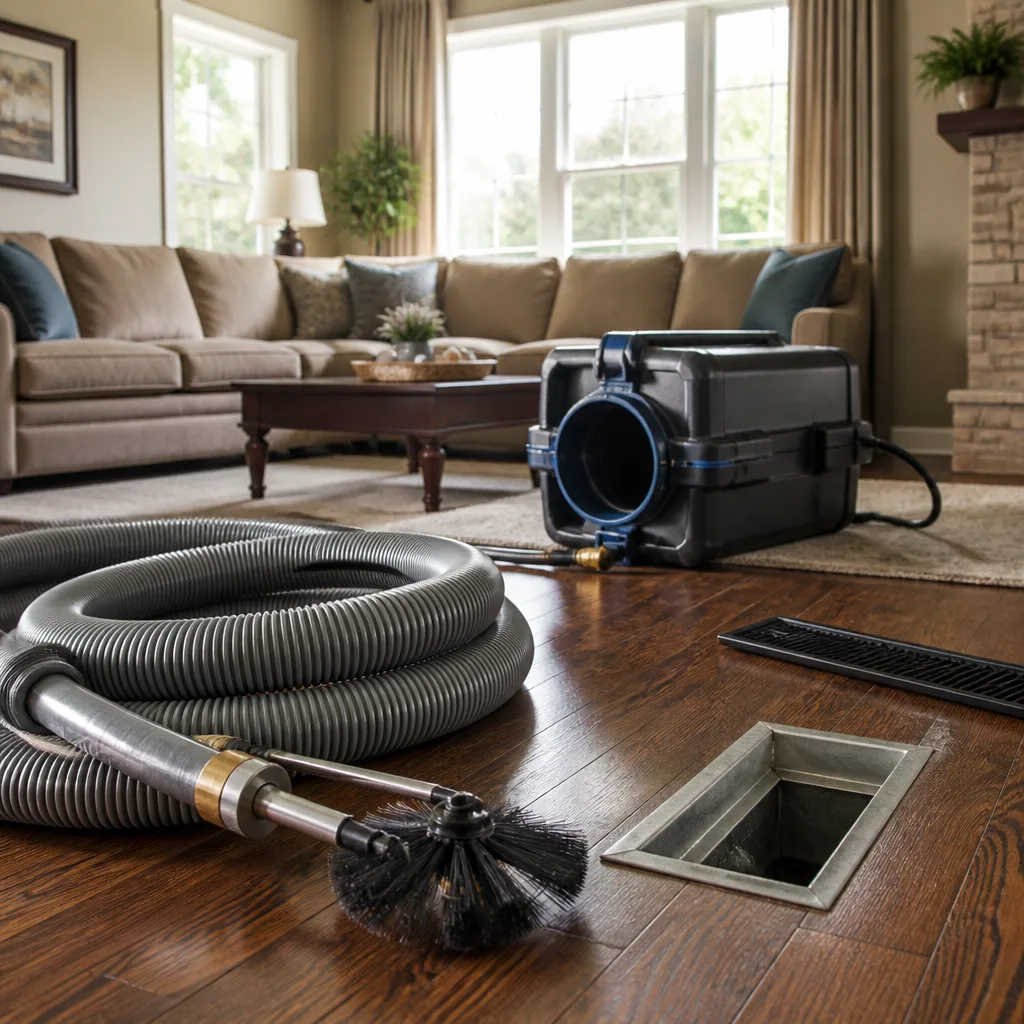
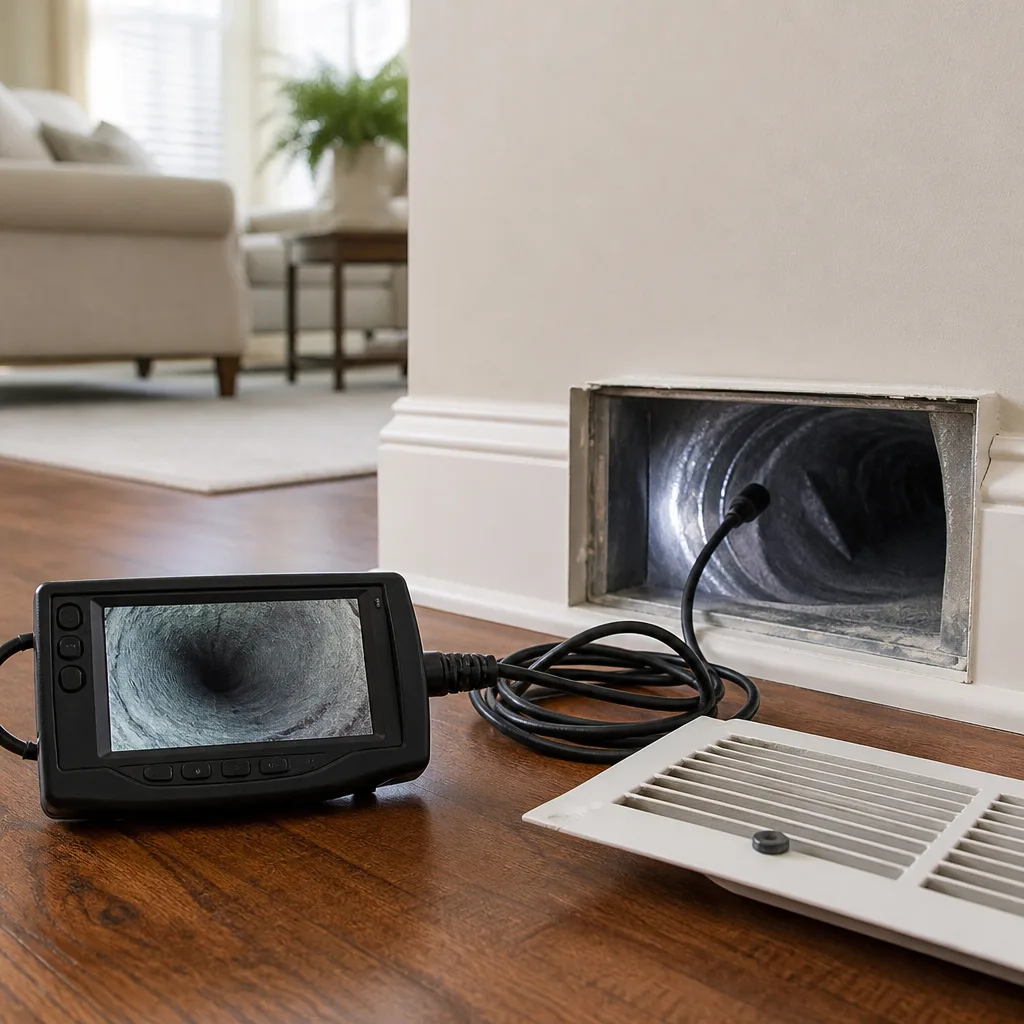
Whole-system duct and dryer vent check with before-and-after photos - you see exactly what came out of your vents
That "$99 whole-house special" is a bait ad - the real number appears once they are in your hallway, or the "clean" is a shop-vac at the register. We photograph the inside of your ducts before and after instead.
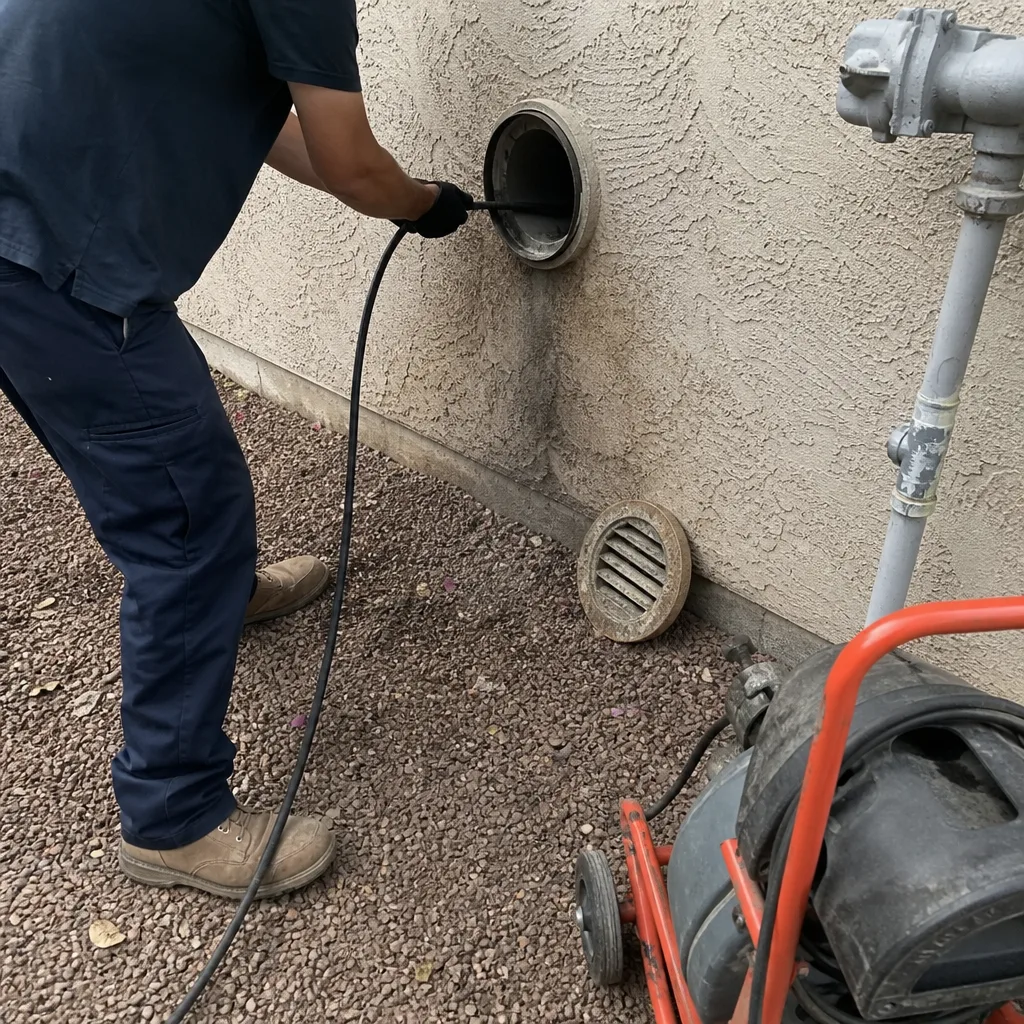 Before
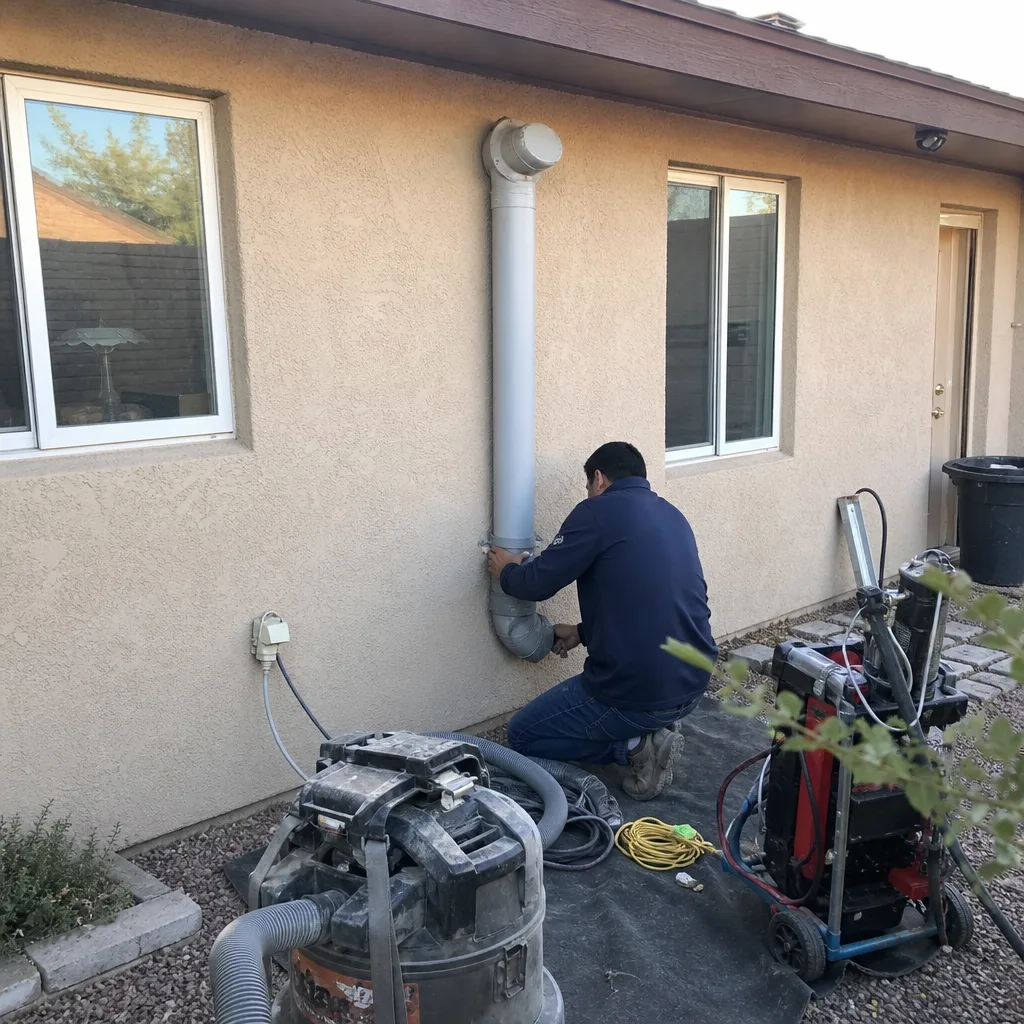 After
After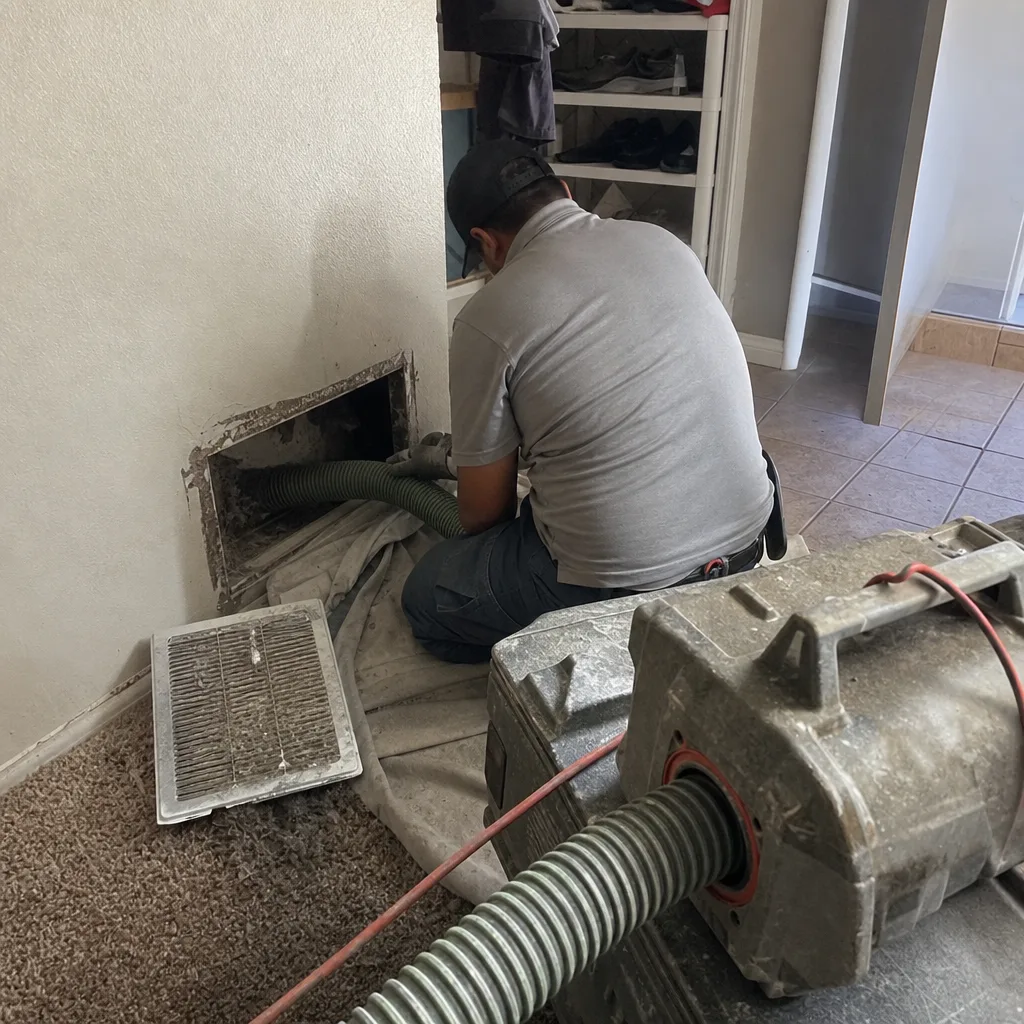 Before
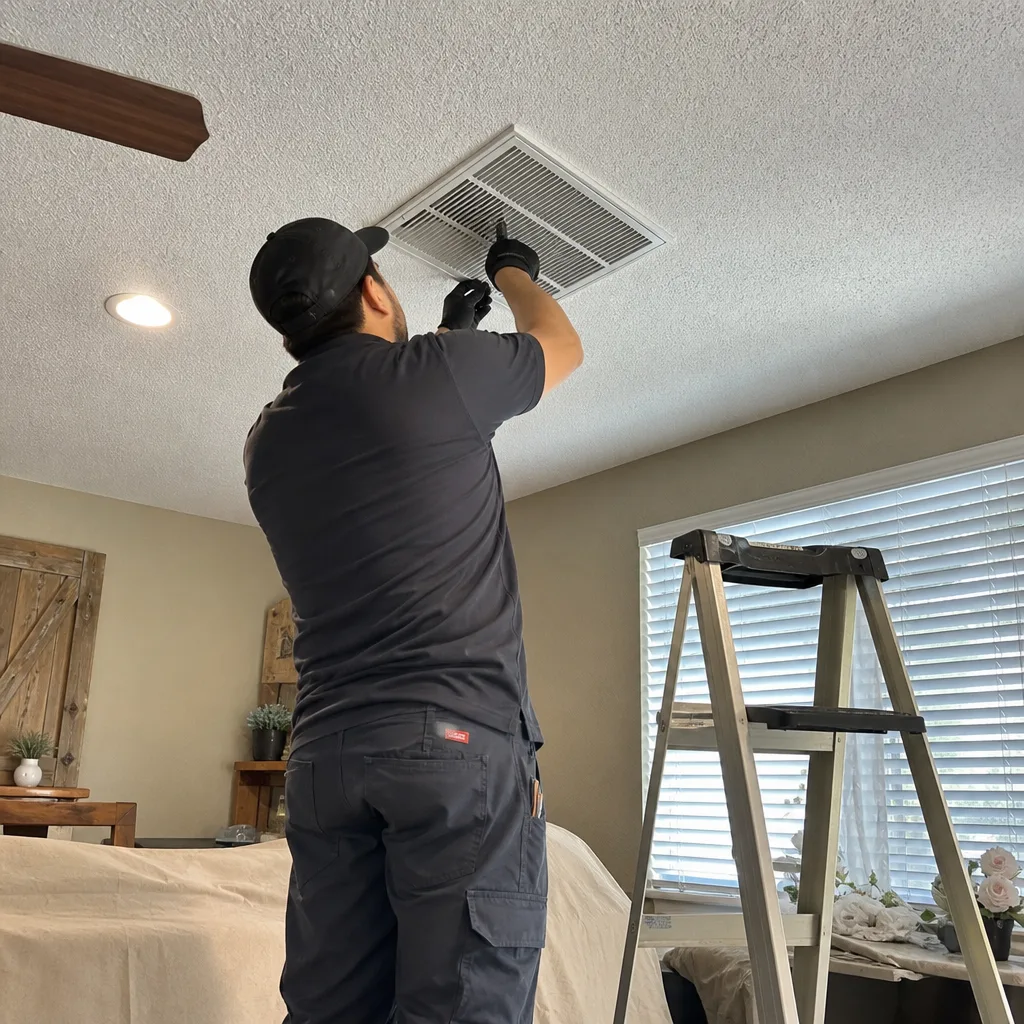 After
After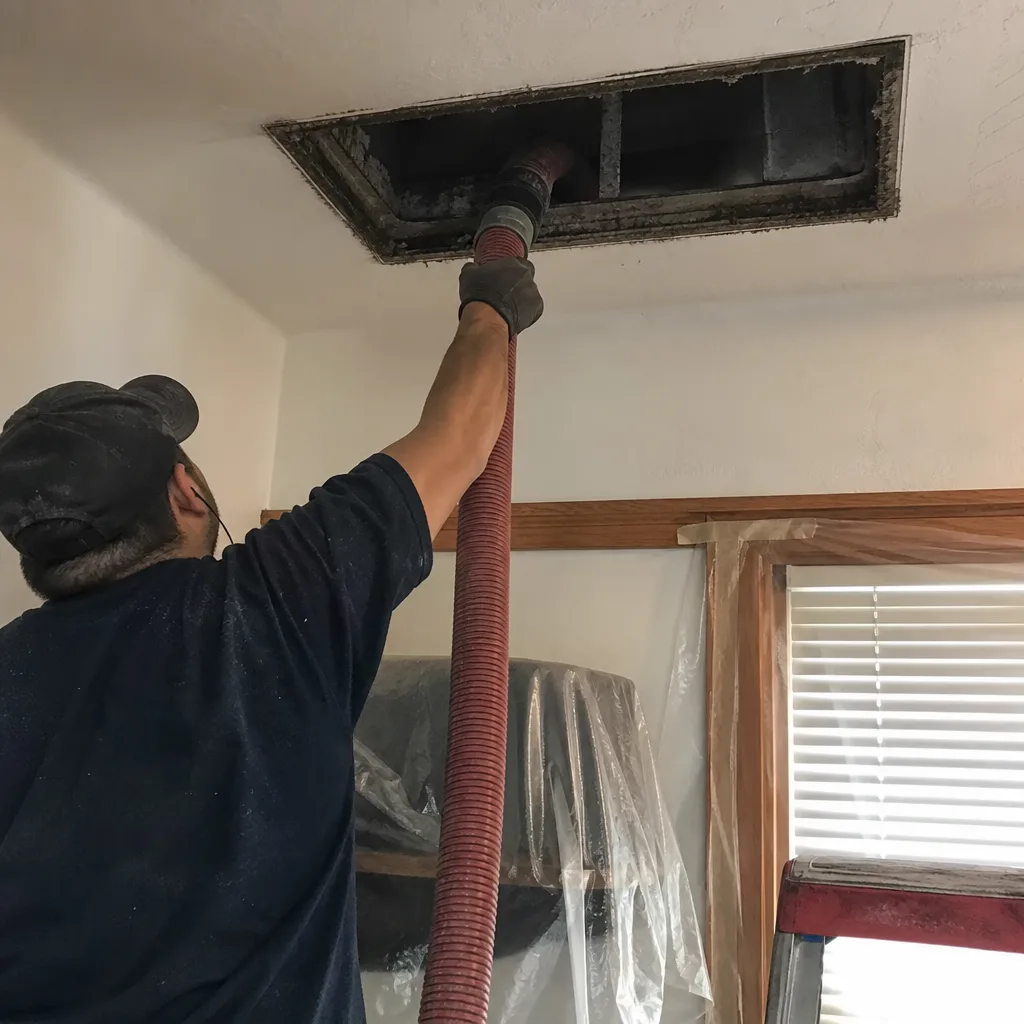 Before
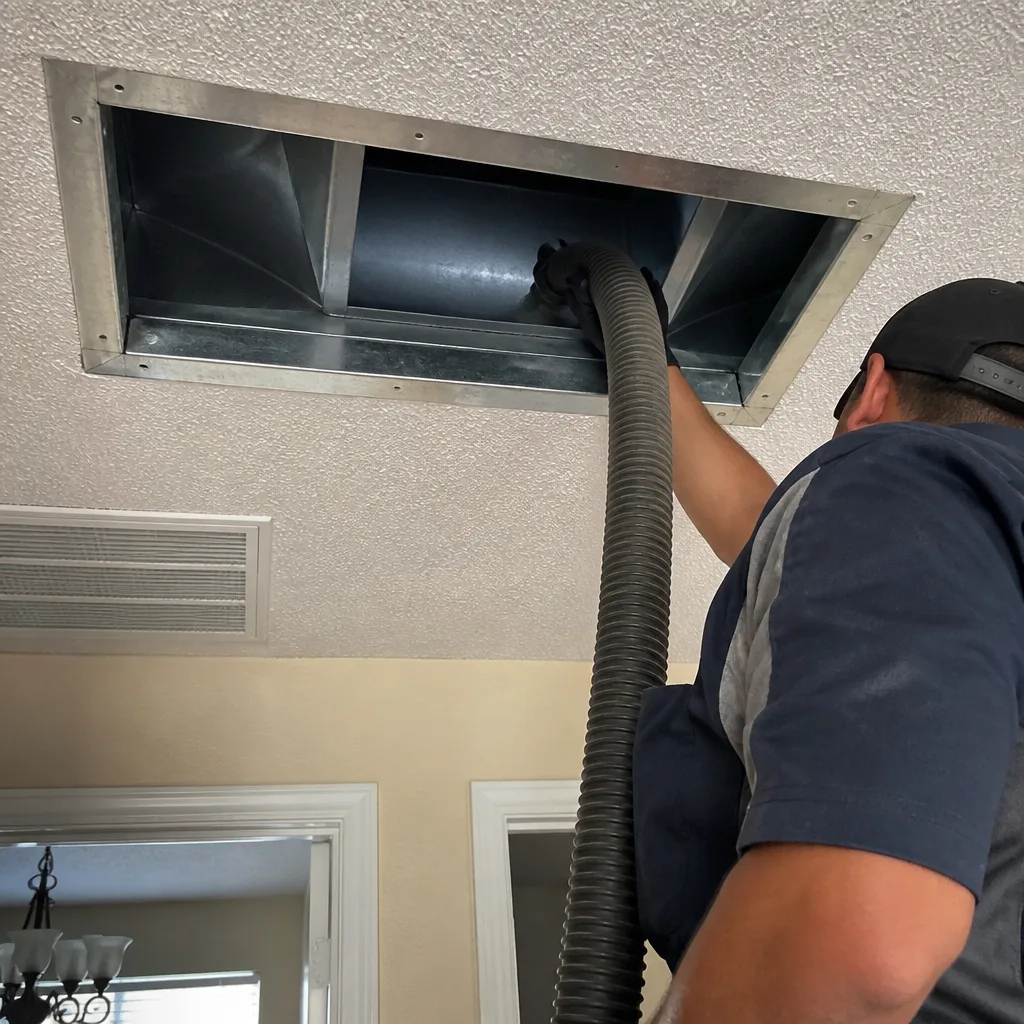 After
AfterSeasonal Air Duct Cleaning Care for Mesa: Year-Round Homeowner’s Guide
In Mesa, the worst time to schedule duct cleaning is July, when every HVAC company is fully booked, your system can’t be shut down for long, and post-monsoon debris hasn’t yet settled into the ductwork. The best window is late October, and almost nobody books it. Most year-round duct care guides are written for climates with four equal seasons; they tell Mesa homeowners to clean in spring and fall without accounting for 110-degree cooling loads, July-September monsoon dust, or the caliche-heavy soil that changes what actually ends up inside duct runs. This guide replaces that national template with a four-window calendar built specifically for the Sonoran Desert’s two high-load periods and two transition gaps.
Quick Answer
Mesa homeowners should schedule professional Air Duct Cleaning services in late October after monsoon debris settles, perform a filter and register inspection in November before heating season, check the evaporator coil drain pan in March before peak cooling, and use the January-February off-peak window for any major duct repair or sealing work. This calendar aligns with Mesa’s actual climate stressors rather than a generic four-season template.
Table of Contents
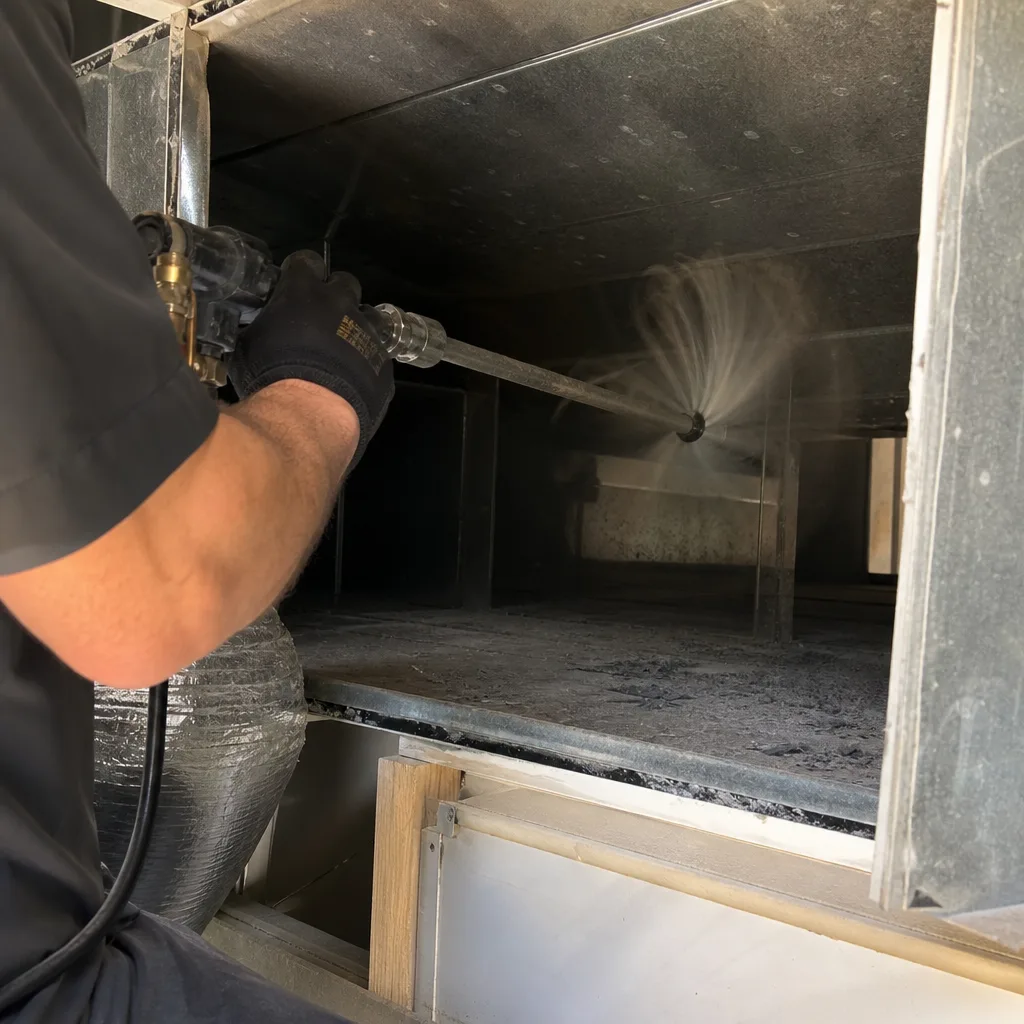
- The Mesa Four-Window Calendar: A Climate-Specific Schedule
- Pre-Cooling Prep: March-April Air Handler Inspection
- What Monsoon Season Actually Deposits in Your Ductwork
- The October Window: Post-Monsoon Assessment and Cleaning
- Heating-Season Filter Check: November Tasks
- Using Your Utility Bill as a Duct Health Indicator
- The January-February Off-Peak Booking Window
- Common Mistakes to Avoid
- When to Call a Professional
- Frequently Asked Questions
- The Bottom Line
BeforeAfterThe Mesa Four-Window Calendar: A Climate-Specific Schedule
Mesa doesn’t have four equal seasons. It has two high-load periods, brutal and brief, separated by two transition windows when your HVAC system and the technicians who service it are both more available. A duct care calendar built around national templates misses every timing advantage a Mesa homeowner actually has.
Here’s how we map the year after serving more than 52,000 homes since 2013, many of them in Mesa neighborhoods from Dobson Ranch to Las Sendas:
- Pre-cooling prep: March-April. Inspect the evaporator coil, drain pan, and return registers before the 100-degree days arrive and your system runs 14-16 hours daily.
- Peak cooling load: May-September. Monitor; don’t schedule major duct work unless there’s a failure. Your system can’t be shut down for long, and technician availability is thinnest when you need it most.
- Post-monsoon assessment: October. The optimal cleaning window. Debris has settled, temperatures have dropped to the 80s, and crews can perform full negative-pressure extraction without pressurizing a hot house.
- Heating-season filter check: November. A lighter inspection focused on filter condition, register airflow balance, and whether summer’s dust load has restricted the system before you switch to heating.
- Off-peak repair window: January-February. Schedule duct sealing, register replacement, or any work requiring extended system downtime. Technicians are more available, and you’re not competing with emergency cooling calls.
The national guides that suggest “spring and fall” cleaning don’t account for the fact that Mesa’s “spring” is already hitting 90 degrees by late April, or that “fall” doesn’t start meaningfully until Halloween. We’ve found that homeowners who follow this four-window schedule catch problems before they become expensive failures, and they pay less because they’re booking in off-peak periods. See our Air Duct Cleaning Cost Breakdown: The Mesa Homeowner’s Reference for 2026 for detailed pricing guidance.
Pre-Cooling Prep: March-April Air Handler Inspection
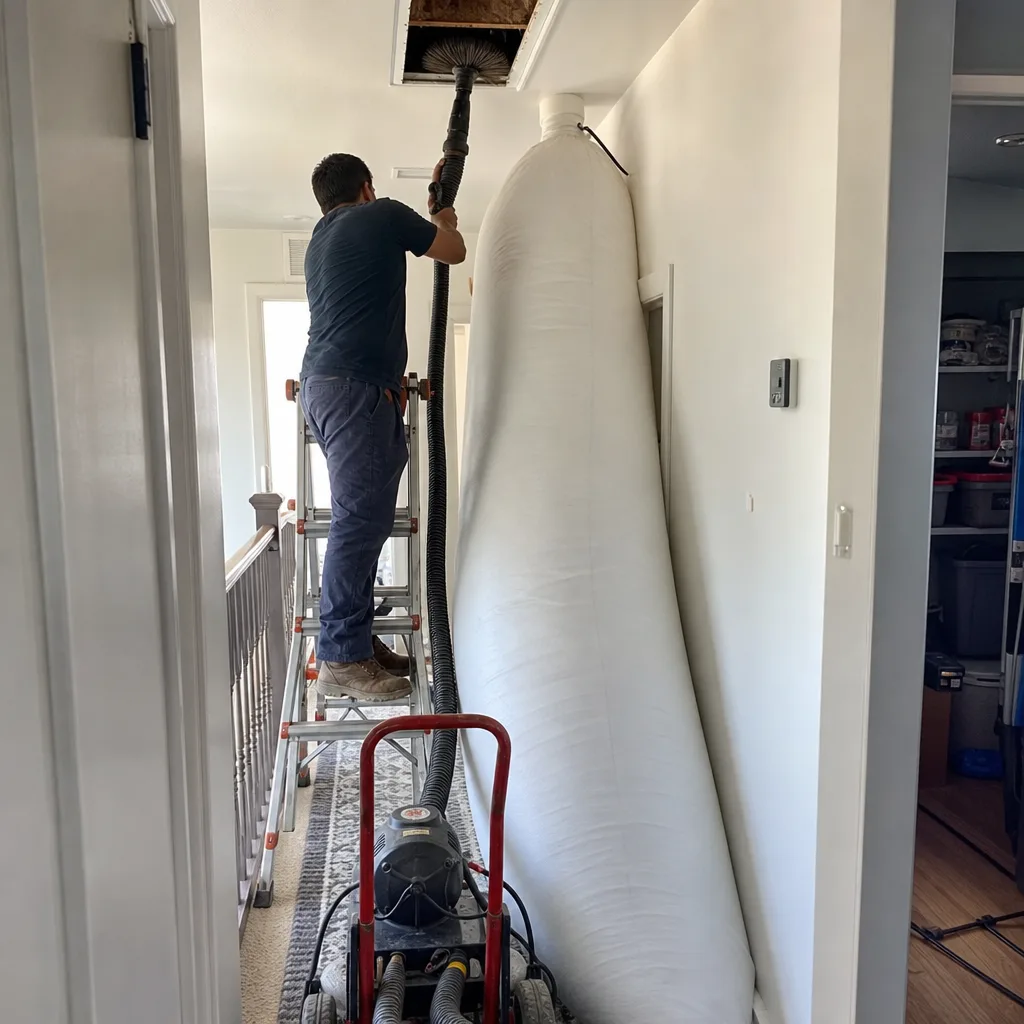
By mid-March in Mesa, daytime temperatures are already climbing into the 80s. Your air handler, the indoor unit that houses the blower and evaporator coil, is about to become the hardest-working appliance in your home. This is the window to inspect it before the thermal load makes shutdowns impractical.
Start with the evaporator coil drain pan. In our Mesa jobs, we regularly see standing condensate in pans where the drain line has partially clogged with dust and biological film over the winter. When that pan overflows during peak season, water damage to drywall and ceiling texture is common, especially in two-story homes with upstairs air handlers. The camera on our Rotobrush equipment has shown us 3-inch debris build-ups at the first elbow of condensate lines in homes near the Salt River bed, where caliche dust is especially fine.
What to check:
- Drain pan condition: Look for standing water, rust, or white mineral deposits. These indicate slow drainage that will fail under summer volume.
- Coil surface: A flashlight across the fins reveals whether dust has bridged between them. Even a thin layer reduces heat transfer efficiency and raises your kWh draw.
- Return register airflow: Hold a tissue against each register. Weak suction at one register but not others often indicates a disconnected duct run in the attic, where Mesa’s 150-degree attic temperatures in July will make that leak expensive.
- Filter frame seal: A filter that doesn’t seat properly allows bypass air to coat the coil directly, bypassing the filter entirely.
If you find standing water or a visibly dirty coil, this is the last practical window before October to have it addressed professionally. Once May arrives, shutting down the system for coil cleaning means several hours without cooling in a house that’s already 85 degrees inside.
What Monsoon Season Actually Deposits in Your Ductwork
July through September in Mesa brings the North American Monsoon: sudden dust storms, heavy rain, and sharp humidity spikes that change what enters your duct system and how it behaves once inside.
Here’s what we document in post-monsoon inspections that national guides never mention:
Caliche and fine mineral dust. Mesa’s soil is high in caliche, a calcium carbonate hardpan that pulverizes into extremely fine particles during dry periods. When a dust storm hits, negative-pressure duct systems, those that pull return air through the building, can draw this material through unsealed return chases, gaps around filter racks, and poorly sealed attic pull-downs. We’ve photographed caliche accumulation 1/4-inch deep on the upstream side of blower wheels in homes near Red Mountain, where the soil is especially exposed.
Organic material. Monsoon rains trigger brief but intense vegetation growth, followed by rapid desiccation. Pollen, leaf fragments, and mold spores enter through the same pathways. In homes with evaporative coolers, the switch to refrigerated air in late September often pulls monsoon-season organic material deep into the duct network that was never designed for it.
Humidity-driven biological growth. Mesa’s relative humidity can spike from 15% to 65% during a monsoon event. Duct interiors that were dry all year suddenly have enough moisture to support mold growth on existing dust deposits. We’ve found active growth on fiberglass duct liner in homes where the homeowner reported “a musty smell only in September.”
The critical point: this debris doesn’t fully settle until October. Scheduling cleaning in August or September means you’re removing material that will be replenished within weeks. The October window exists for a reason.
The October Window: Post-Monsoon Assessment and Cleaning
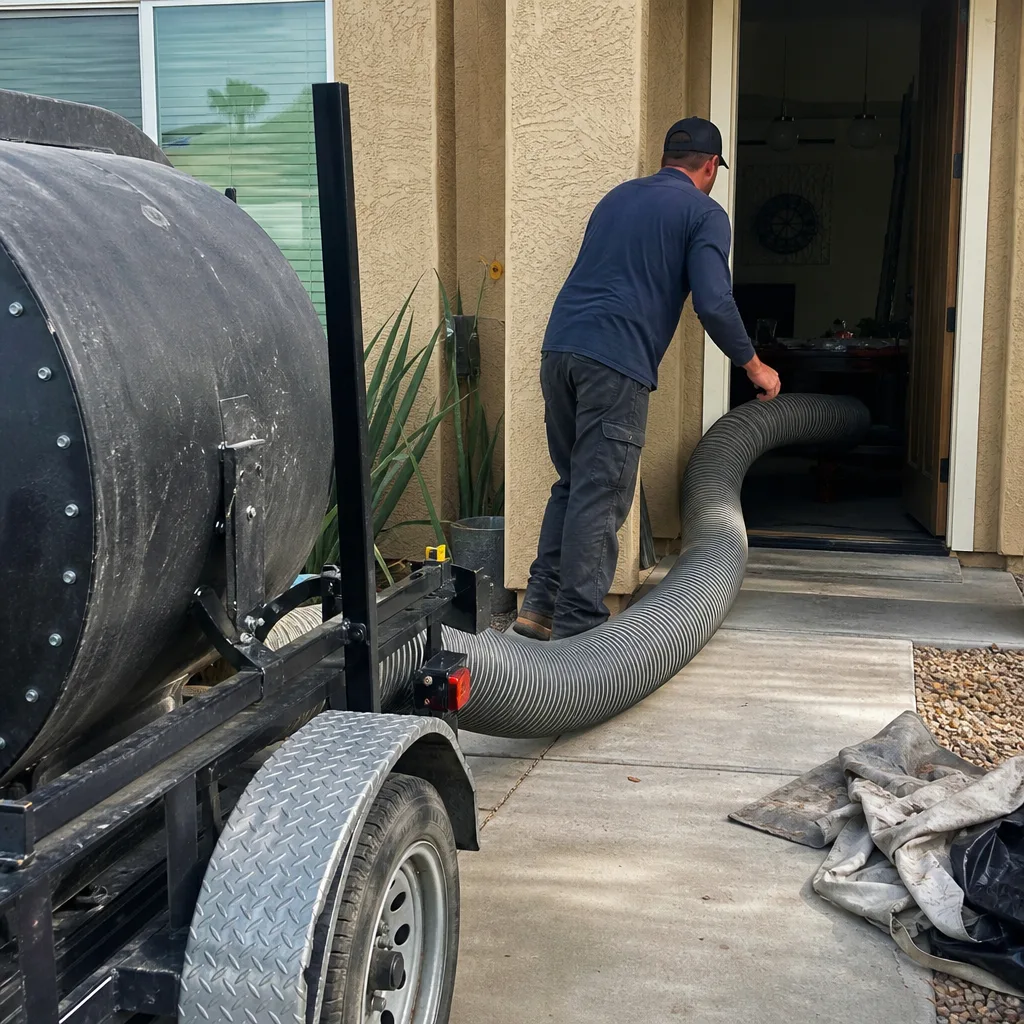
Late October is the single best time for professional air duct cleaning in Mesa. Temperatures have dropped to the 80s, so your system can be shut down for the 3-4 hours a thorough job requires without making the house unlivable. Monsoon debris has settled. Technician availability is better than at any point since February. And cleaning before heating season removes particulate that would otherwise be recirculated by the furnace blower.
What a proper October service should include, based on what we deliver under the H.A.V.E.N. Standard:
- Written price before work starts. Haven Standard Clause 1: no exceptions. The price is agreed in writing before a single panel comes off.
- Documented photo record of every duct run. Haven Standard Clause 4: the inside of every run is photographed before and after. You see the difference between real work and vacuum noise.
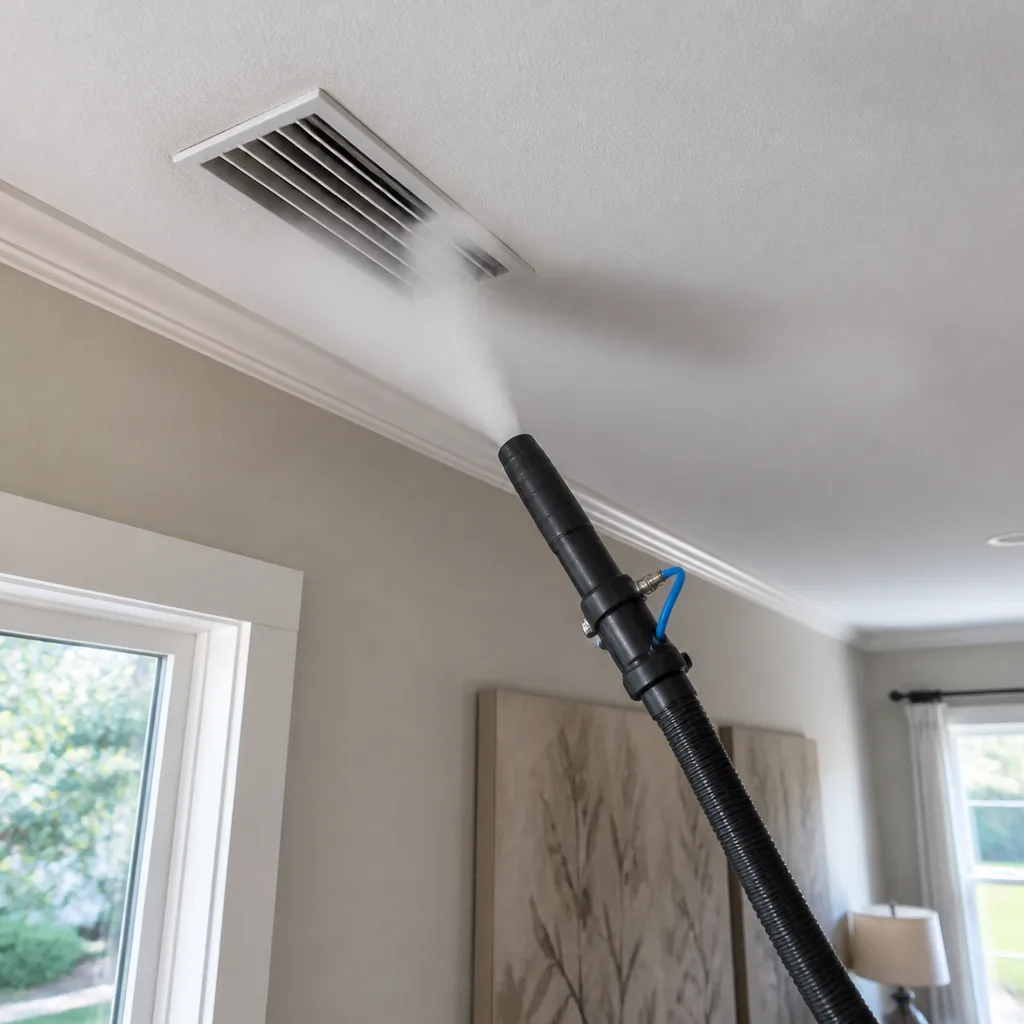
- Negative-pressure extraction with professional equipment. We use Rotobrush and Nikro systems, not shop vacuums with duct tape adapters. The equipment creates controlled suction that prevents debris from escaping into your living space during cleaning.
- Register and boot inspection. Each register is removed, the boot (the sheet-metal transition from duct to wall or floor) is inspected for gaps, and the register is reseated.
- Post-cleaning airflow verification. We check that suction has been restored to design levels, not assumed.
There’s a safety consideration specific to October timing. Debris cleared before heating season starts reduces ignition risk from particulate accumulation near electric resistance strips. These strips, used in heat pump auxiliary mode, operate at temperatures high enough to char accumulated dust. We’ve found 1/2-inch debris layers on strip heaters in homes that hadn’t been cleaned in four years. The October window addresses this before the first cold night.
Air Duct Cleaning in Mesa through CleanRun includes all of the above as standard, not upgrades.
Heating-Season Filter Check: November Tasks
November in Mesa is brief and mild. You’ll run heating perhaps a dozen nights before January. This is exactly why it’s valuable: you can observe system behavior under light load before serious cold arrives, and you can catch summer’s accumulated restrictions before they strain the heating components.
The November check is lighter than October’s full service. You’re confirming that the October cleaning held, that filters handled the monsoon load, and that no new issues emerged during the switchover from cooling to heating. Follow our Air Duct Cleaning Maintenance Checklist for Mesa Homeowners to ensure nothing is missed.
Specific tasks:
- Filter inspection, not just replacement. Look at the filter’s loading pattern. Even loading across the face means air is distributing properly. A dirty spot in the center with clean edges indicates bypass, usually from a poor frame seal or a filter that’s too small for the rack.
- Register temperature check. After 10 minutes of heating, all registers should deliver air within 5 degrees of each other. A cold register in one room often means a disconnected duct in the attic, where Mesa’s temperature swings will make that room uncomfortable in January.
- Thermostat cycle observation. Heat pumps in Mesa should cycle 2-3 times per hour in mild weather. Short-cycling, 5+ times per hour, often indicates restricted airflow from duct debris or an undersized return path.
- Humidity monitoring. November humidity in Mesa is typically 30-40%. If your home feels drier than previous years, restricted return airflow may be reducing the system’s ability to circulate and mix air.
This is also the window to address any October findings you deferred. If the photo record showed debris remaining in one branch line, or if a register boot was noted as deteriorating, November’s mild weather allows correction before January’s cold.
Using Your Utility Bill as a Duct Health Indicator
Your utility bill contains a seasonal duct health signal that almost no homeowner monitors: kWh per cooling degree day (CDD). This metric normalizes your electricity use against how hot it actually was, stripping out weather variation to reveal system efficiency changes.
Here’s how to calculate it:
- Find your monthly kWh from your SRP or APS bill.
- Find cooling degree days for that month from NOAA’s Mesa climate data.
- Divide kWh by CDD.
A stable duct system shows consistent kWh/CDD year over year, within about 10%. A measurable spike that isn’t explained by occupancy changes, a new appliance, or a thermostat adjustment often signals restricted airflow from debris buildup.
We’ve seen this pattern repeatedly in Mesa. A homeowner in Alta Mesa called us in October 2022; their kWh/CDD had risen 34% from 2021 despite identical thermostat settings. The photo record showed a 2-inch debris layer in the main return trunk, reducing airflow enough that the system ran 22% longer to maintain temperature. After cleaning, their November kWh/CDD dropped to 8% below the prior year, the efficiency gain from restored airflow more than offsetting the milder weather.
The reverse is also useful. If your kWh/CDD drops after duct cleaning, you’ve got documentation that the service delivered measurable performance improvement, not just cleaner ducts. We encourage Mesa homeowners to track this and share the data with us; it helps us calibrate our service scope to actual conditions.
For HVAC Cleaning in Mesa that includes coil and blower inspection alongside duct service, the efficiency impact is typically larger.
The January-February Off-Peak Booking Window
January and February are the forgotten months in Mesa HVAC. Nights dip to the 30s, days recover to the 60s, and nobody’s thinking about their ducts. This is precisely why it’s the best window for work that requires extended system downtime or multiple technician hours.
What to schedule in this window:
- Duct sealing and repair. Mastic application and metal tape work need cure time and access to cold attics. In July, a Mesa attic hits 150 degrees and sealants flash-dry poorly. In January, you get proper adhesion and the technician can work a full day without heat exhaustion.
- Register replacement or relocation. Cutting new openings or patching old ones generates drywall dust. In January, you can open windows for ventilation without importing 110-degree air.
- Return path upgrades. Many Mesa homes built 2015-2020 have undersized returns for the actual cooling load. Adding a return duct run is a half-day job that’s impractical during peak season.
- Major system modifications. Adding a zoning damper, replacing a plenum, or converting from flex duct to hard pipe, all of these are January-February projects.
Technician availability is the other factor. CleanRun’s Mesa crew schedule in January typically has 40% more open slots than in July. You’re not competing with emergency no-cool calls from retirees in Sunland Village or new homeowners in Eastmark who just discovered their builder-grade ductwork can’t handle the load.
Pricing reflects this, too. While we don’t discount our written prices seasonally, the total project cost is often lower in January because the job can be completed in one scheduled day rather than two, with no overtime or emergency premiums.
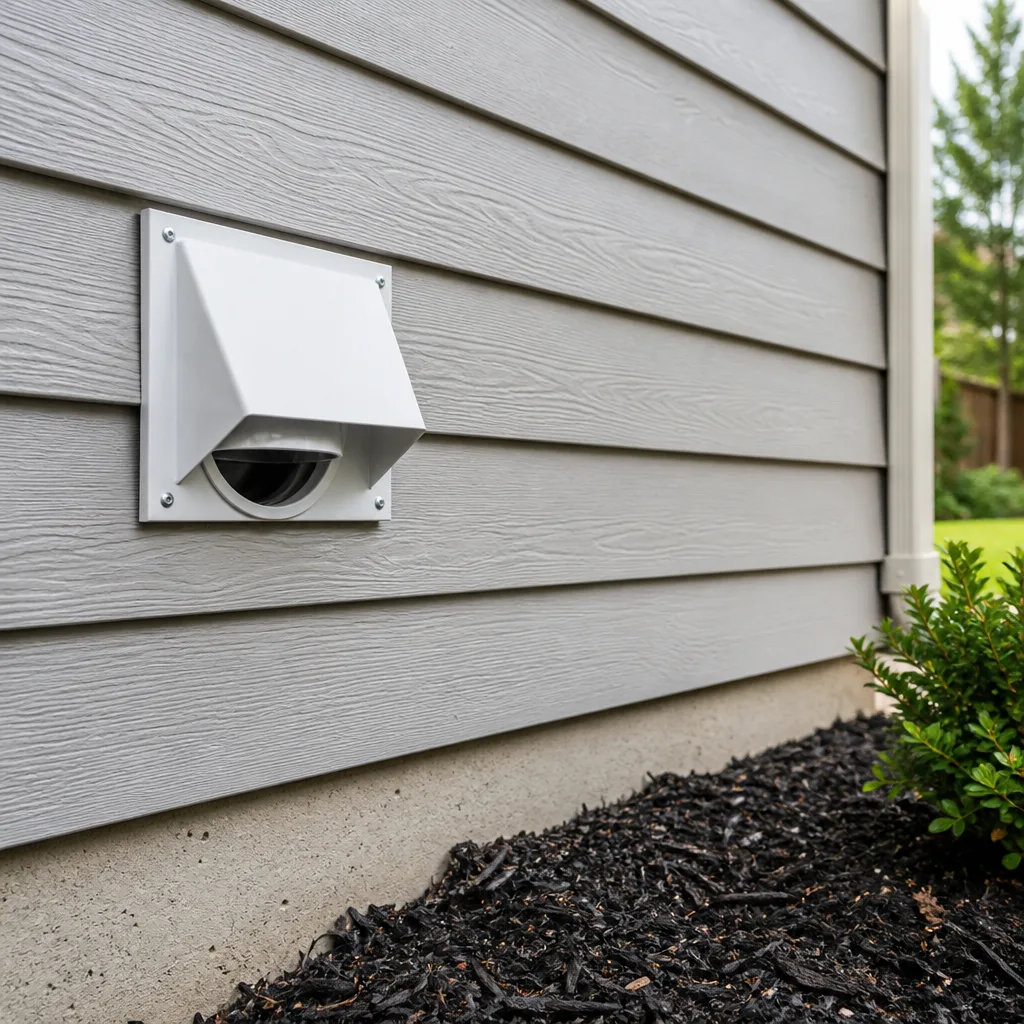
Dryer Vent Cleaning in Mesa also benefits from January scheduling; the lint load from winter fleece and blanket use is typically at its annual peak.
Common Mistakes to Avoid
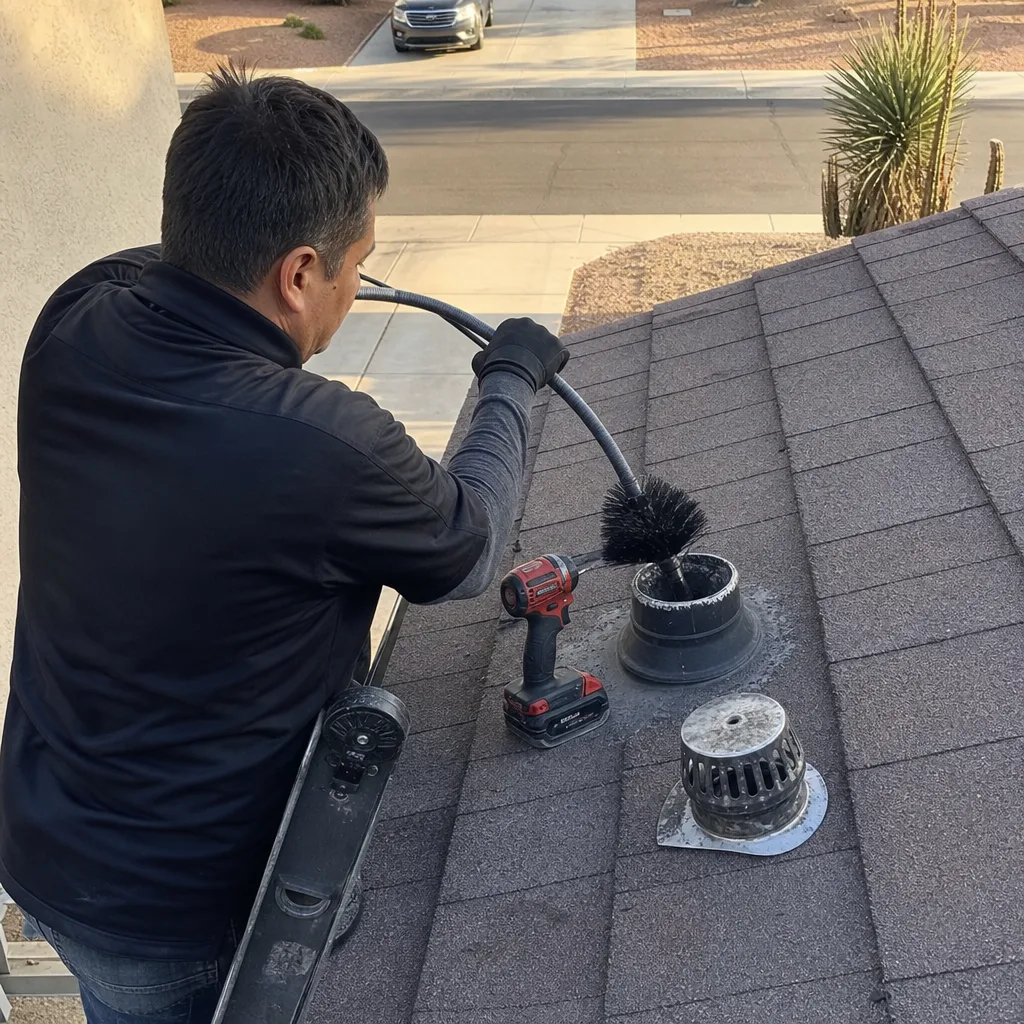
- Scheduling duct cleaning in July. Your system can’t be shut down for long, technicians are overbooked, and monsoon debris hasn’t finished entering the system. You’re paying premium rates for incomplete results.
- Ignoring the evaporator coil drain pan until it overflows. In Mesa’s hard water, mineral deposits build slowly then fail suddenly. A March inspection prevents a July ceiling repair.
- Using a shop vacuum for “DIY duct cleaning.” Without negative-pressure containment, you dislodge debris into the living space. We’ve been called to clean up after homeowners who released a decade of caliche dust into their own bedrooms.
- Replacing filters on a calendar schedule instead of a loading schedule. A filter that lasts 90 days in Minneapolis loads in 45 days during Mesa’s monsoon season. Check the filter, not the calendar.
- Booking “whole house” duct cleaning that doesn’t include the return side. The return path is where Mesa’s dust load concentrates. Cleaning only supply registers misses 60% of the debris.
- Accepting a verbal estimate or per-vent pricing. Per-vent pricing incentivizes the technician to find more vents. A written whole-system price, agreed before work starts, aligns your interests with the company’s.
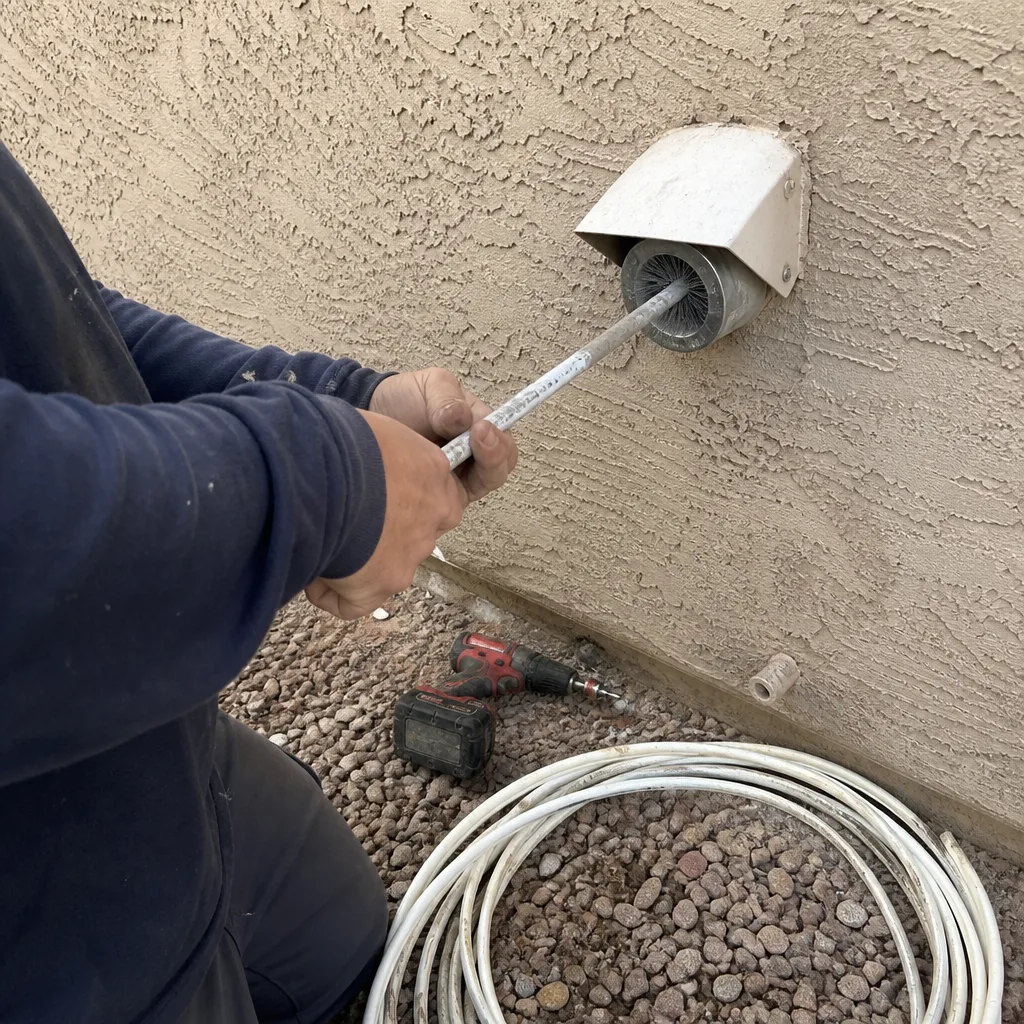
- Neglecting dryer vent cleaning in the same cycle. Mesa’s lint load is higher than national averages due to heavier towel and swimwear use. A clogged dryer vent raises humidity in the laundry space, which can migrate to return air paths.
When to Call a Professional
Call a professional when you observe any of the following: visible mold inside registers or on the duct liner; persistent musty odor that intensifies when the system runs; water stains near the air handler or any ceiling register; temperature variation greater than 8 degrees between rooms; or kWh/CDD spikes above 15% year over year that aren’t explained by occupancy changes.
Also call when your home is new to you. Even homes built 2018-2022 in Mesa often have construction debris in ducts, and the builder’s one-time “duct cleaning” is typically a shop vacuum at the registers, not a documented service.
CleanRun Air Duct Cleaning Mesa offers free estimates in Mesa. Every estimate includes a written price before any work starts, under Haven Standard Clause 1. Call (602) 632-0849.
Frequently Asked Questions
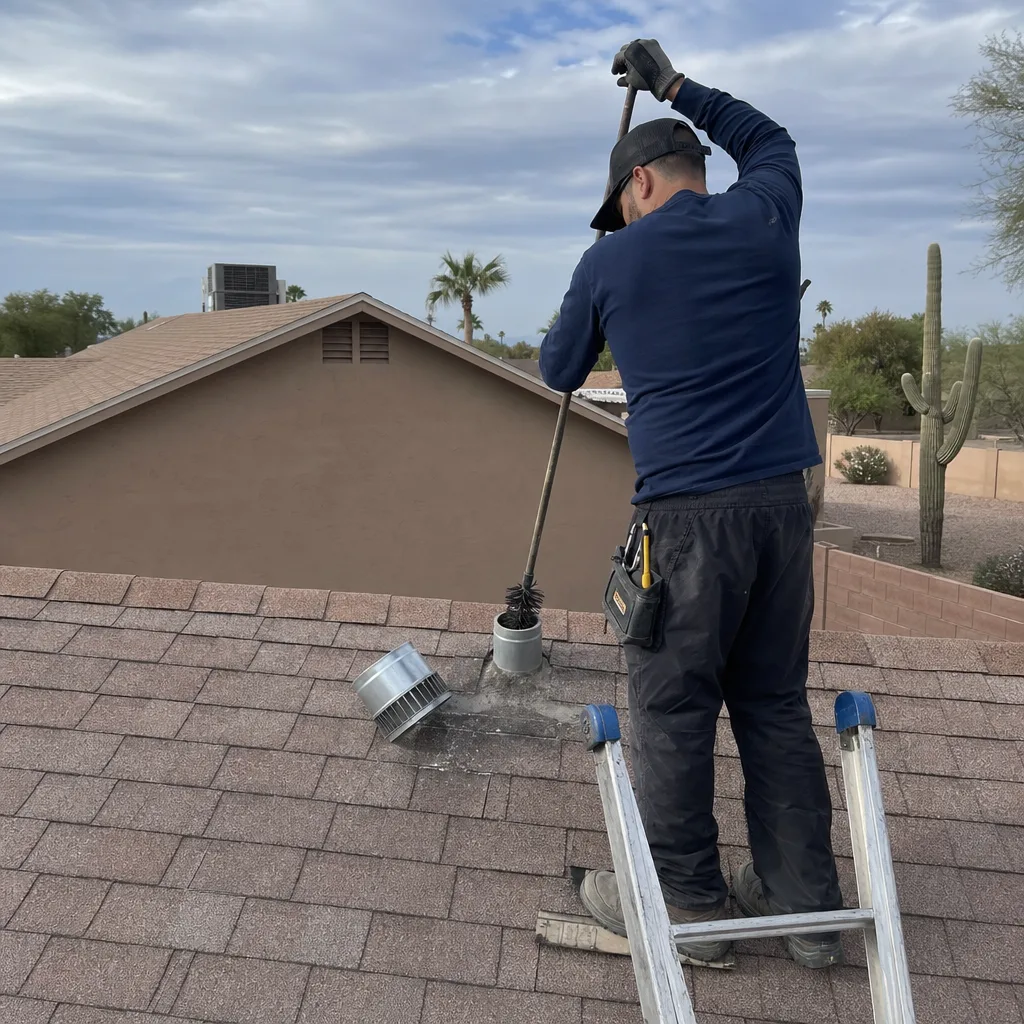
Whole-system air duct cleaning in Mesa typically ranges from $380 to $720 for a single-system home, depending on duct complexity, accessibility, and whether the service includes the evaporator coil and blower assembly. Two-story homes with attic air handlers, common in Mesa’s 2015+ construction, tend toward the higher end due to additional duct runs. CleanRun provides a written price before any work starts; call (602) 632-0849 for an exact quote, estimates are free.
$79-$129 quotes typically cover register vacuuming only, not full duct-run cleaning, and they often convert to larger invoices once the technician is in your home. The actual cost of professional negative-pressure extraction with documented before-and-after photography, using equipment like Rotobrush or Nikro systems, cannot be delivered at coupon prices. CleanRun’s Haven Standard Clause 1 requires a written whole-system price agreed before work begins, no exceptions.
Demand a documented photo record of every duct run, before and after. CleanRun includes this as a standard deliverable on every job, Haven Standard Clause 4, delivered to you as part of the job record. If a company cannot show you the inside of your own ducts, you’re buying vacuum noise, not cleaning.
Most Mesa homes benefit from professional cleaning every 3-4 years, with annual filter changes and a November inspection in between. Homes near active construction, with evaporative cooler history, or with multiple pets may need cleaning every 2-3 years. The monsoon season adds a Mesa-specific factor; post-monsoon assessment in October should be annual.
Yes, specifically through accelerated blower wheel loading and evaporator coil fouling. Caliche dust is abrasive; we’ve measured blower wheel imbalance in Mesa homes that correlates with dust storm frequency. The fine particles also bridge coil fins, reducing heat transfer and raising operating pressure. October cleaning removes this load before it causes compressor strain.
Duct cleaning itself doesn’t disturb intact asbestos wrap, but any duct repair or register modification in pre-1985 Mesa homes requires testing first. CleanRun technicians are trained to identify suspect materials and halt work if asbestos is suspected. We don’t proceed with any disturbance until testing confirms safety; this is Haven Standard Clause 2: Verified Methods.
The Bottom Line
Mesa’s climate demands a duct care calendar that respects its actual rhythm: two brutal high-load periods separated by two windows of opportunity. Schedule your pre-cooling inspection in March, your full cleaning in late October, your heating-season verification in November, and any major repair or sealing work in January-February. Track kWh per cooling degree day to catch efficiency degradation before it becomes a failure. And demand documentation for every service: written prices, photographed results, and a guarantee that survives the truck’s departure. The national template won’t serve you here. Mesa’s conditions are specific, and your maintenance calendar should be too. Explore more guides & resources on our blog to keep your system running efficiently year-round.
CleanRun Air Duct Cleaning Mesa home
Written by Tomas Reyes, Owner at CleanRun Air Duct Cleaning Mesa, serving Mesa since 2013.