
Last updated September 23, 2026
Whole-system duct and dryer vent check with before-and-after photos - you see exactly what came out of your vents
That "$99 whole-house special" is a bait ad - the real number appears once they are in your hallway, or the "clean" is a shop-vac at the register. We photograph the inside of your ducts before and after instead.
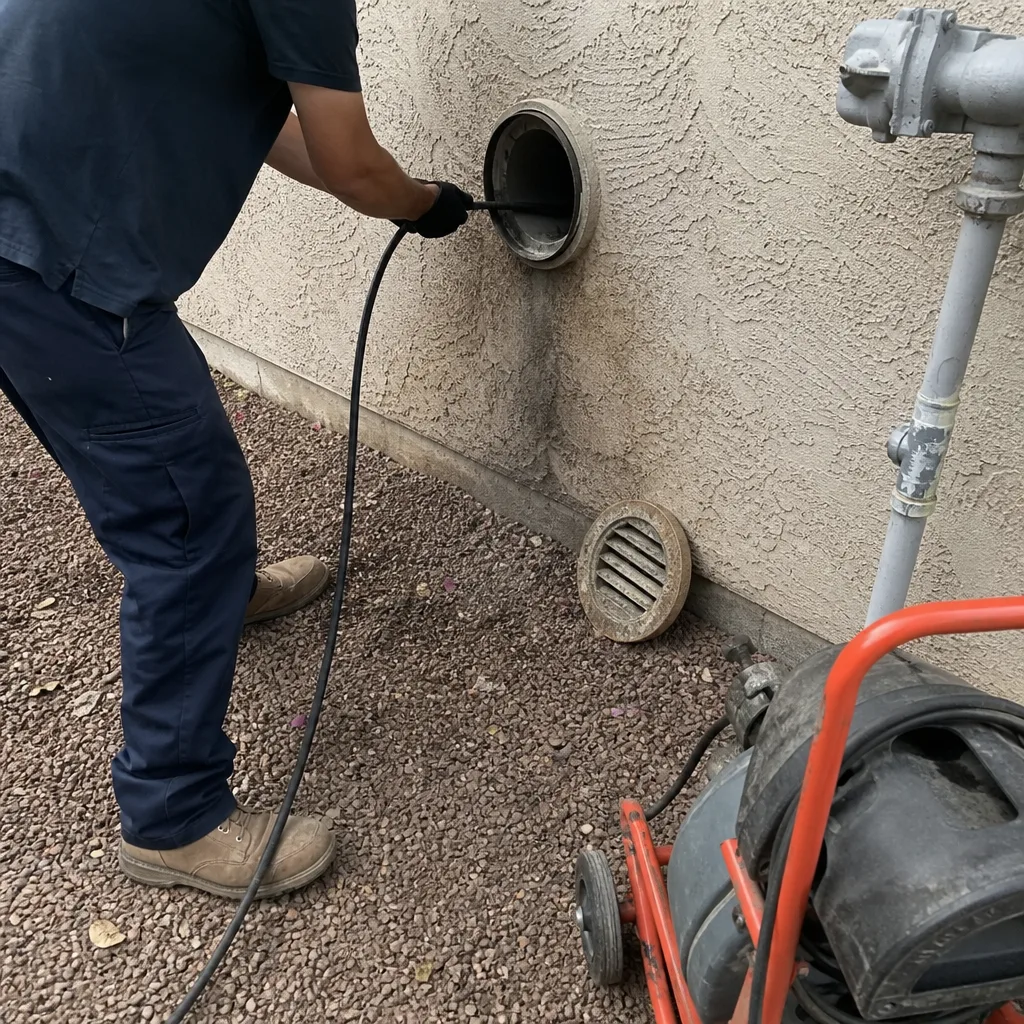 Before
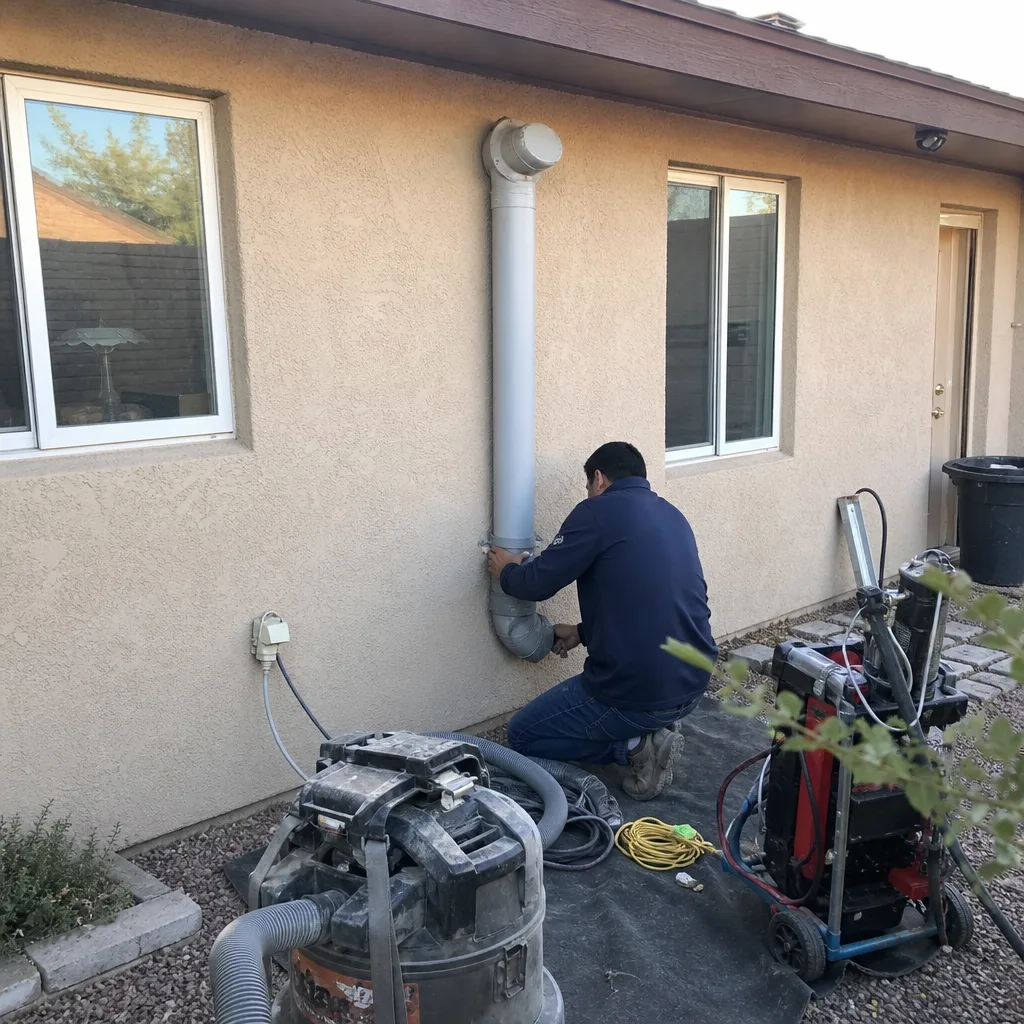 After
After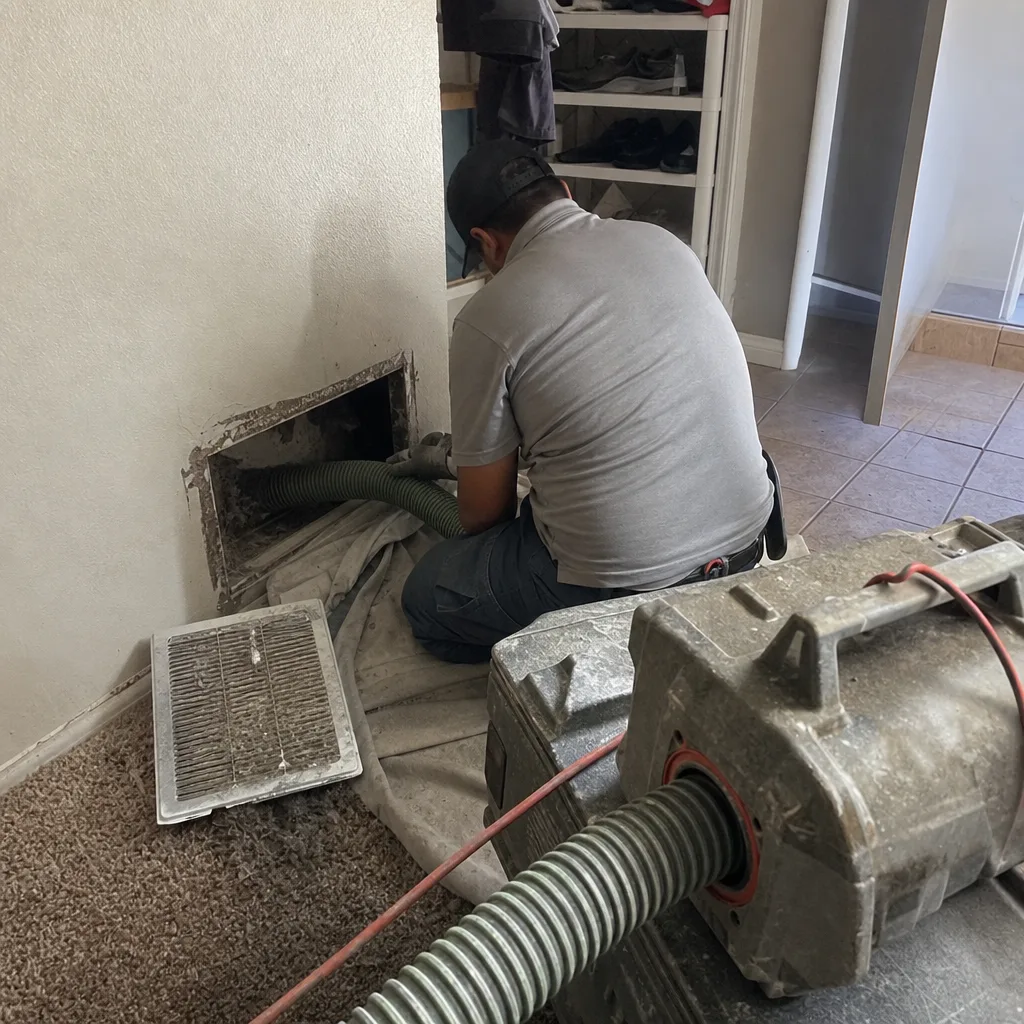 Before
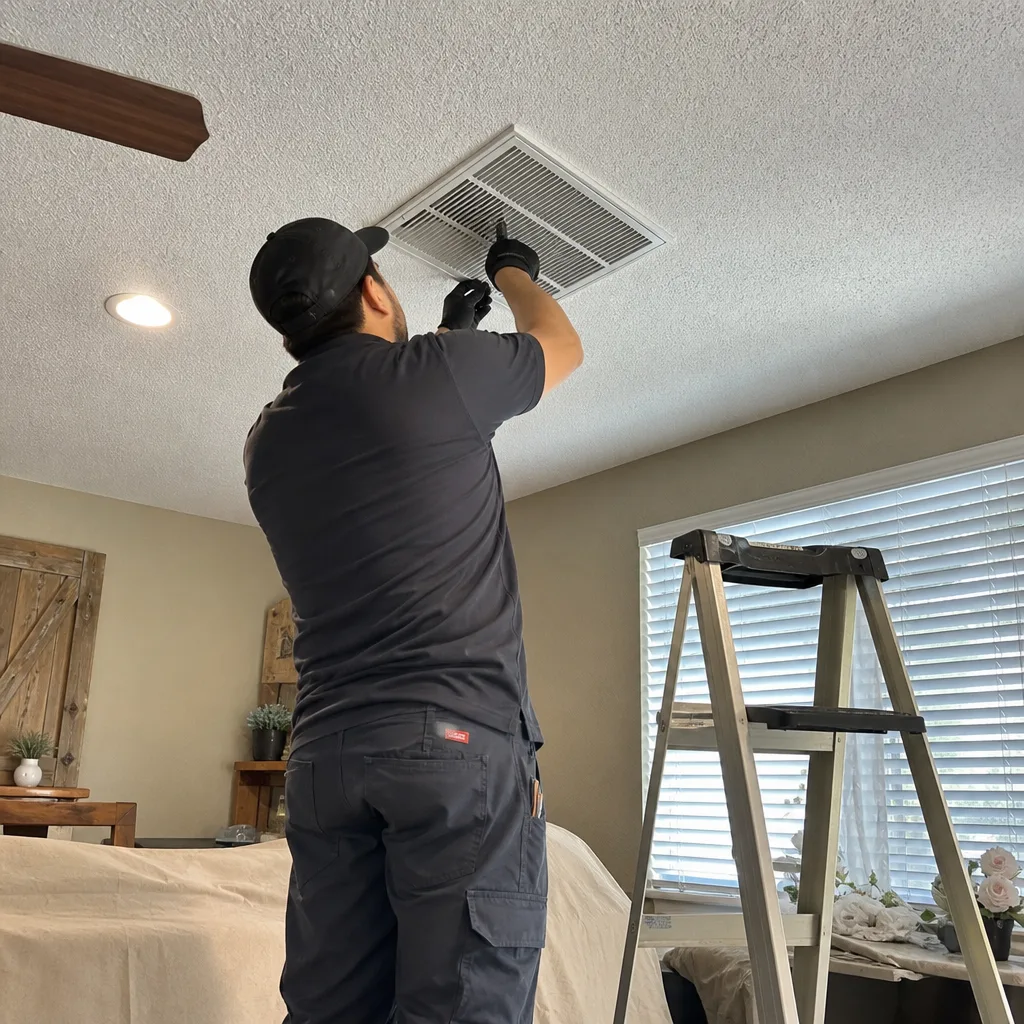 After
After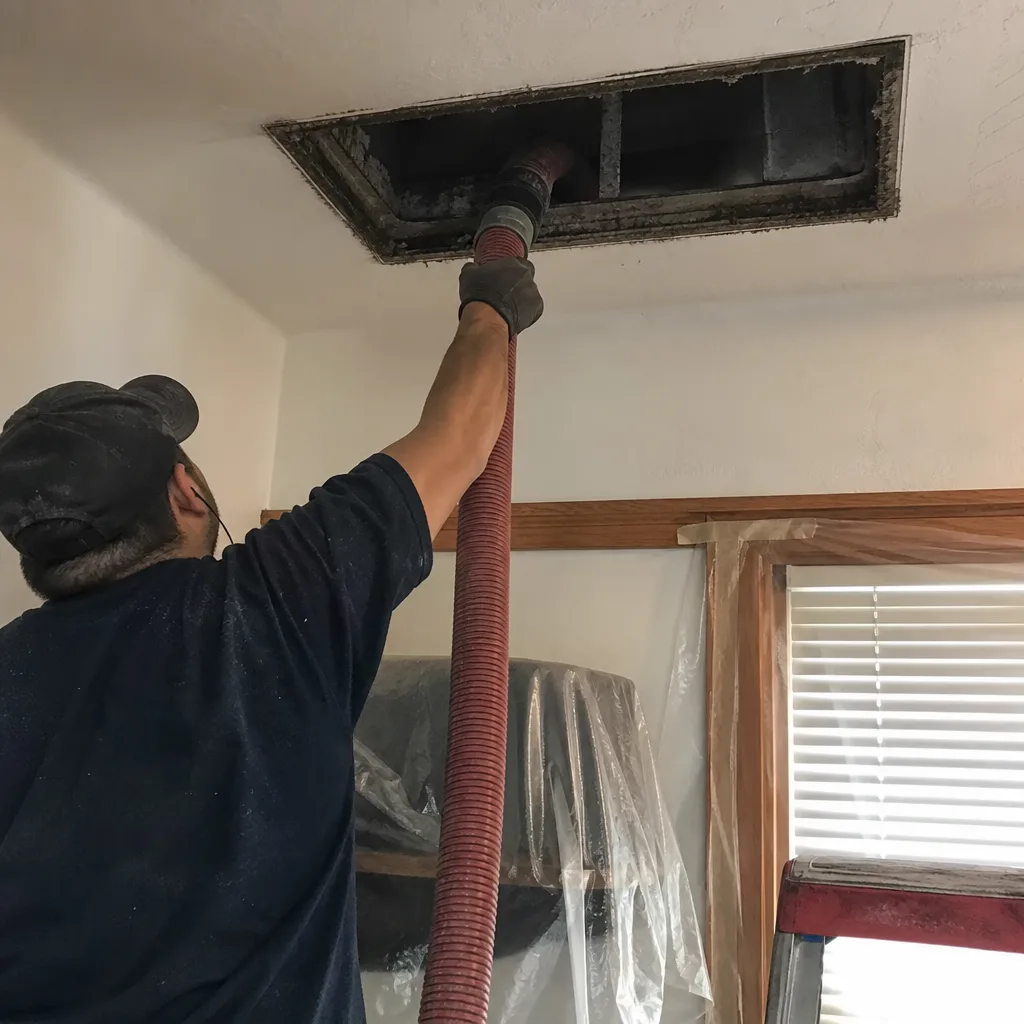 Before
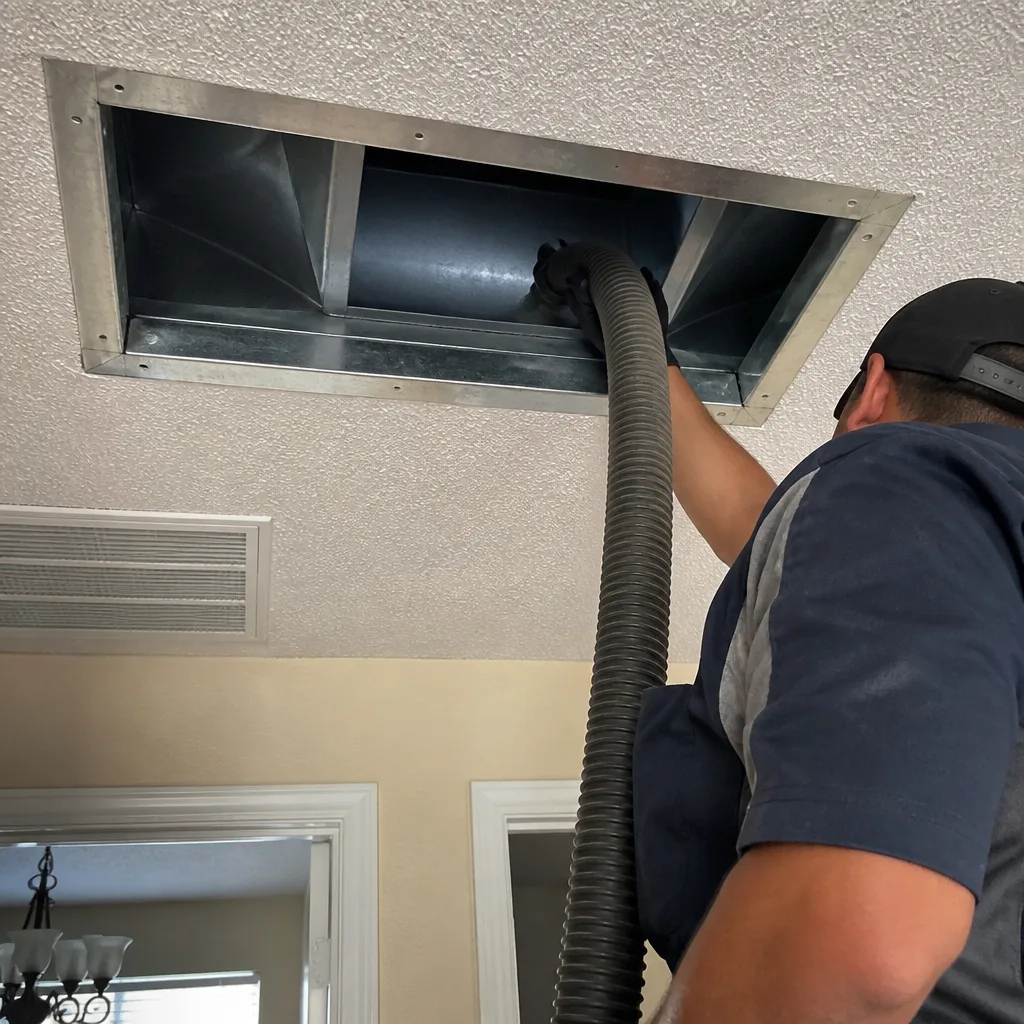 After
AfterDIY vs Professional Air Duct Cleaning: The Mesa Homeowner’s Decision Guide
A standard shop vac moves roughly 90-120 CFM of air. A truck-mounted professional duct cleaning system pulls 1,500-2,000 CFM. That is not a sales pitch. It is the physics reason why debris sitting 8 feet past your register grille stays exactly where it is after a Saturday afternoon DIY cleaning. In Mesa, where summer dust storms load attics with fine particulate and monsoon humidity can set that debris into duct walls, the equipment gap matters even more. This guide defines what a homeowner can actually accomplish with consumer tools, what remains unreachable, and how to decide which path fits your home’s condition and your tolerance for documented results versus assumed cleanliness.
Quick Answer
Most Mesa homeowners with a shop vac and brush kit can clean register grilles, the first 12-18 inches of visible duct, and return air surfaces in 4-6 hours for $80-$140 in materials. A professional full-system cleaning with negative-pressure extraction, rotary brushing, and a documented photo record of every duct run runs $350-$550 and reaches the full length of the system. If your home is under 5 years old with no pets, smokers, or contamination events, DIY register maintenance is sufficient. For everything else, the equipment physics make professional Air Duct Cleaning services the only path to measurable results.
Table of Contents
- What DIY Equipment Actually Does (And Where It Stops)
- Mesa Housing Stock: Duct Configurations That Favor or Frustrate DIY
- Honest Cost Comparison: What Each Dollar Buys
- How to Document DIY Results Like a Professional
- The One Scenario Where DIY Is the Right Answer
- Professional Equipment Explained: What the Extra CFM Actually Cleans
- Common Mistakes to Avoid
- When to Call a Professional
- Frequently Asked Questions
BeforeAfterWhat DIY Equipment Actually Does (And Where It Stops)
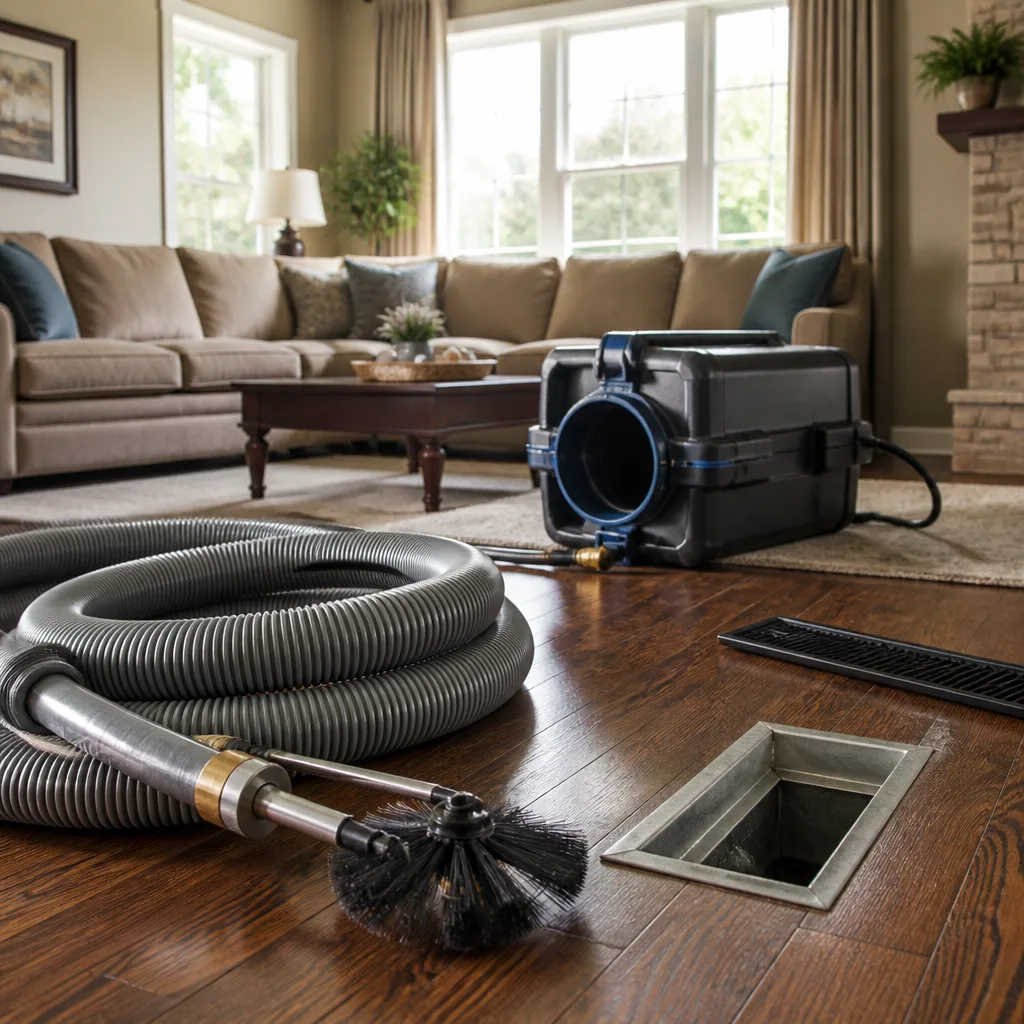
Consumer duct cleaning kits sold at hardware stores include a flexible fiberglass rod with a round brush head, a shop vac adapter, and sometimes a drill attachment for rotary motion. The typical homeowner in Mesa who attempts this work owns a 5-6.5 HP wet/dry vac with a standard 2.5-inch hose. Here is exactly what that combination can and cannot do.
What You Can Reach and Clean
- Register grilles and boots: Remove the register, vacuum the grille on both sides with a brush attachment, and clean the sheet metal boot (the angled transition piece) that connects the grille to the duct run. This is the highest-impact DIY task because it removes hair, dust, and debris that fall back into the airstream.
- The first 12-18 inches of supply duct: With the register removed, the brush kit can snake into the round or rectangular duct until the first elbow or damper. In straight runs, you may reach 24 inches. Beyond that, the rod flexes against duct walls and loses contact pressure.
- Return air grille surfaces: The large return grille in your hallway or living room collects visible dust. A vacuum with brush attachment cleans the face and the first few inches behind it. The return air plenum (the large sheet metal box behind the grille) is usually accessible enough for partial cleaning.
- Filter replacement and housing wipe-down: Not technically duct cleaning, but replacing a MERV 8-13 filter and wiping the filter rack removes a significant debris source. In Mesa’s dust-prone climate, this every-60-day task has more impact than annual duct brushing.
What Stays Exactly Where It Is
Debris past the first elbow in any duct run. The shop vac’s 90-120 CFM cannot overcome static pressure in a 25-foot duct run with multiple bends. The brush head, lacking powered rotation unless attached to a drill, merely pushes debris deeper or compacts it. Fine particulate - the PM2.5 and PM10 particles that pass through standard filters - adheres to duct walls through electrostatic attraction and humidity cycling. A shop vac does not generate the air velocity or mechanical agitation to dislodge it.
In our work across Mesa neighborhoods from Dobson Ranch to Las Sendas, we’ve photographed the junction between homeowner-cleaned sections and untouched duct. The transition is usually visible: clean metal for 18 inches, then a uniform gray coating beyond. That coating is not cosmetic. It is the accumulation of multiple years of skin cells, textile fibers, pollen, and construction dust that circulates with every HVAC cycle.
One critical safety note: if your ductwork contains asbestos insulation or vermiculite, any disturbance releases fibers. Mesa homes built 1945-1980 may have asbestos-containing duct tape or wrap. Do not brush or vacuum these materials. A licensed professional can test and handle abatement if needed.
Mesa Housing Stock: Duct Configurations That Favor or Frustrate DIY
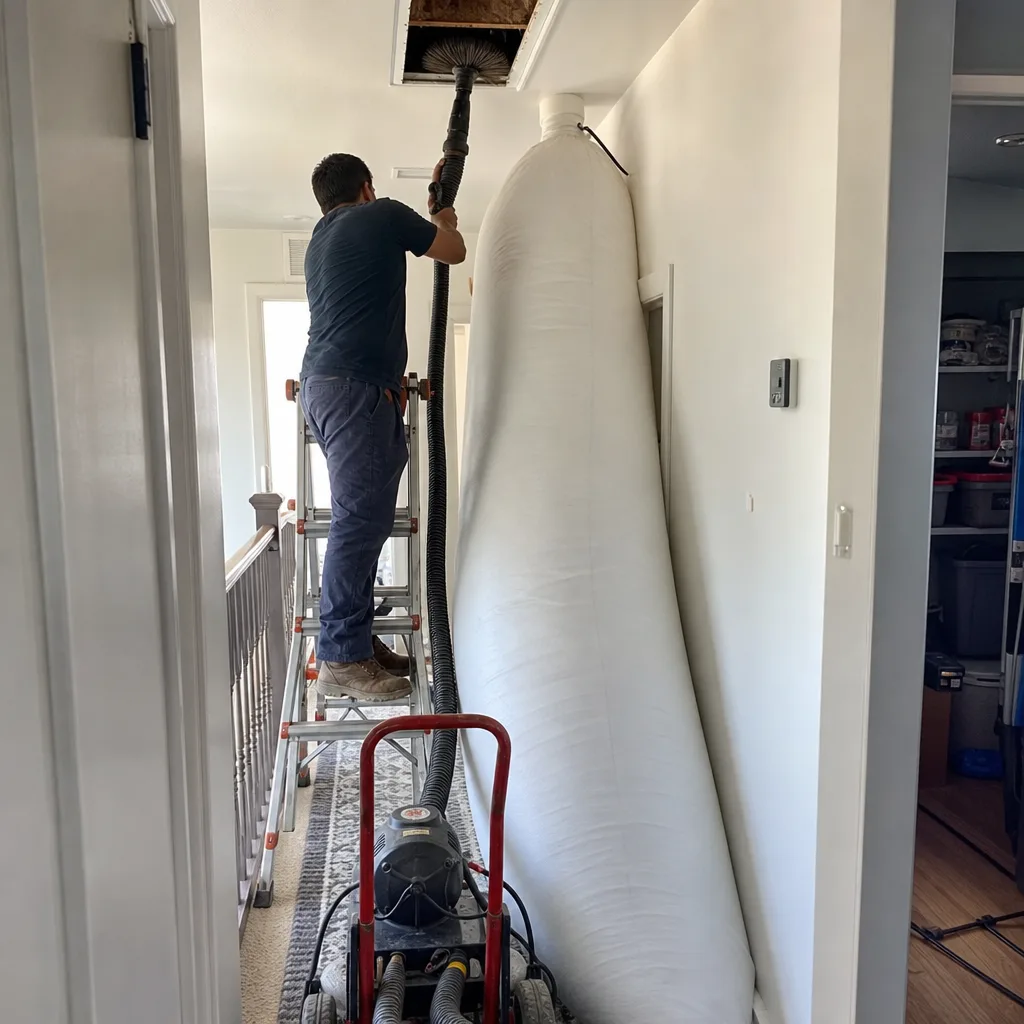
Mesa’s housing stock spans seven decades with distinct HVAC architectures. The duct configuration in your home determines whether DIY cleaning is merely limited or genuinely impractical.
Rooftop Air Handlers with Vertical Drop Ducts
Common in 1970s-1990s ranch homes in neighborhoods like Alta Mesa and Red Mountain Ranch, these systems place the air handler on the roof with insulated flex duct dropping vertically through a chase into the attic, then branching horizontally to ceiling registers. The vertical drops are 8-12 feet long, inaccessible from either end without dismantling the chase. A shop vac brush kit cannot navigate a vertical drop. Even professional equipment requires access panels or register-based cleaning with specialized whips and reverse nozzles.
These homes also tend to have hard duct in the attic that is buried under blown cellulose or fiberglass insulation. A homeowner cannot access the trunk lines without disturbing the thermal envelope. In Mesa’s climate, where attic temperatures reach 140°F in July, that insulation is critical. Disturbing it creates more problems than partial duct cleaning solves.
Horizontal Attic Systems with Exposed Metal Duct
Newer homes, particularly those built 2005-2020 in Eastmark and Southeast Mesa, often have the air handler in a garage closet or attic platform with exposed rectangular duct running horizontally. If your attic has a walkable deck and permanent lighting, you can inspect the trunk lines and even clean accessible sections. Most Mesa attics do not. They have 24-inch truss spacing, temporary plywood boards, and a single pull-chain light. The safety risk of working around ductwork in that environment - sharp sheet metal edges, 130°F temperatures, limited egress - outweighs the cleaning benefit for most homeowners.
Slab Homes with Underground Duct
A subset of 1960s-1970s Mesa homes, concentrated near downtown and the original Mesa subdivision grid, used underground ductwork embedded in the slab. These systems are inaccessible by definition. Any cleaning requires professional equipment that can generate sufficient negative pressure to pull debris through long horizontal runs with no intermediate access. DIY is not applicable.
Key Mesa-Specific Factor: Caliche and Construction Debris
Mesa’s soil contains caliche, a cement-like calcium carbonate layer that produces fine dust during home construction. In homes built during the 2005-2008 building boom, we’ve documented significant caliche dust remaining in ductwork 15+ years after construction. This material is heavier than household dust and requires the agitation force of professional rotary brushing to dislodge. A consumer brush kit merely skims the surface.
Honest Cost Comparison: What Each Dollar Buys
The duct cleaning industry in Mesa advertises prices from $79 to $800, which confuses homeowners before they even choose a path. This table breaks down what DIY and professional cleaning actually cost, with the specific deliverables each price includes. For deeper context, see our How to Hire a Air Duct Cleaning Contractor in Mesa: A Step-by-Step Guide.
| Cost Component | DIY Cleaning | Professional Cleaning (CleanRun) |
|---|---|---|
| Base equipment/materials | $80-$140 (brush kit, shop vac filters, register removal tools, PPE) | Included in service price |
| Labor time | 4-6 hours (typical 3-4 bedroom home) | 2.5-4 hours (crew of 2 technicians) |
| Reach | First 12-18 inches of each duct run; register grilles; return surfaces | Full length of every duct run, including trunk lines and plenums |
| Debris removal method | Shop vac suction at point of access | Negative-pressure extraction with HEPA filtration; debris collected outside living space |
| Agitation/mechanical cleaning | Manual brush or drill-attached rotary (limited contact pressure) | Powered rotary brushing, pneumatic whips, and compressed-air tools sized to duct diameter |
| Documentation | Homeowner photographs (recommended; see below) | Documented Photo Record of every duct run, before and after, delivered as standard job record |
| Contamination protection | Homeowner-provided respirator and drop cloths | Contained work area, HEPA air scrubbers, protective floor coverings |
| Total price range | $80-$140 plus labor | $350-$550 for full system cleaning |
What the $270-$410 Difference Purchases
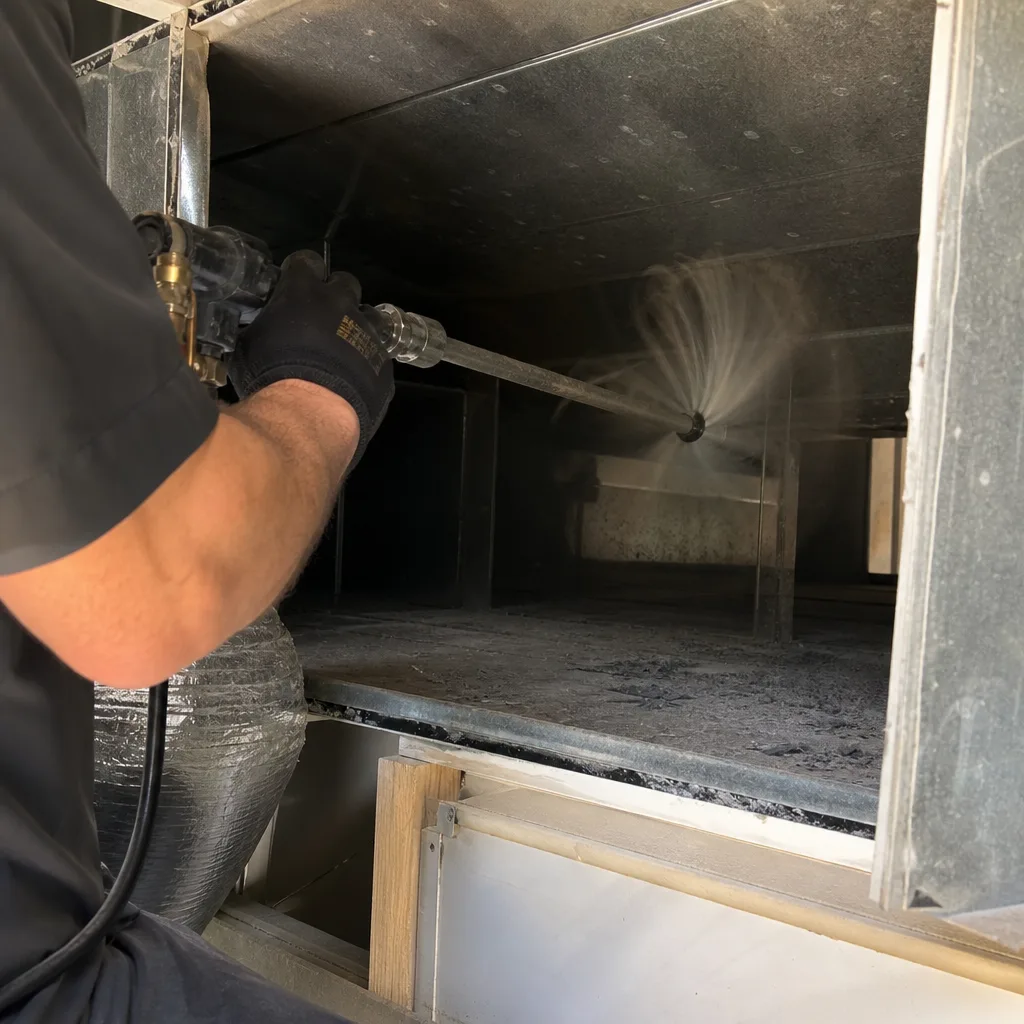
The gap between DIY materials and professional service is not markup. It is equipment physics and documentation. A professional system from Nikro or Abatement Technologies generates 15-20 times the air velocity of a shop vac, with HEPA filtration that captures 99.97% of particles to 0.3 microns. The rotary brushing system - think of a plumber’s snake with a powered brush head - maintains contact pressure against duct walls through the full run length. The debris is not just loosened; it is suspended in an airstream strong enough to carry it out of your home entirely.
More importantly, the professional price includes verification. After a DIY cleaning, you assume the ducts are cleaner. After a professional cleaning with a Documented Photo Record, you see the 3-inch debris build-up at the first elbow and the clean metal after. That evidence is the difference between assumed and known air quality.
One pricing note specific to Mesa: homes with rooftop air handlers often require additional access time. Some competitors add $100-$200 for these configurations after arrival. At CleanRun, the written price delivered before work starts includes the full scope. No supplementals. That is Haven Standard Clause 1.
How to Document DIY Results Like a Professional
If you choose the DIY path, documentation transforms your effort from assumed progress into measurable baseline data. The next time a professional assesses your system, your photo record makes that assessment faster and more accurate. Here is how to create documentation that meets professional standards.
- Photograph every register before touching it. Use your phone’s timestamp feature. Capture the grille face, the boot interior with a flashlight, and the first visible section of duct. Label by room: “Master bedroom supply, before.”
- Photograph the same angles after cleaning. Match the lighting and framing as closely as possible. The comparison should show what your tools reached and what they did not.
- Measure and record your brush penetration depth. Mark the rod at 12 inches, 18 inches, and 24 inches. Note where resistance stopped progress. This tells a professional where their work must begin.
- Document your filter condition and replacement date. A dirty filter photographed beside a new one illustrates maintenance frequency.
- Store photos with the date and your home’s age. “2024-03-15, home built 2016, last professional cleaning: never” creates a service history that informs future decisions.
This record serves two purposes. First, it gives you objective evidence of what you accomplished. Second, it eliminates the uncertainty that drives unnecessary service calls. When a CleanRun technician arrives for a free estimate, your photo record lets us target our assessment to the sections you could not reach, rather than starting from zero. The estimate is more precise. The scope is clearer. The written price reflects actual conditions, not assumptions.
The One Scenario Where DIY Is the Right Answer
DIY duct cleaning is the correct choice for a specific, narrow set of conditions. If your Mesa home meets all of the following criteria, register cleaning and filter maintenance are genuinely sufficient:
- Built within the last 5 years (2019 or later)
- No known contamination events (water intrusion, rodent activity, construction dust from remodeling)
- No pets with significant shedding
- No occupants with asthma, allergies, or immunocompromise
- No smokers indoors
- Regular filter changes (every 60-90 days in Mesa’s dust climate)
In these homes, the ductwork has not accumulated enough debris to justify professional agitation cleaning. The primary maintenance tasks are register hygiene and filter discipline. A $30 brush kit and consistent filter replacement will maintain adequate cleanliness until the home ages into the 8-10 year range, when even well-maintained systems develop measurable debris at duct elbows and trunk line joints.
The critical error is applying this narrow exception broadly. A 2015 home with two dogs, a recent kitchen remodel, and filters changed once yearly is not a DIY candidate. The debris load exceeds consumer tool capability. The homeowner who attempts it anyway has spent $100 and a Saturday for a result they cannot verify, while the debris remains in place.
Professional Equipment Explained: What the Extra CFM Actually Cleans
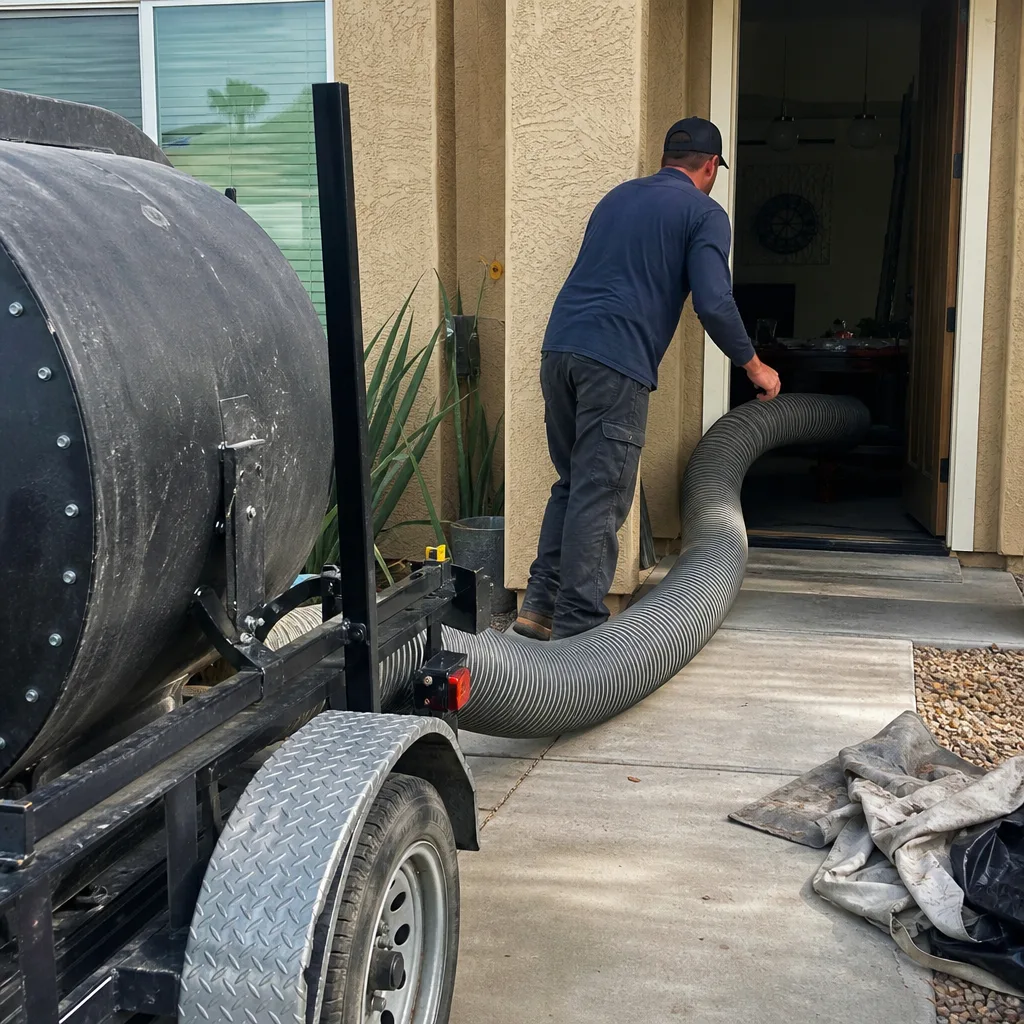
Understanding professional equipment helps homeowners evaluate service quality and recognize inadequate work. Not every truck with a vacuum hose performs true negative-pressure extraction. Here is what the equipment roster at CleanRun Air Duct Cleaning Mesa home accomplishes, and why the brands matter.
Negative-Pressure Extraction Systems
A professional duct cleaning unit, such as those manufactured by Nikro or Abatement Technologies, connects to your duct system at a central point - usually the air handler or a large return trunk - and pulls 1,500-2,000 CFM through the entire network. This creates negative pressure throughout the system, meaning air flows inward at every opening. When a technician opens a register to insert a cleaning tool, the debris dislodged by that tool is immediately drawn toward the collection point rather than escaping into your living space.
The HEPA filtration on these units captures particles to 0.3 microns. For context, a human hair is roughly 70 microns in diameter. The fine desert dust that penetrates Mesa homes during haboob season is often 2.5-10 microns. Without HEPA containment, aggressive cleaning simply redistributes this material through your home.
Mechanical Agitation Tools
Air velocity alone does not clean duct walls. Debris adheres through static electricity, humidity, and time. Professional cleaning requires mechanical agitation to break that adhesion.
- Rotary brushing systems: A powered brush head on a flexible cable, sized to the duct diameter (typically 6-10 inches for residential), spins at controlled RPM to contact all duct surfaces. The brush bristles are softer than sheet metal and will not damage galvanized steel or aluminum ductwork.
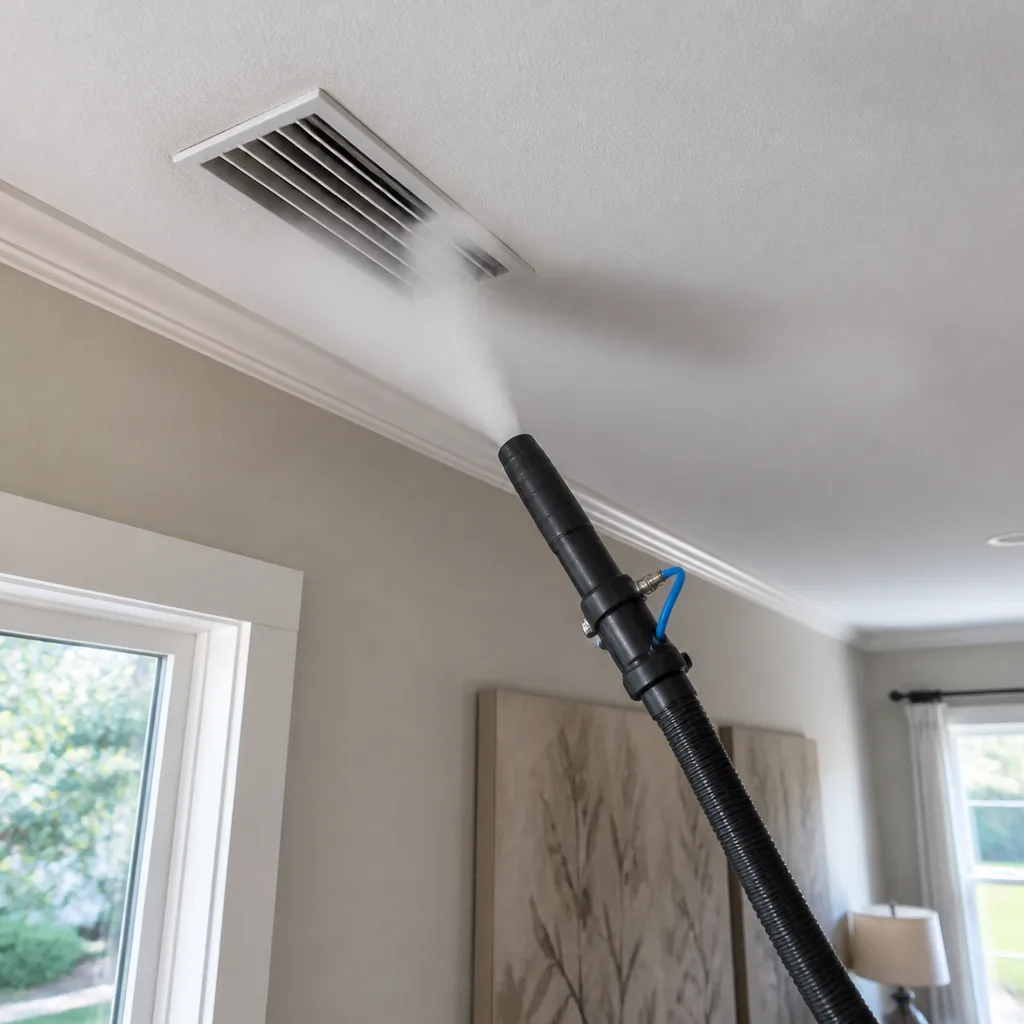
- Pneumatic whips: Compressed-air tools with multiple tentacle-like tubes that thrash against duct walls in a controlled pattern. Effective for rectangular duct where round brushes cannot maintain full contact.
- Skipper balls and reverse nozzles: Compressed-air tools that propel themselves down duct runs while blasting debris backward toward the collection point. Essential for long horizontal runs with no intermediate access.
These tools require training to operate without damaging flex duct or dislodging connections. The H.A.V.E.N. Standard requires verified crew training on each tool type before independent operation. Haven Standard Clause 3: Verified Crews means background-checked, trained technicians operating under documented protocols - not day laborers with a borrowed machine.
Documentation Equipment
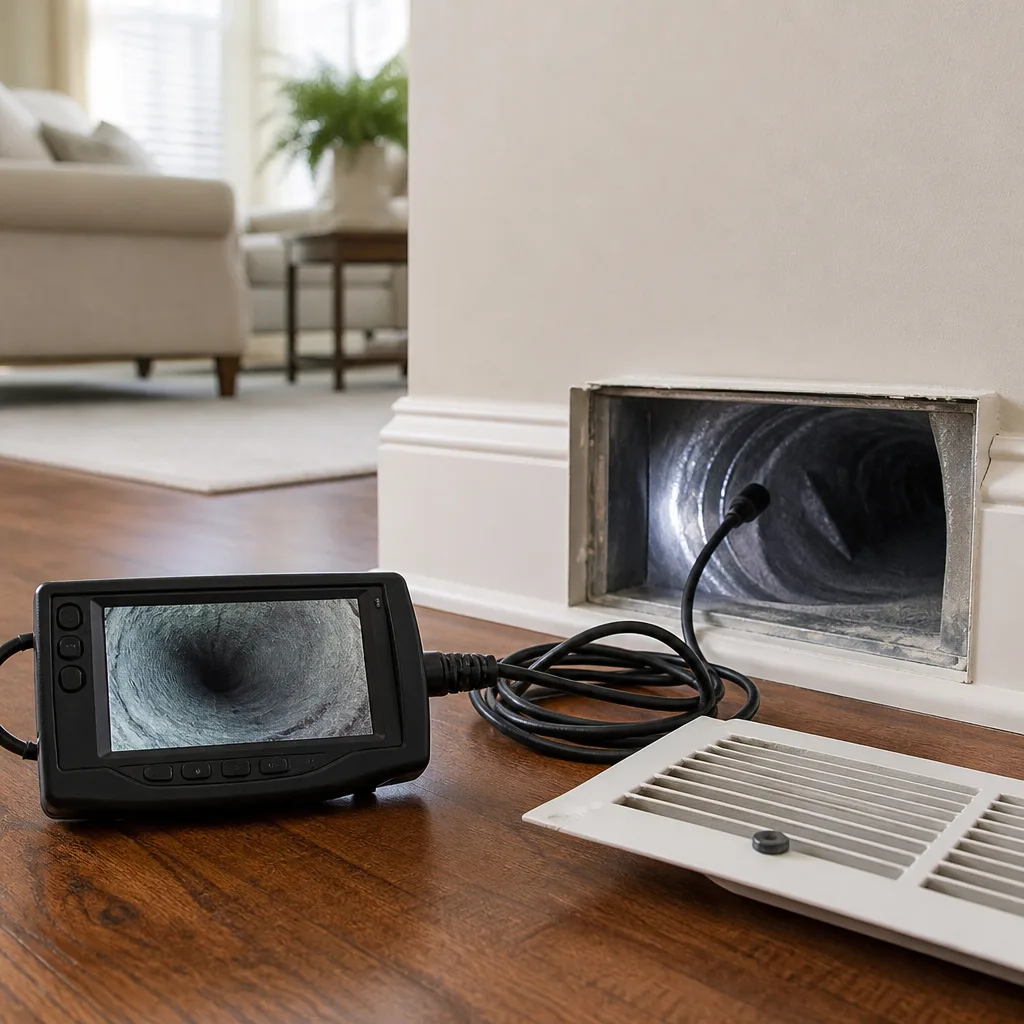
Every Air Duct Cleaning in Mesa job at CleanRun includes photography of every duct run before and after cleaning. We use borescope cameras - flexible fiber-optic or digital probes with integrated lighting - that transmit images to a handheld display. The camera shows debris build-up at elbows, standing water in drain pans, and disconnected duct sections that leak conditioned air into attics. These images become part of your job record, delivered with the invoice.
This practice, maintained since our first job in 2013, exists because verbal claims are unverifiable. A technician who tells you “your ducts were really dirty” without photographs asks for trust without evidence. The Documented Photo Record provides the evidence.
Common Mistakes to Avoid
- Buying a $79 coupon and expecting full-system cleaning. In Mesa’s market, this price covers register vacuuming and a photo of a clean filter. The trunk lines and plenums are untouched. The homeowner believes the system is clean while debris remains in place. Always ask for a written scope before agreeing to any price.
- Using a shop vac without HEPA filtration for duct work. Standard shop vacs exhaust fine particulate through their discharge port. You may remove visible debris from the register while distributing PM2.5 throughout your home. If you DIY, use a HEPA-rated filter and vent the exhaust outdoors if possible.
- Ignoring the return air system. The return side pulls air from your living space and is often dirtier than supply ducts. Homeowners clean supply registers because they are visible and neglect the large return grille and plenum that feed the air handler. In Mesa homes with central returns, this single opening handles 100% of circulated air.
- Brushing asbestos-containing duct tape. Pre-1980 homes in Mesa’s original neighborhoods may have asbestos wrap on duct joints. Disturbing this material with a brush releases fibers. If your home falls in this age range and you see fibrous, gray tape on ductwork, stop and consult a professional for testing.
- Cleaning ducts after water intrusion without addressing the moisture source. Mesa’s monsoon season drives roof leaks and condensate drain overflows. Duct cleaning removes mold spores temporarily; if the moisture remains, regrowth occurs within weeks. Fix the water problem first, then assess whether cleaning is needed.
- Assuming clean registers mean clean ducts. This is the most common DIY error. The visible portion - the register - represents less than 5% of total duct surface area in a typical home. Clean registers improve appearance. They do not indicate system cleanliness.
When to Call a Professional
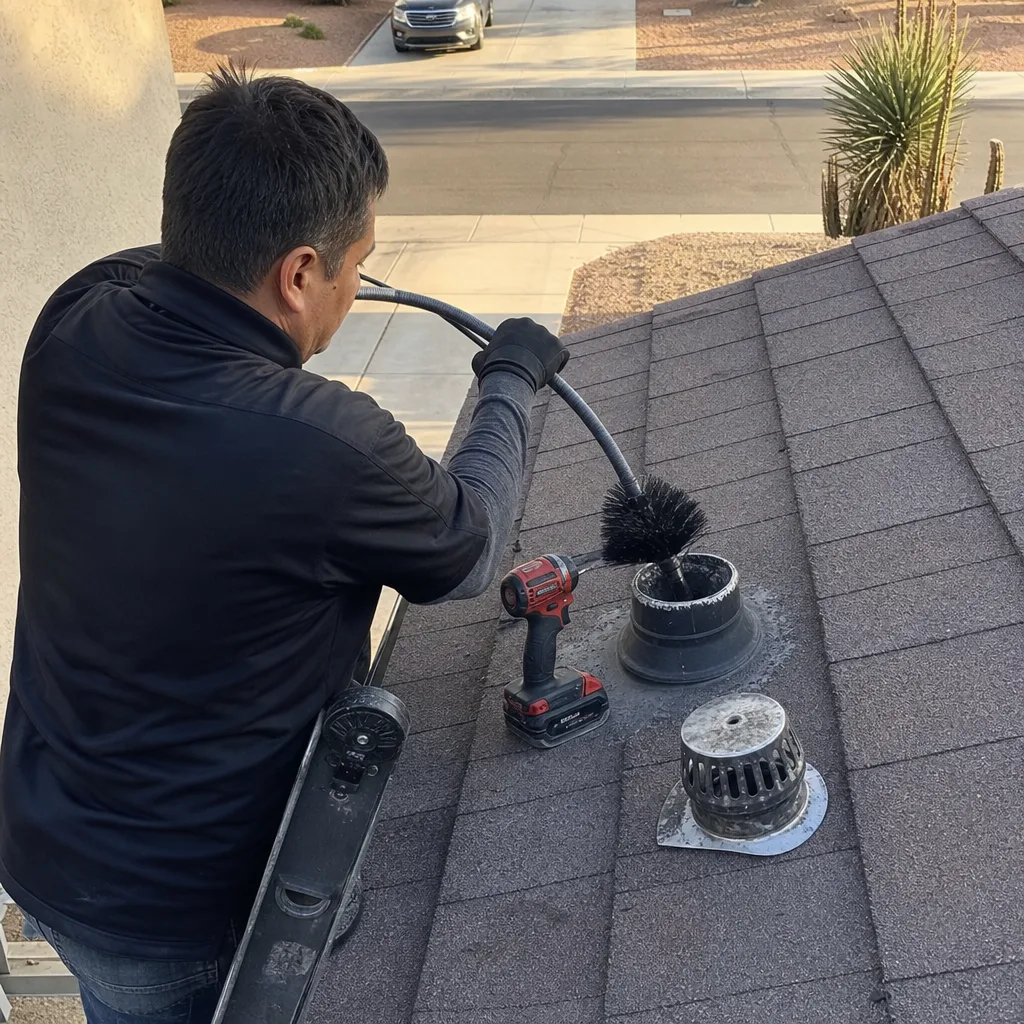
Call a professional when your home’s age, condition, or your own health requirements exceed what consumer equipment can verify. Specific triggers include: visible mold inside ductwork or on the air handler; rodent droppings or nesting material in registers; debris release from supply vents when the system cycles; a home over 10 years old with no prior professional cleaning; recent remodeling that generated construction dust; or any occupant with respiratory conditions that require documented air quality.
CleanRun Air Duct Cleaning Mesa offers free estimates in Mesa - call (602) 632-0849. Every estimate includes a written price before work starts, every job includes a Documented Photo Record of every duct run, and every result is backed by the 365-Day Done Right Promise. If you have a competitor’s written estimate, we provide a Free Second Opinion at no cost, with our number written beside theirs for direct comparison.
Frequently Asked Questions
Full-system cleaning for a typical 3-4 bedroom Mesa home runs $350-$550, depending on system size, accessibility, and contamination level. This includes all supply and return duct runs, the plenum, and the air handler cabinet, with a Documented Photo Record delivered as part of the standard job. Call (602) 632-0849 for a written estimate specific to your home - estimates are free, and the price is agreed before any work starts.
The $79-$149 quotes common in Mesa coupon mailers typically cover register surface cleaning and a filter change, not full-system work. The technician arrives, performs 30 minutes of visible cleaning, and departs. The trunk lines, plenums, and deep duct runs remain untouched. A legitimate full-system cleaning requires 2.5-4 hours, two technicians, and truck-mounted extraction equipment. The price reflects that scope. Always request a written description of what is included before comparing quotes.
Demand documentation. A professional service should provide photographs or video from inside the ductwork, before and after. At CleanRun, the Documented Photo Record is standard on every visit, not an add-on. If a company cannot show you the inside of your ducts, you cannot verify the work. This is why we have photographed every duct run on every job since 2013.
For most Mesa homes, every 3-5 years with regular filter maintenance. Homes with pets, smokers, or recent construction may need service every 2-3 years. Mesa’s dust storm season loads more particulate than milder climates, so filter discipline - changing every 60 days minimum during spring and summer - extends the interval between professional cleanings. See our Seasonal Air Duct Cleaning Care for Mesa: Year-Round Homeowner’s Guide for a full maintenance calendar. A documented photo record from your last cleaning lets you compare conditions rather than guessing.
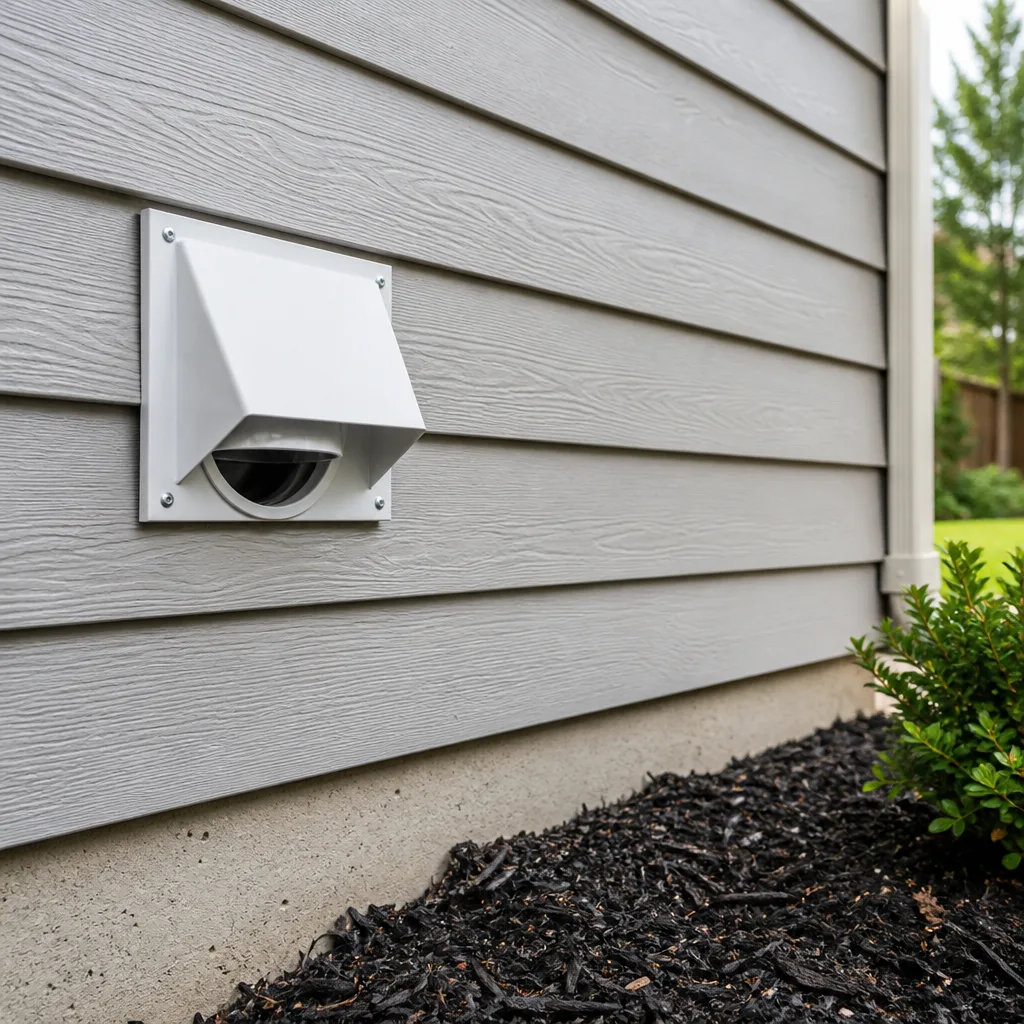
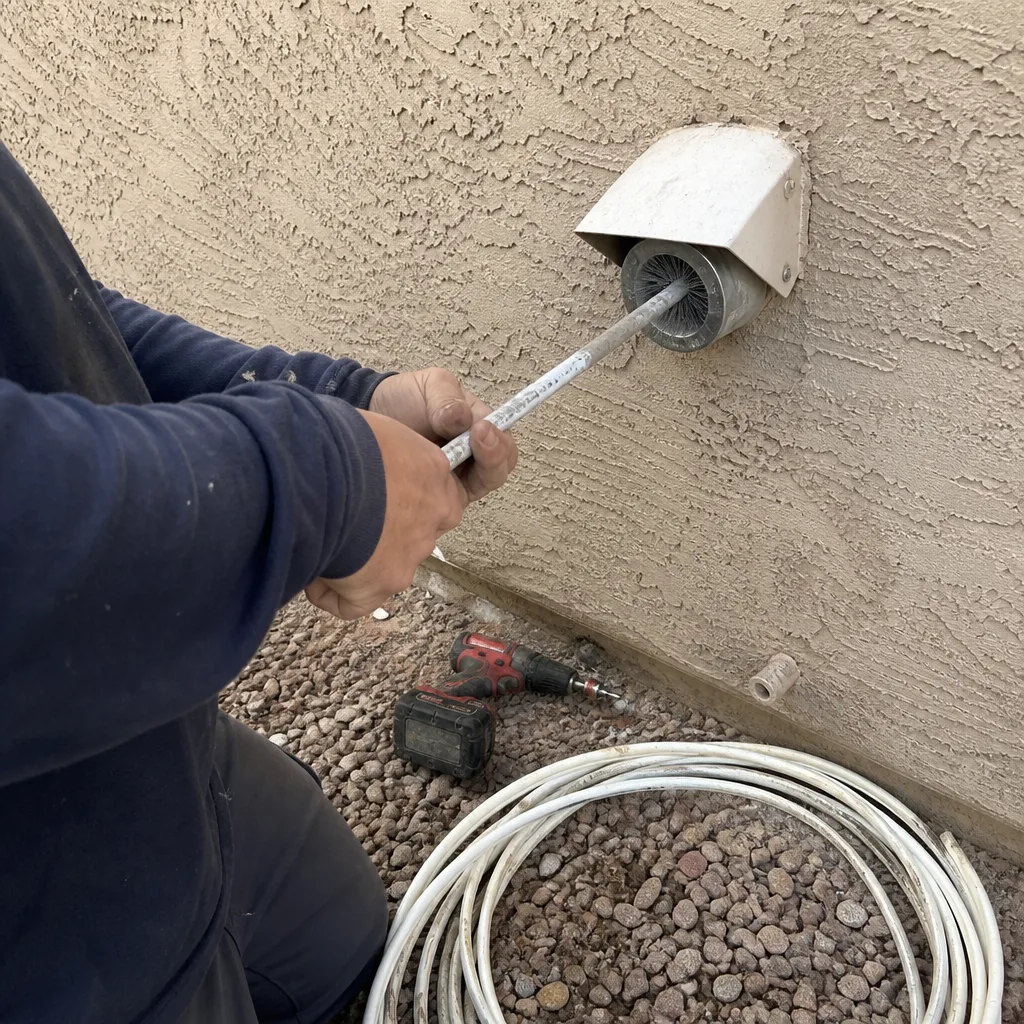
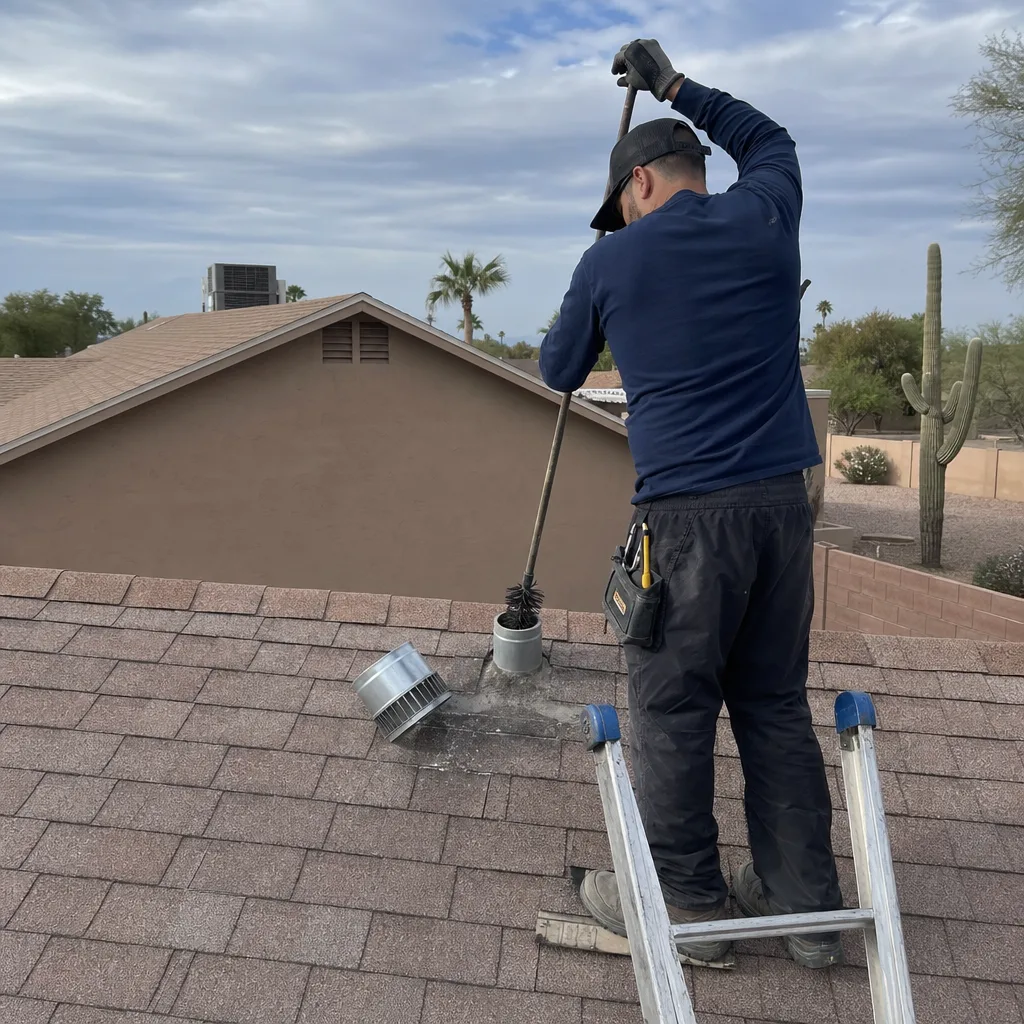
Dryer vent cleaning is often more accessible than duct cleaning because the run is a single, continuous path from the dryer to the exterior termination. A homeowner with a rotary brush kit and a shop vac can clean many ground-floor dryer vents effectively. However, rooftop terminations, runs over 15 feet with multiple elbows, or vents with visible lint compaction require professional equipment. For Dryer Vent Cleaning in Mesa, CleanRun uses specialized rotary tools and airflow meters to verify restoration to manufacturer-specified exhaust rates. Dryer vent blockage is also a genuine fire hazard - if you encounter packed lint or cannot achieve free airflow, stop and call a professional.
Moderately, but not dramatically. A severely debris-restricted system works harder to move air, and cleaning restores design airflow. The more significant efficiency gains come from sealing duct leaks - conditioned air escaping into a 140°F Mesa attic is pure loss. For combined cleaning and sealing, see our HVAC Cleaning in Mesa service. The primary benefit of duct cleaning is indoor air quality and system longevity, not utility bill reduction.
The Bottom Line
The DIY versus professional question for duct cleaning is not a matter of opinion or budget philosophy. It is a question of equipment physics and documentation standards. A homeowner with a shop vac can accomplish specific, limited, and valuable work: register hygiene, filter discipline, and baseline photo documentation. What that equipment cannot do - reach past the first elbow, generate sufficient agitation to dislodge adhered debris, or verify results with photographic evidence - defines the boundary where professional service becomes necessary.
In Mesa’s climate, with its dust loading and temperature extremes, that boundary sits further toward professional service than in milder regions. The homes with rooftop air handlers, the caliche construction dust in older builds, and the monsoon moisture events that drive microbial growth all push the calculation toward documented, equipment-based cleaning.
The decision is yours. The physics are not. If your home falls outside the narrow DIY-appropriate criteria - under 5 years old, no contamination, no health vulnerabilities - the $350-$550 professional service buys measurable results you can see, a written price you agreed to in advance, and a guarantee that persists for 365 days after the truck leaves. That is the difference between assumed cleanliness and known air quality. Explore more guides & resources to keep your home’s air system informed.
Written by Tomas Reyes, Owner at CleanRun Air Duct Cleaning Mesa, serving Mesa since 2013.